CATIA Design with Visual Scripting for Innovation and Optimizing Engineering Processes
- Jayesh Darji
- November 13, 2025
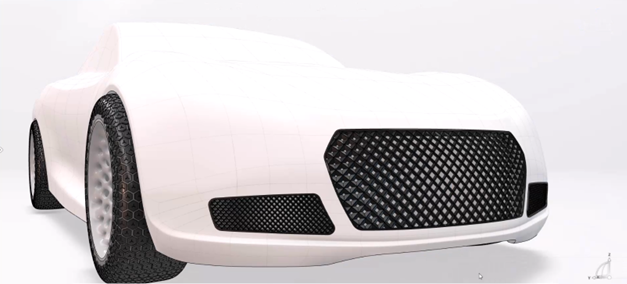
In the evolving world of digital engineering, efficiency and innovation are the key drivers of competitive advantage. As product complexity increases, engineers and designers need intelligent tools that not only simplify modeling but also automate repetitive tasks and enable creative exploration. CATIA Design with Visual Scripting on the 3DEXPERIENCE platform brings this capability to life by combining the power of parametric modeling with the flexibility of graphical programming, revolutionizing how engineering processes are conceived and executed.
Visual Scripting in CATIA introduces a dynamic, node-based approach to automation and design optimization. Instead of writing traditional code, engineers can create logic flows by connecting visual blocks that represent operations, conditions, and parameters. This makes automation accessible to both technical and non-programming users while maintaining the robustness and precision of CATIA’s modeling engine. Through this visual interface, users can define complex design rules, automate geometry creation, control configurations, and drive intelligent updates — all without needing to switch between programming environments or manual design workflows.
Within the 3DEXPERIENCE environment, Visual Scripting seamlessly integrates with CATIA applications, allowing users to directly interact with geometry, product structures, and parameters in real time. Designers can manipulate inputs, visualize outcomes instantly, and optimize designs through iterative logic testing. This integration enables a rule-based and knowledge-driven design approach, reducing dependency on manual operations while ensuring consistency across design iterations. Moreover, because the entire workflow exists within a unified data model, teams benefit from full traceability and collaboration, ensuring that changes made by one designer are instantly reflected across the project.
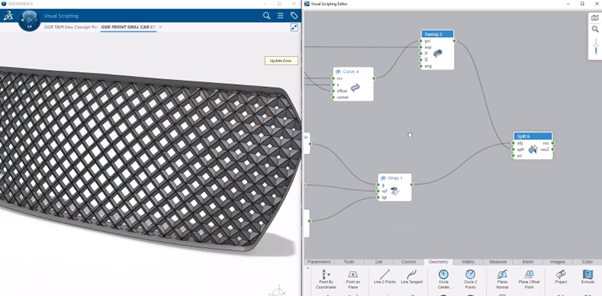
The power of Visual Scripting extends far beyond automation — it serves as an enabler for design innovation and optimization. Engineers can use scripting to explore design variations rapidly, conduct parameter sweeps, and perform what-if analyses that would otherwise take hours to model manually. It also helps standardize company-specific best practices, ensuring that every project adheres to design rules, material usage standards, and manufacturability constraints. Whether it’s automating fixture design, optimizing surface layouts, or streamlining complex assembly creation, Visual Scripting accelerates productivity and reduces the potential for human error.

From a broader perspective, CATIA Visual Scripting Designer bridges the gap between design automation and artificial intelligence. By connecting data from simulation, manufacturing, and product lifecycle applications, it fosters a model-based engineering ecosystem that enhances decision-making and reduces iteration cycles. The result is a smarter, more agile product development process that aligns creativity with efficiency.
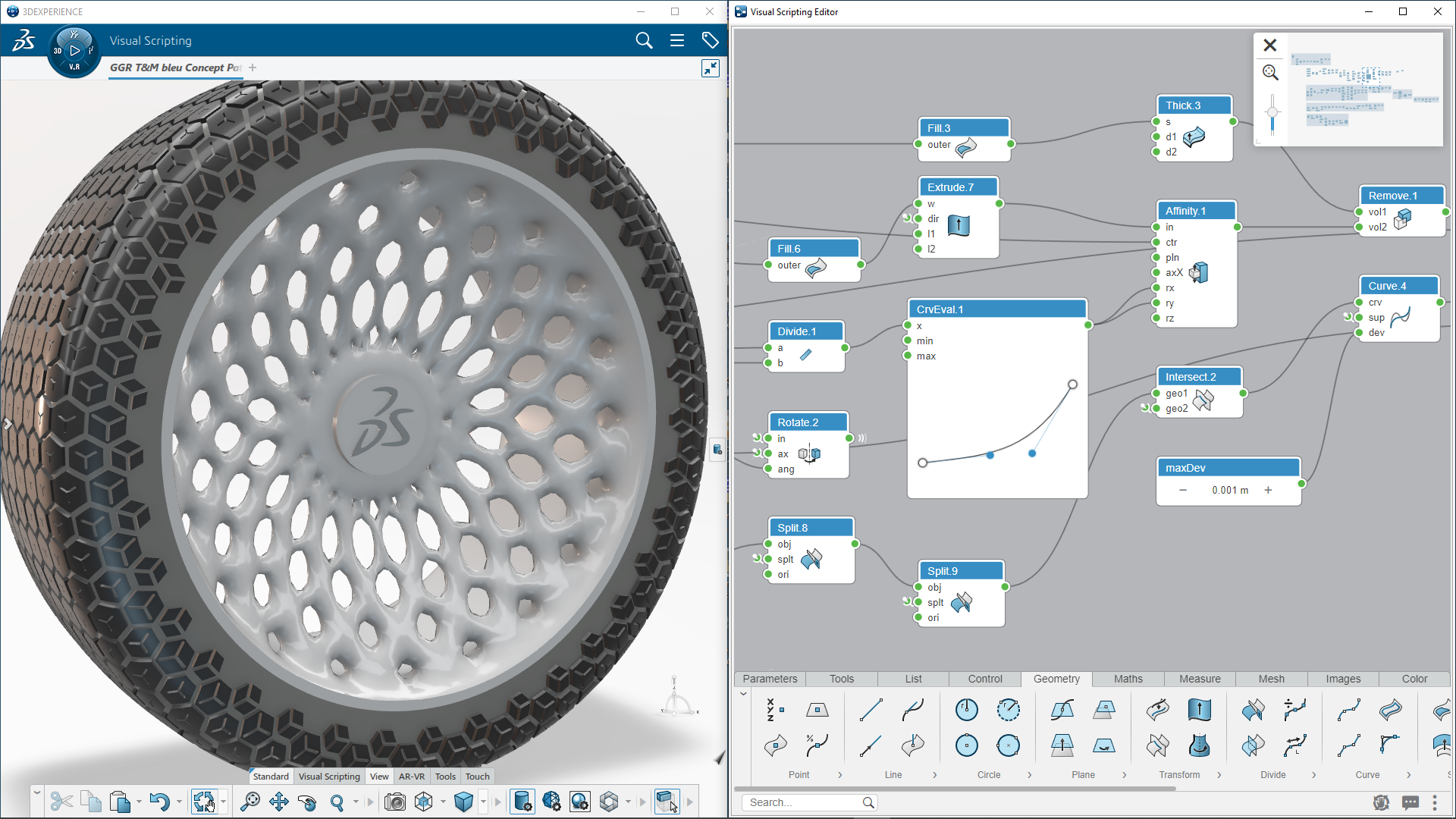
In conclusion, CATIA Design and Visual Scripting empower engineers to innovate faster and design smarter by blending automation, logic, and creativity into a single workflow. It transforms the traditional CAD environment into an intelligent design ecosystem that adapts to user intent, accelerates product development, and ensures design excellence. As industries continue to embrace digital transformation, Visual Scripting stands as a cornerstone of engineering innovation and process optimization within the 3DEXPERIENCE platform.

Recent Posts
-

From Prototypes to Production: How Additive Manufacturing is Shaping Atmanirbhar Bharat
The conversation around additive manufacturing (AM) in India has evolved considerably over the past decade. What was once viewed primarily as a prototyping technology is…
-
Identify Stray Light in Imaging Systems with LightTools
Stray light is undesired light radiation that interacts with the components of a system and degrades its performance by generating noise, that significantly reduces image…
-
Redefining the Riding Experience with RAMSIS
In two‑wheeler design, comfort and safety start with the rider. RAMSIS (Realistic Anthropometric Mathematical System of Interior Comfort Simulation) is an ergonomic simulation platform that…
-

Enhancing Product Understanding through 3D Technical Illustrator
The 3D Technical Illustrator role within the 3DEXPERIENCE Platform enables organizations to transform complex engineering data into clear, interactive, and visually rich technical documentation. In…
-

Transforming Physical Parts into Digital Models with CATIA 3DEXPERIENCE Reverse Engineer role
Reverse engineering has become a critical capability in modern product development, especially when working with legacy components, competitor benchmarking, or physical prototypes that lack digital…
-
Fixing Search Service Down Issue in 3DEXPERIENCE Platform
Search is one of the most critical features in the 3DEXPERIENCE platform. If the search service goes down, users cannot find objects, documents, or data—impacting…
-
Common Installation Errors and How to Fix Them in 3DEXPERIENCE
The 3DEXPERIENCE Platform is a powerful solution used by industries worldwide for product lifecycle management (PLM), simulation, and collaboration. However, installing 3DEXPERIENCE—especially on-premise—can be complex…
-
From Classroom to Industry: Empowering Future Engineers with the 3DEXPERIENCE Platform
In today’s fast-evolving engineering and design landscape, educational institutions must go beyond conventional CAD teaching methods. While standalone tools like CATIA V5, SOLIDWORKS, or traditional…
- Jayesh Darji
- November 13, 2025
CATIA Design with Visual Scripting for Innovation and Optimizing Engineering Processes
In the evolving world of digital engineering, efficiency and innovation are the key drivers of competitive advantage. As product complexity increases, engineers and designers need intelligent tools that not only simplify modeling but also automate repetitive tasks and enable creative exploration. CATIA Design with Visual Scripting on the 3DEXPERIENCE platform brings this capability to life by combining the power of parametric modeling with the flexibility of graphical programming, revolutionizing how engineering processes are conceived and executed.
Visual Scripting in CATIA introduces a dynamic, node-based approach to automation and design optimization. Instead of writing traditional code, engineers can create logic flows by connecting visual blocks that represent operations, conditions, and parameters. This makes automation accessible to both technical and non-programming users while maintaining the robustness and precision of CATIA’s modeling engine. Through this visual interface, users can define complex design rules, automate geometry creation, control configurations, and drive intelligent updates — all without needing to switch between programming environments or manual design workflows.
Within the 3DEXPERIENCE environment, Visual Scripting seamlessly integrates with CATIA applications, allowing users to directly interact with geometry, product structures, and parameters in real time. Designers can manipulate inputs, visualize outcomes instantly, and optimize designs through iterative logic testing. This integration enables a rule-based and knowledge-driven design approach, reducing dependency on manual operations while ensuring consistency across design iterations. Moreover, because the entire workflow exists within a unified data model, teams benefit from full traceability and collaboration, ensuring that changes made by one designer are instantly reflected across the project.
The power of Visual Scripting extends far beyond automation — it serves as an enabler for design innovation and optimization. Engineers can use scripting to explore design variations rapidly, conduct parameter sweeps, and perform what-if analyses that would otherwise take hours to model manually. It also helps standardize company-specific best practices, ensuring that every project adheres to design rules, material usage standards, and manufacturability constraints. Whether it’s automating fixture design, optimizing surface layouts, or streamlining complex assembly creation, Visual Scripting accelerates productivity and reduces the potential for human error.
From a broader perspective, CATIA Visual Scripting Designer bridges the gap between design automation and artificial intelligence. By connecting data from simulation, manufacturing, and product lifecycle applications, it fosters a model-based engineering ecosystem that enhances decision-making and reduces iteration cycles. The result is a smarter, more agile product development process that aligns creativity with efficiency.
In conclusion, CATIA Design and Visual Scripting empower engineers to innovate faster and design smarter by blending automation, logic, and creativity into a single workflow. It transforms the traditional CAD environment into an intelligent design ecosystem that adapts to user intent, accelerates product development, and ensures design excellence. As industries continue to embrace digital transformation, Visual Scripting stands as a cornerstone of engineering innovation and process optimization within the 3DEXPERIENCE platform.