Redefining the Riding Experience with RAMSIS
- Pranay Malewar
- June 23, 2026
In two‑wheeler design, comfort and safety start with the rider. RAMSIS (Realistic Anthropometric Mathematical System of Interior Comfort Simulation) is an ergonomic simulation platform that brings precise human modeling into the development of motorbikes and scooters. By combining large anthropometric databases, posture modeling, vision analysis, and reachability studies, RAMSIS lets designers evaluate how real people of different sizes interact with a vehicle long before any physical prototype exists.
Why Ergonomics And Anthropometry Matter For Two‑Wheelers
Ergonomics optimizes the fit between rider and machine; anthropometry supplies the measurements of human bodies. For two‑wheelers, small changes to handlebar height, seat shape, footpeg position, or mirror placement can dramatically affect comfort, fatigue, visibility, and control. Using anthropometric-driven simulation reduces costly late design changes and improves rider satisfaction across diverse populations.
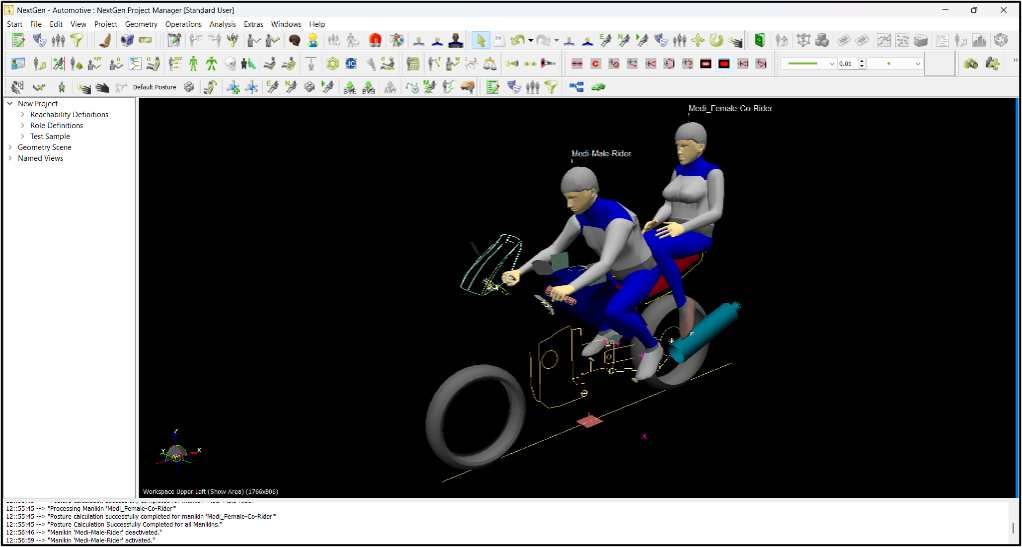
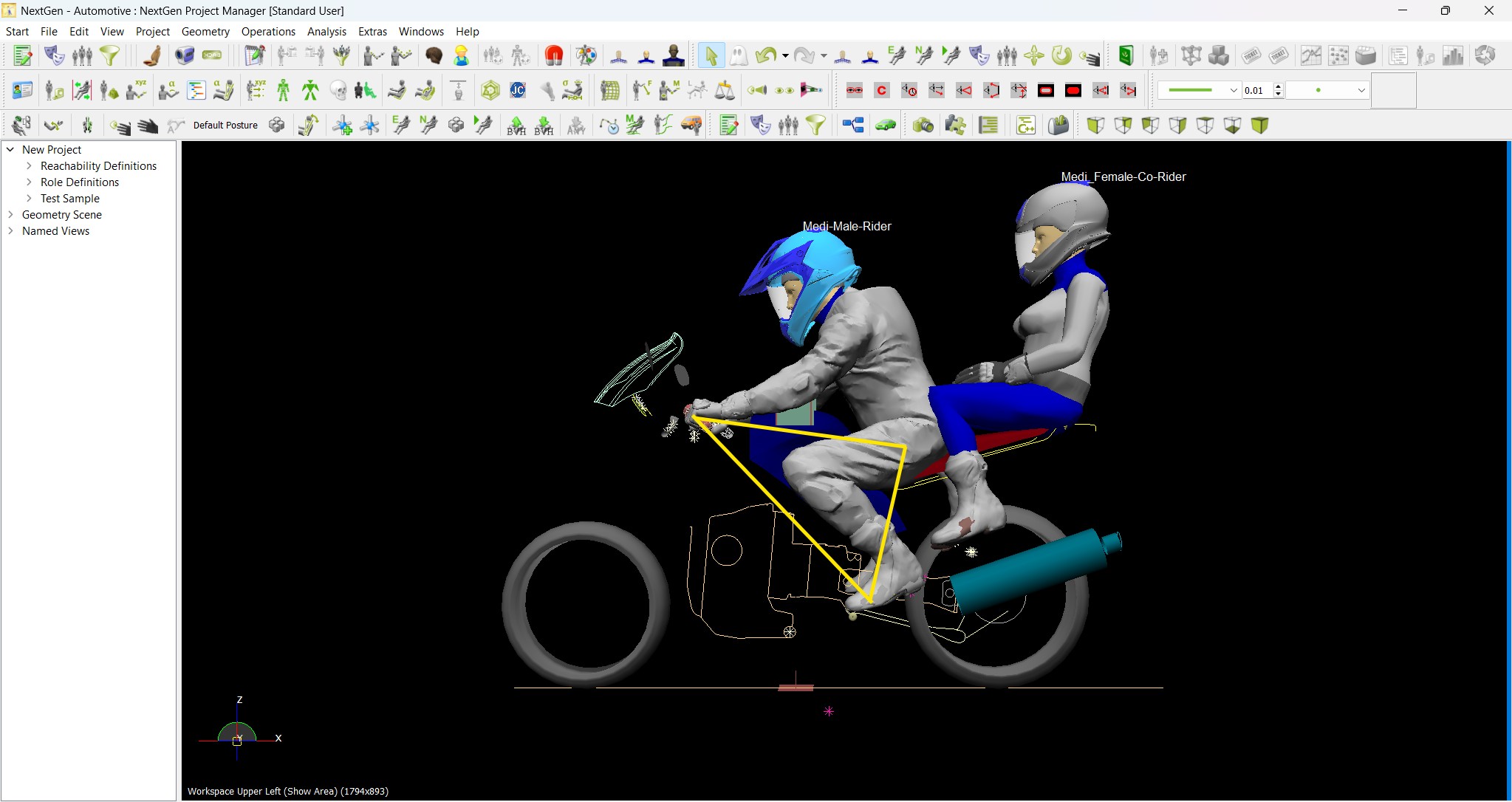
Fig 1: Shows Male Rider (50th percentile) and Female Pillion (50th percentile) withing RAMSIS standalone environment
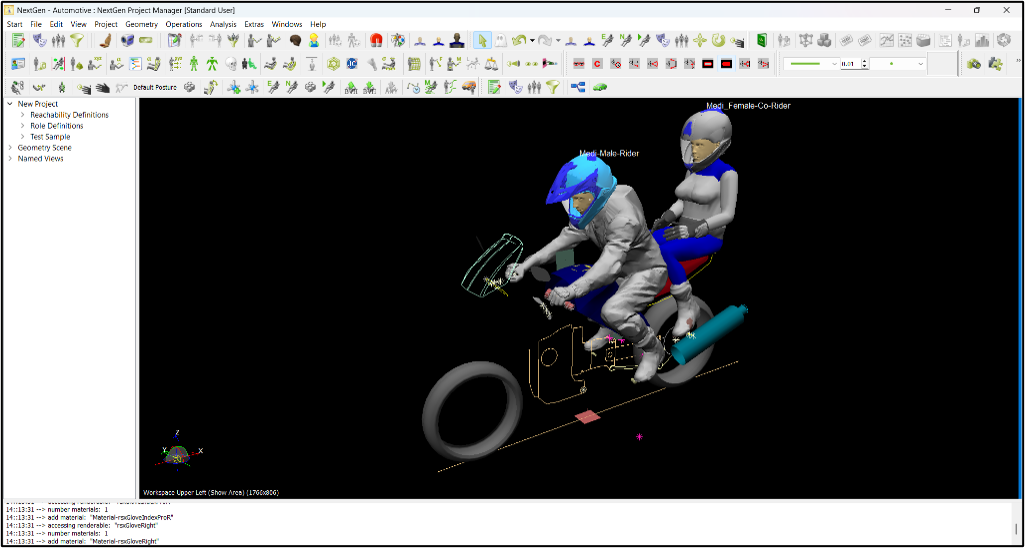
Fig 2: Shows Male Rider (50th percentile) and Female Pillion (50th percentile) withing RAMSIS standalone environment wearing Riding gears (RAMSIS equipment Library)
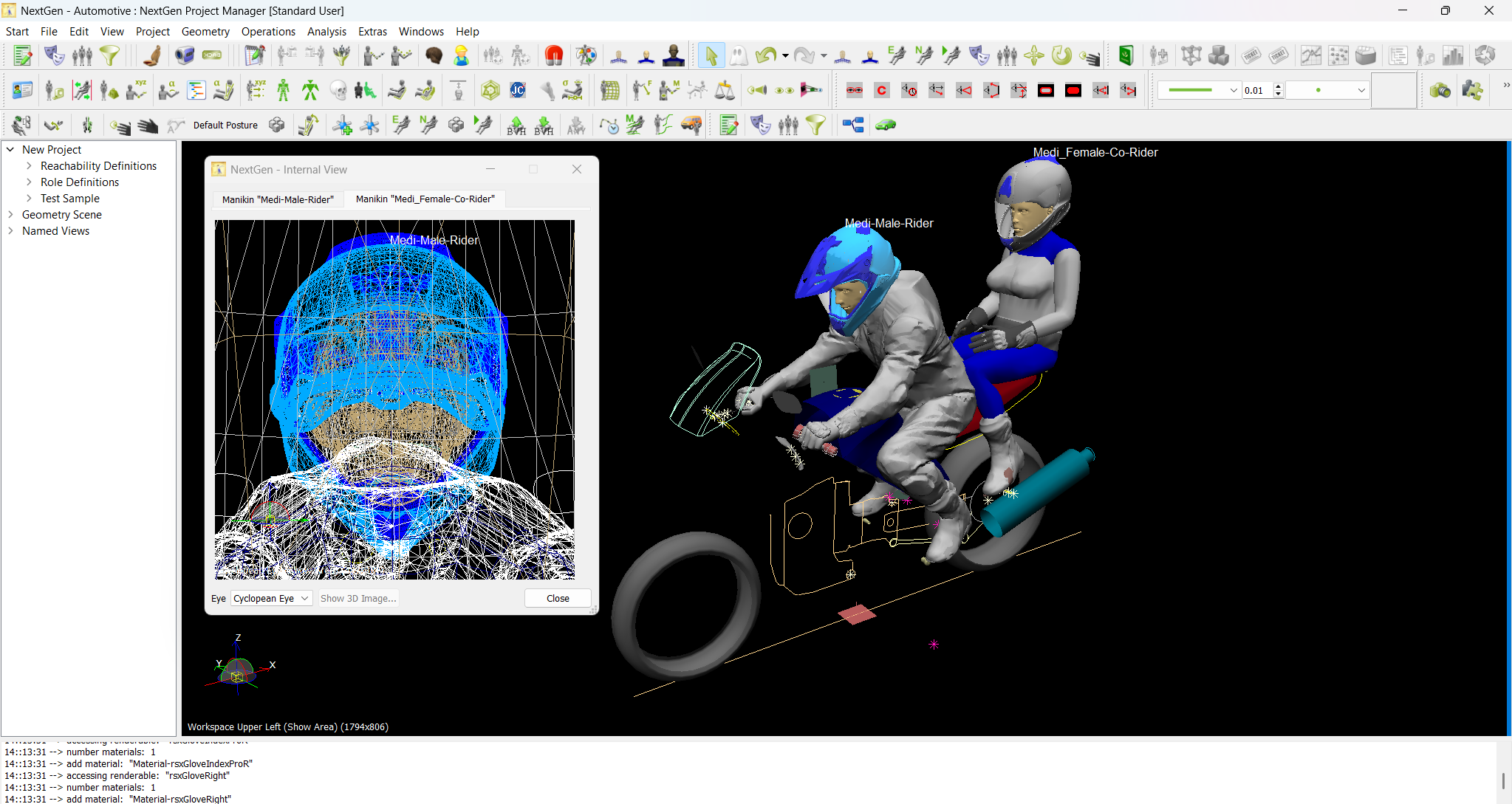
Fig 3: 50th Female Pillion Eye Vision
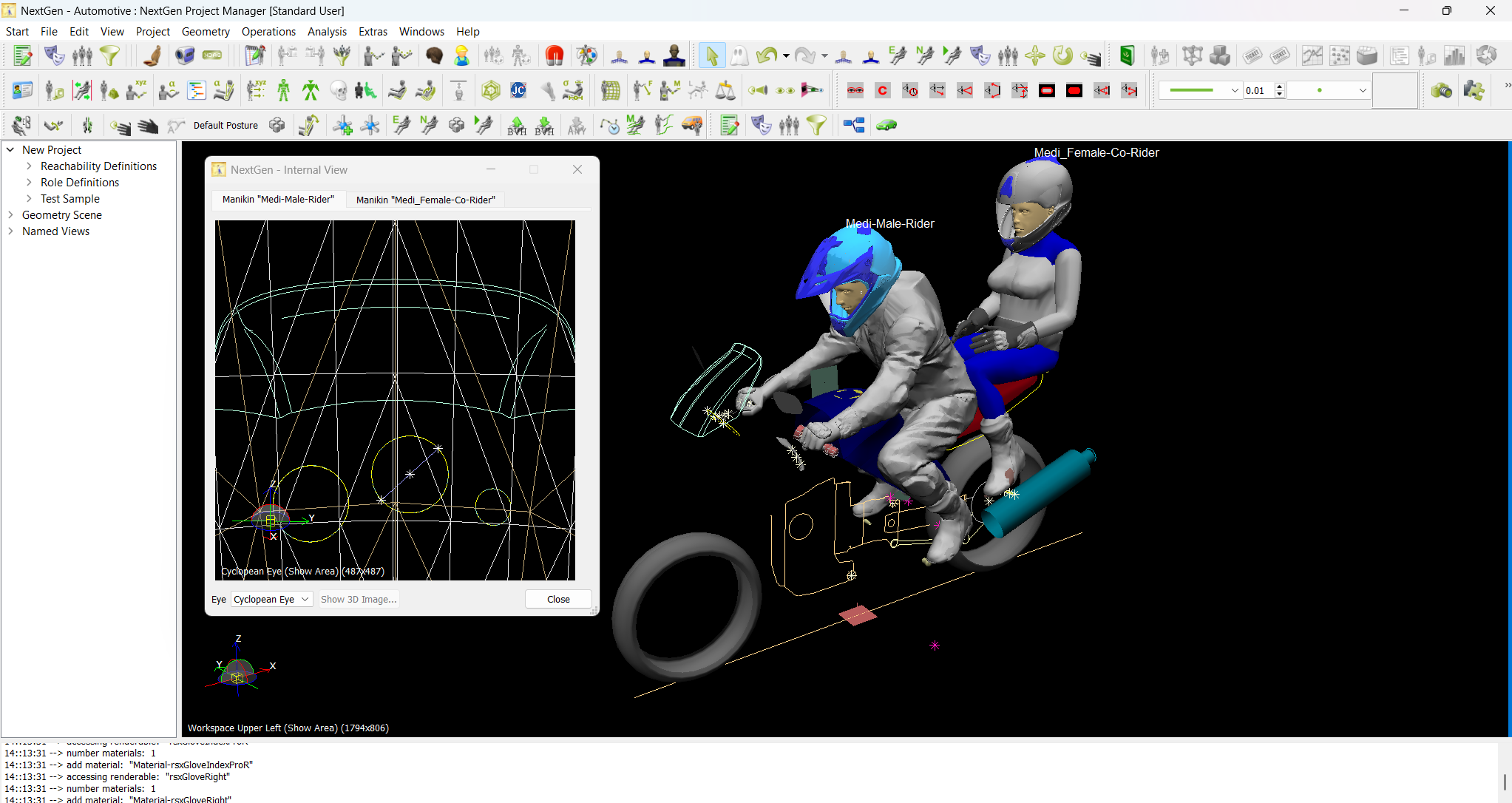
Fig 4: 50th Male Rider Eye Vision
Key RAMSIS Capabilities For Two‑Wheelers
- Comprehensive anthropometric databases: Models draw from worldwide datasets (Germany, Japan/Korea, China, USA NHANES, India, Canada/LISA, Mexico, South America, France, and more) so designers test for regional body-size differences and global markets.
- Automated posturing: Realistic rider postures for typical use (e.g., aggressive motorbike stance, upright scooter stance) are generated automatically to reflect natural seated positions.
- Ground reachability analysis: Verifies whether riders of varying heights can plant feet safely when stopped, a critical safety and comfort metric for bikes and scooters.
- Joint capacity and maximum force analysis: Assesses whether required steering, braking, or shifting forces exceed the comfort or strength limits of target user groups.
- Vision and mirror analysis: Simulates sightlines and mirror fields to minimize blind spots and optimize mirror placement for both urban scooters and high‑speed bikes.
- Rider triangle evaluation: Tests ergonomic relationships between seat, handlebars, and foot controls to ensure intuitive control and reduced rider strain.
- Seat–manikin contact contour analysis: Visualizes contact between rider and seat to guide foam, shape, and contour design for long‑ride comfort.
Practical Applications In Motorbike And Scooter Development
- Concept validation: Early-stage concepts can be checked for reach, posture, and visibility across percentile riders, avoiding costly rework.
- Regional model tuning: Use region‑specific datasets (for example, Size India or Size North America) to tune geometry for local markets—seat height, peg position, and handlebar reach can be optimized per market.
- Variant and accessory design: Test effects of different seats, windscreens, luggage racks, and handlebar risers on ergonomics before production.
- Safety and usability testing: Evaluate emergency reach, mirror effectiveness, and steering forces to improve both comfort and crash preparedness.
- Rider segmentation: Create target rider personas (commuter scooter rider, sport motorbike rider, touring rider) and tailor geometry and controls.
Example:
Designing a commuter scooter for India
Using India anthropometric data, designers run RAMSIS simulations to ensure shorter‑leg riders can still reach the ground comfortably, while also checking vision lines for typical urban traffic. Seat contour analysis helps shape a seat that reduces pressure points on long commutes. Results guide adjustments to seat height, floorboard shape, and mirror configuration before building prototypes.
Why OEMs And Designers Adopt RAMSIS
- Faster, evidence‑based decisions that reduce physical prototyping.
- Better market fit by validating designs for the demographics who will actually ride the product.
- Improved rider comfort, safety, and satisfaction—key differentiators in competitive two‑wheeler markets.
Conclusion
RAMSIS turns anthropometry and ergonomics into actionable design intelligence. For motorbike and scooter manufacturers aiming to deliver comfort, control, and market‑fit, it’s a powerful tool to move from guesswork to human‑centred design.

Recent Posts
-

Precision Under Pressure: Aerospace Machining in 2026
Commercial aerospace has never had more demand and has rarely struggled more to meet it. Airbus closed the first half of 2026 with a record…
-
From Prototypes to Production: How Additive Manufacturing is Shaping Atmanirbhar Bharat
The conversation around additive manufacturing (AM) in India has evolved considerably over the past decade. What was once viewed primarily as a prototyping technology is…
-
Identify Stray Light in Imaging Systems with LightTools
Stray light is undesired light radiation that interacts with the components of a system and degrades its performance by generating noise, that significantly reduces image…
-

Enhancing Product Understanding through 3D Technical Illustrator
The 3D Technical Illustrator role within the 3DEXPERIENCE Platform enables organizations to transform complex engineering data into clear, interactive, and visually rich technical documentation. In…
-
Transforming Physical Parts into Digital Models with CATIA 3DEXPERIENCE Reverse Engineer role
Reverse engineering has become a critical capability in modern product development, especially when working with legacy components, competitor benchmarking, or physical prototypes that lack digital…
-
Fixing Search Service Down Issue in 3DEXPERIENCE Platform
Search is one of the most critical features in the 3DEXPERIENCE platform. If the search service goes down, users cannot find objects, documents, or data—impacting…
-
Common Installation Errors and How to Fix Them in 3DEXPERIENCE
The 3DEXPERIENCE Platform is a powerful solution used by industries worldwide for product lifecycle management (PLM), simulation, and collaboration. However, installing 3DEXPERIENCE—especially on-premise—can be complex…
-

From Classroom to Industry: Empowering Future Engineers with the 3DEXPERIENCE Platform
In today’s fast-evolving engineering and design landscape, educational institutions must go beyond conventional CAD teaching methods. While standalone tools like CATIA V5, SOLIDWORKS, or traditional…
- Pranay Malewar
- June 23, 2026
Redefining the Riding Experience with RAMSIS
In two‑wheeler design, comfort and safety start with the rider. RAMSIS (Realistic Anthropometric Mathematical System of Interior Comfort Simulation) is an ergonomic simulation platform that brings precise human modeling into the development of motorbikes and scooters. By combining large anthropometric databases, posture modeling, vision analysis, and reachability studies, RAMSIS lets designers evaluate how real people of different sizes interact with a vehicle long before any physical prototype exists.
Why Ergonomics And Anthropometry Matter For Two‑Wheelers
Ergonomics optimizes the fit between rider and machine; anthropometry supplies the measurements of human bodies. For two‑wheelers, small changes to handlebar height, seat shape, footpeg position, or mirror placement can dramatically affect comfort, fatigue, visibility, and control. Using anthropometric-driven simulation reduces costly late design changes and improves rider satisfaction across diverse populations.
Fig 1: Shows Male Rider (50th percentile) and Female Pillion (50th percentile) withing RAMSIS standalone environment
Fig 2: Shows Male Rider (50th percentile) and Female Pillion (50th percentile) withing RAMSIS standalone environment wearing Riding gears (RAMSIS equipment Library)
Fig 3: 50th Female Pillion Eye Vision
Fig 4: 50th Male Rider Eye Vision
Key RAMSIS Capabilities For Two‑Wheelers
- Comprehensive anthropometric databases: Models draw from worldwide datasets (Germany, Japan/Korea, China, USA NHANES, India, Canada/LISA, Mexico, South America, France, and more) so designers test for regional body-size differences and global markets.
- Automated posturing: Realistic rider postures for typical use (e.g., aggressive motorbike stance, upright scooter stance) are generated automatically to reflect natural seated positions.
- Ground reachability analysis: Verifies whether riders of varying heights can plant feet safely when stopped, a critical safety and comfort metric for bikes and scooters.
- Joint capacity and maximum force analysis: Assesses whether required steering, braking, or shifting forces exceed the comfort or strength limits of target user groups.
- Vision and mirror analysis: Simulates sightlines and mirror fields to minimize blind spots and optimize mirror placement for both urban scooters and high‑speed bikes.
- Rider triangle evaluation: Tests ergonomic relationships between seat, handlebars, and foot controls to ensure intuitive control and reduced rider strain.
- Seat–manikin contact contour analysis: Visualizes contact between rider and seat to guide foam, shape, and contour design for long‑ride comfort.
Practical Applications In Motorbike And Scooter Development
- Concept validation: Early-stage concepts can be checked for reach, posture, and visibility across percentile riders, avoiding costly rework.
- Regional model tuning: Use region‑specific datasets (for example, Size India or Size North America) to tune geometry for local markets—seat height, peg position, and handlebar reach can be optimized per market.
- Variant and accessory design: Test effects of different seats, windscreens, luggage racks, and handlebar risers on ergonomics before production.
- Safety and usability testing: Evaluate emergency reach, mirror effectiveness, and steering forces to improve both comfort and crash preparedness.
- Rider segmentation: Create target rider personas (commuter scooter rider, sport motorbike rider, touring rider) and tailor geometry and controls.
Example:
Designing a commuter scooter for India
Using India anthropometric data, designers run RAMSIS simulations to ensure shorter‑leg riders can still reach the ground comfortably, while also checking vision lines for typical urban traffic. Seat contour analysis helps shape a seat that reduces pressure points on long commutes. Results guide adjustments to seat height, floorboard shape, and mirror configuration before building prototypes.
Why OEMs And Designers Adopt RAMSIS
- Faster, evidence‑based decisions that reduce physical prototyping.
- Better market fit by validating designs for the demographics who will actually ride the product.
- Improved rider comfort, safety, and satisfaction—key differentiators in competitive two‑wheeler markets.
Conclusion
RAMSIS turns anthropometry and ergonomics into actionable design intelligence. For motorbike and scooter manufacturers aiming to deliver comfort, control, and market‑fit, it’s a powerful tool to move from guesswork to human‑centred design.