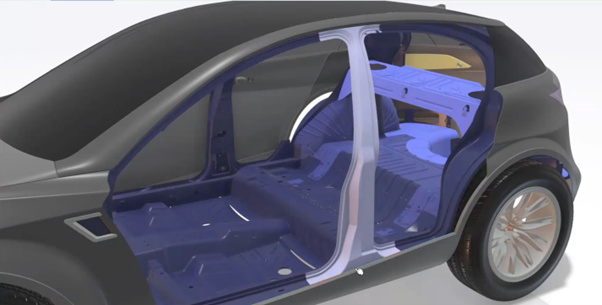
3DEXPERIENCE CATIA Composite Design – Delivering Next-Generation Precision for Advanced Composite Structures

3DEXPERIENCE CATIA Composite Design is an advanced, collaborative, and highly integrated engineering solution designed to manage the complexity of modern composite structures used across aerospace, automotive, marine, defence, energy, and high-performance industrial applications. Unlike conventional metallic parts, composite materials are engineered from multiple stacked plies with different orientations, materials, and thicknesses, where overall structural performance depends significantly on fiber direction, laminate sequence, and draping behaviour. The 3DEXPERIENCE platform elevates this capability further by providing a unified digital environment that connects design, simulation, manufacturing, and data management, ensuring composite development is accurate, traceable, and fully aligned with enterprise workflows.


A key strength of 3DEXPERIENCE CATIA Composite Design is its robust ply-based design methodology, enabling engineers to build laminates layer by layer with exceptional precision. Each ply can be defined with exact boundaries, material definitions, thickness, fiber orientations (0°, ±45°, 90°, or custom), and stacking sequences, while zones and groups help manage large and complex components efficiently. The platform provides powerful draping simulation capabilities that allow designers to visualize how composite material behaves on curved or freeform surfaces and automatically adapts ply geometry to minimize wrinkles, overlaps, fiber distortion, and misalignment. This ensures that designs are not only structurally accurate but also realistic for manufacturing conditions.
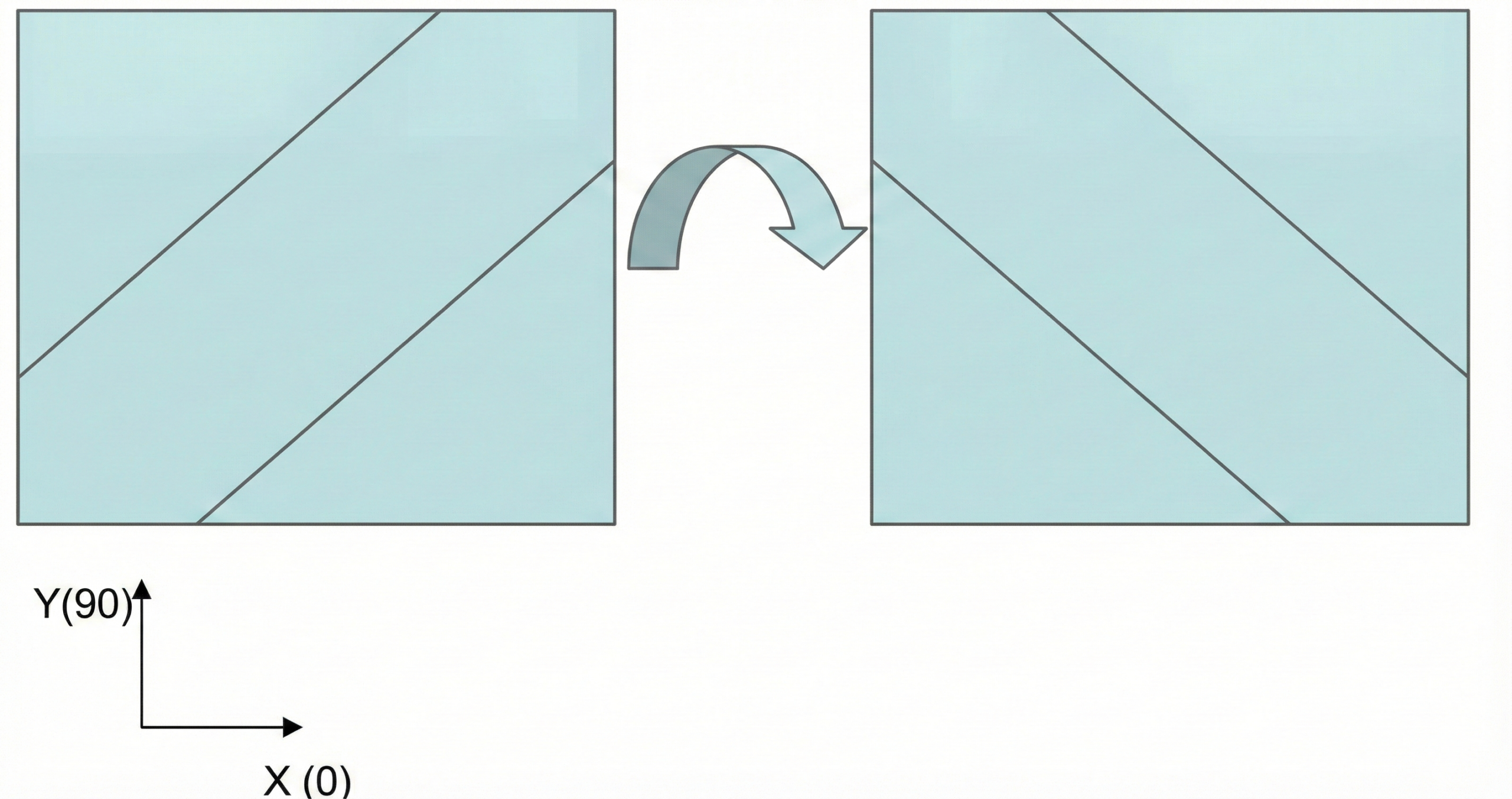
Fig- Ply Fiber Direction


Visualization, validation, and decision-making are significantly enhanced in 3DEXPERIENCE CATIA. Engineers can review laminate buildup step-by-step, analyse thickness variations, verify stack sequences, and evaluate overlaps and gaps with high clarity. Composite grid definitions and fiber direction maps support continuity and precision across complex aerodynamic, structural, or ergonomic surfaces. With the platform’s integrated data management capabilities, every design iteration remains traceable, controlled, and synchronized, reducing the risk of errors and rework while strengthening digital continuity from concept to production.


Another major advantage of 3DEXPERIENCE CATIA Composite Design is its strong alignment with manufacturing needs. The system supports automated flat pattern generation while considering draping effects and real fiber behaviour. Engineers can produce ply books, detailed manufacturing documentation, optimized nesting layouts, and laser projection data to support both manual lay-up and automated fiber placement processes. Through the unified 3DEXPERIENCE ecosystem, manufacturing teams, engineering teams, and suppliers can collaborate seamlessly, enabling faster decision-making, reduced material waste, shorter lead times, and higher production reliability.

From a structural performance perspective, 3DEXPERIENCE CATIA connects seamlessly with SIMULIA tools such as Abaqus for advanced composite analysis. Laminate definitions, stacking sequences, material details, and fiber orientations can be transferred directly for simulation to assess stiffness, load-bearing capability, failure criteria, delamination risks, fatigue performance, and optimization opportunities. This integrated simulation-driven design approach enables engineers to validate concepts early and refine them efficiently within the same platform without losing design intent or data integrity.
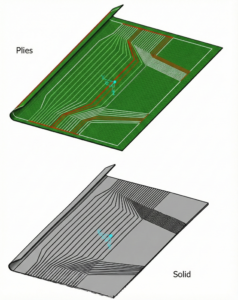

Fig- Solid representation of Plies


In conclusion, 3DEXPERIENCE CATIA Composite Design offers a comprehensive, intelligent, and collaborative environment for engineering composite structures with unmatched accuracy and efficiency. By integrating detailed ply-based modeling, advanced visualization, manufacturability assessment, enterprise collaboration, and simulation connectivity within a single platform, it empowers industries to deliver lighter, stronger, and more reliable composite products. Organizations benefit from reduced development cycles, enhanced product quality, minimized manufacturing risks, and accelerated innovation. For companies looking to master composite engineering while ensuring digital continuity and manufacturing readiness, 3DEXPERIENCE CATIA Composite Design stands as a future-ready and industry-leading solution

Keysight Optical Simulation Solutions: Innovation in Optical Design

Leveraging Keysight’s portfolio of optical and photonic design and simulation software one can accurately model all facets of an optical system. These advanced and interactive tools enable design of complex imaging systems, illumination devices, automotive lighting systems and photonic devices.


Achieve Optical Innovation with Keysight’s Optical Design Engineering software

LucidShape: Comprehensive automotive lighting solution

The LucidShape product family is a reliable engineering solution for design, simulation, visualization and validation of automotive lighting systems.

It includes modules to streamline shape creation and simulation of exterior automotive lighting systems.

  • Calculates optical geometries and creates optics based on freeform design
  • Simulate light sources, surfaces, materials, and sensors.
  • Use physics-based visualization tools for photorealistic images and simulations.
  • Automatic light guide construction, ray tracing, analysis and optimization tools.

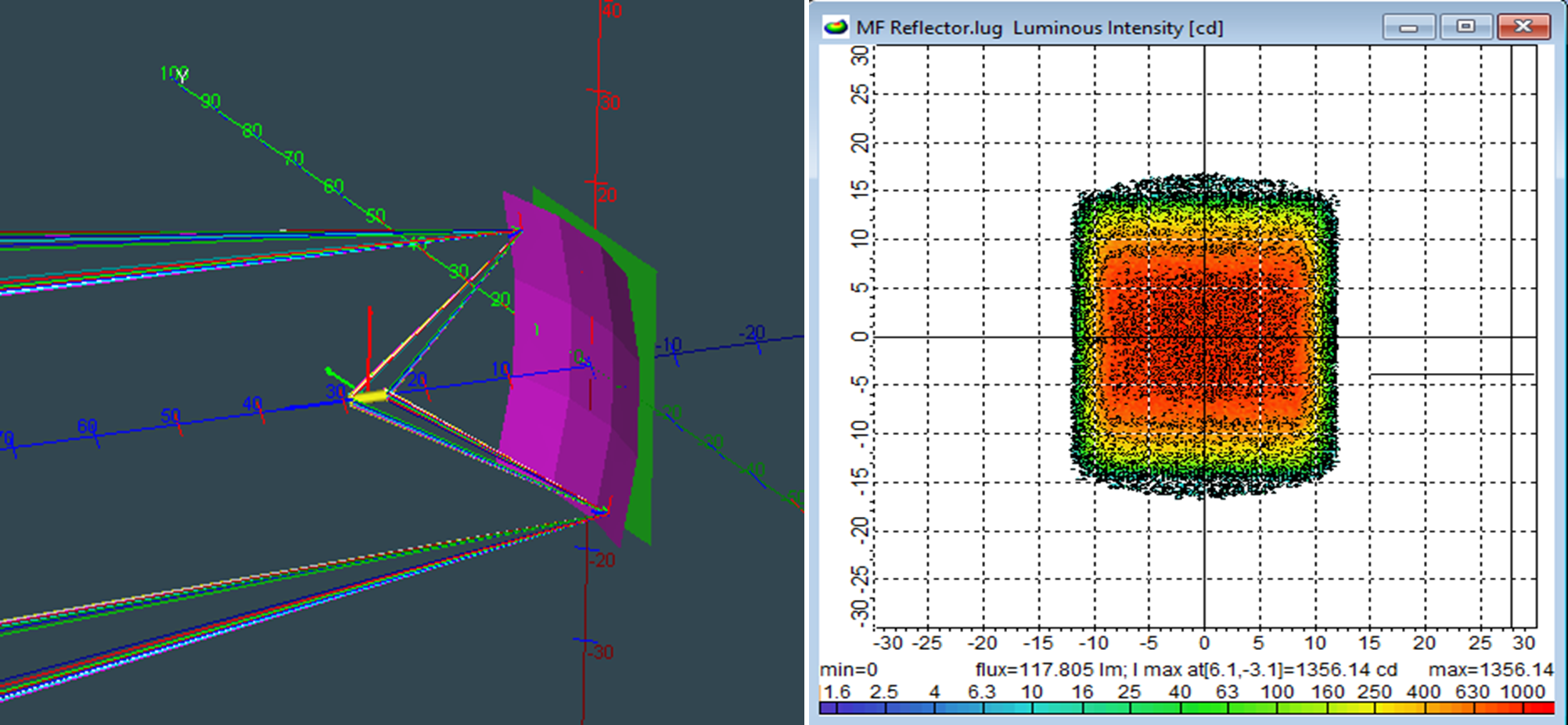
Fig.1: Freeform Macrofocal Reflector and it’s corresponding spread distribution in LucidShape.


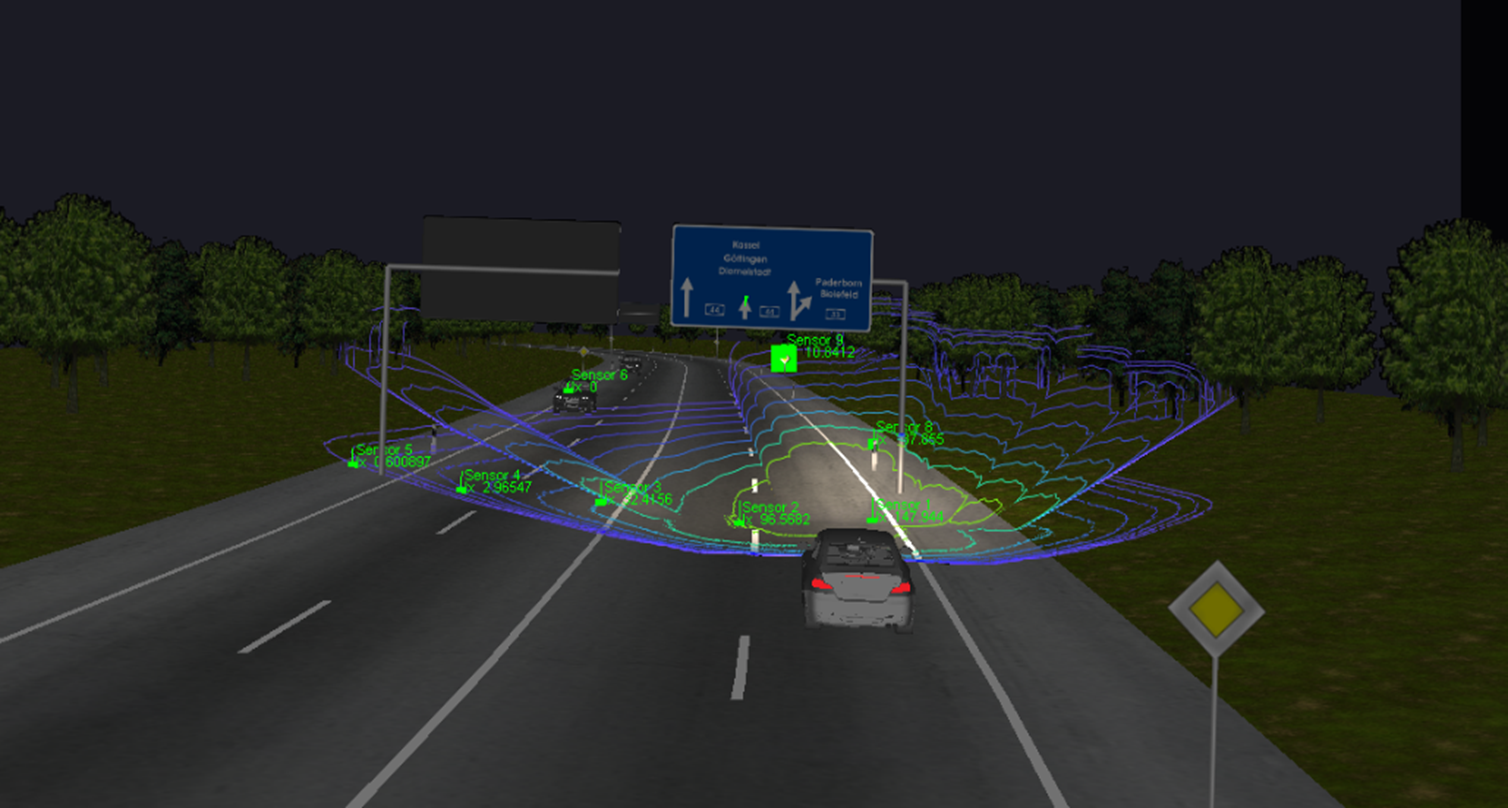
LucidDrive, a night driving simulator generates realistic beam pattern evaluations for vehicle headlamps to ensure optimal performance in real-world conditions. Helps assess adaptive front lighting systems like Pixel and Matrix beam headlamps by simulating their response to dynamic traffic conditions.

Fig.2: Matrix headlamp validation for traffic scenarios in LucidDrive, night driving simulator.


LightTools: Illumination Design Software

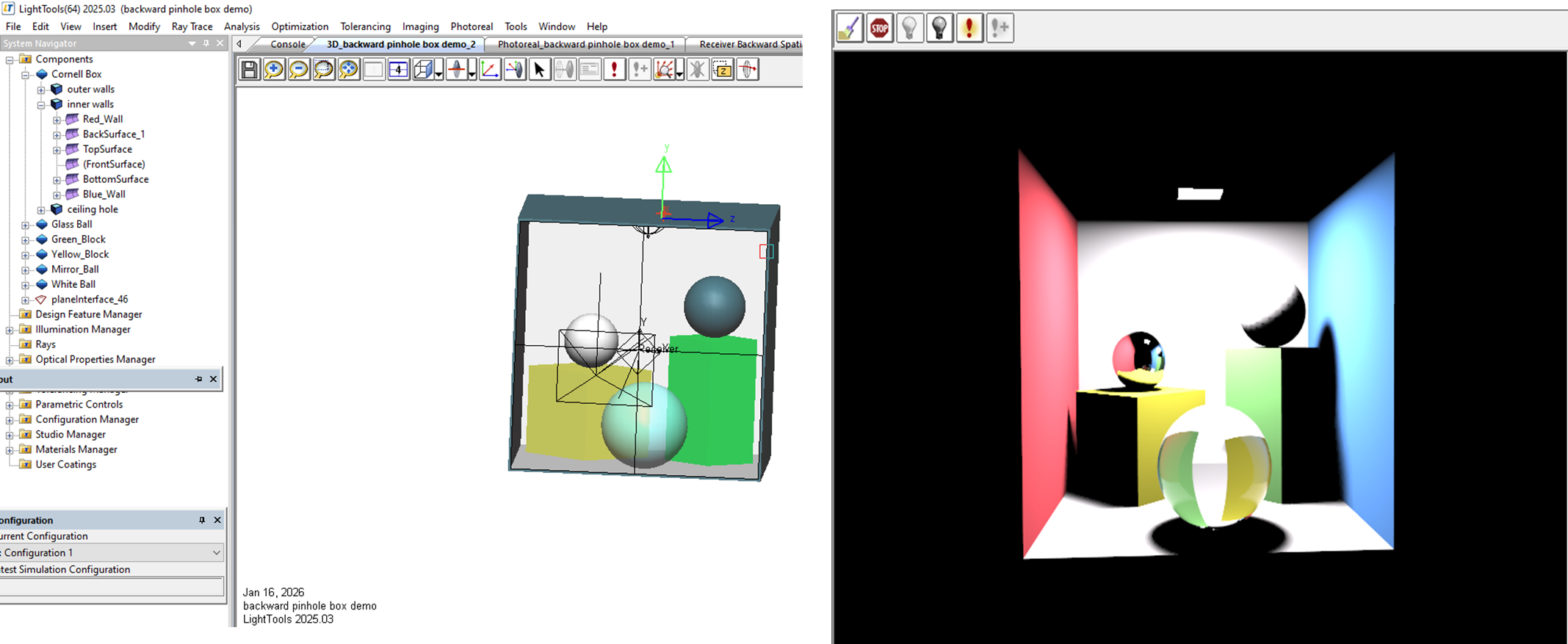
This 3D design software supports virtual prototyping, simulation, optimization and photorealistic rendering of illumination applications including LEDs, light guides for ambient lighting and backlit display systems (AR/VR devices).

It offers superior non-sequential ray tracing and advanced material libraries for modelling various surfaces as some of its key capabilities for designing backlight display systems, digital projectors, luminaires and ambient lighting components.

Fig.3: 3D modelling and photorealistic rendering of various surfaces under illumination as simulated in LightTools.


CODE V: Imaging System Design

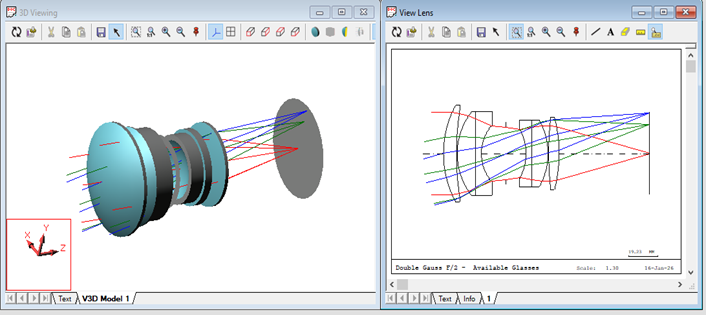
Development of imaging systems including photographic, mobile camera and zoom lens, as well as free space photonic devices can be accelerated with CODE V’s advanced optimizing and tolerancing features.

  • Visualize optical system performance with image simulation.
  • Speed time to market with utilities like glass expert and asphere expert.
  • Multi-environment coupling model’s substrate changes due to temperature, pressure and mounting variations.

Fig.4: 2D schematic and 3D rendering of a lens with paraxial ray trace as seen in CODE V.


RSoft: Photonic Device Design

Comprises a wide portfolio of simulators and optimizers for active and passive photonic devices such as lasers, sensors and many more.

  • FulWave FDTD – study propagation of light in structures such as waveguides
  • DiffractMOD – tool for diffractive structures like DOE, photonic crystals
  • BandSOLVE – automates the modeling and calculation of photonic band structures
  • LaserMOD – simulates the optical, electronic and thermal properties of semiconductor lasers.

Optical Scattering Measurement Instruments

 Quickly and accurately quantify the light propagated from any surface or material depending on the angle of incidence, wavelengths, polarization, and observation angle. Helps identify imperfections in optical surfaces or light reflections off mechanical elements.

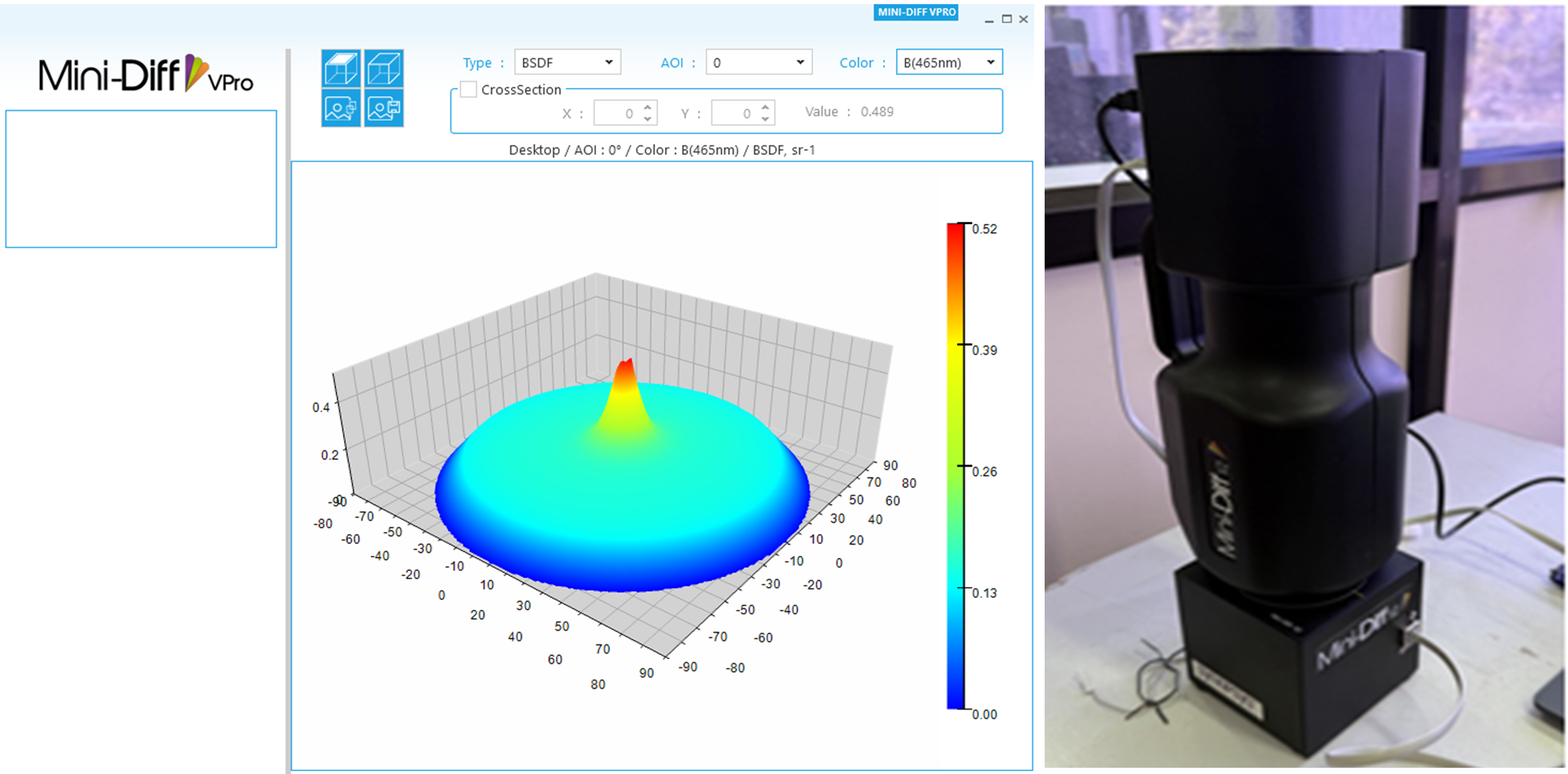
  • Mini Diff V2 – portable device that measures BRDF and BTDF with fixed AOI.
  • Mini Diff VPro – provides BRDF, BTDF and TIS Measurements with choice of AOI.
  • TIS Pro – features an integrated sphere and spectral detector to measure reflectance, transmittance and absorption.

Fig.5: Mini Diff V2 device for measuring the BRDF and BTDF or various surfaces based on AOI


Maximize your design potential and bring concepts to reality by leveraging Keysight’s end-to-end optical design and virtual prototyping suite. Model light propagation with precision ensuring your innovations are as accurate as they are dazzling.

Subscribe to our newsletter

Get all the latest information on Events, Sales and Offers.