From Prototypes to Production: How Additive Manufacturing is Shaping Atmanirbhar Bharat
- Jaspreet Sidhu
- July 24, 2026
The conversation around additive manufacturing (AM) in India has evolved considerably over the past decade. What was once viewed primarily as a prototyping technology is increasingly finding applications in aerospace, defence, healthcare, automotive, energy and heavy engineering. The ability to manufacture complex geometries, reduce material wastage, shorten product development cycles and produce parts on demand has made AM an important element of modern manufacturing strategies.
For India, the opportunity extends beyond technology adoption. As the country seeks to strengthen domestic manufacturing under the Make in India and Atmanirbhar Bharat initiatives, additive manufacturing offers the possibility of reducing import dependence while creating indigenous capabilities in materials, machines, software and advanced manufacturing processes.
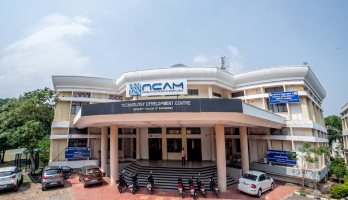
The National Centre for Additive Manufacturing (NCAM) has emerged as one of the institutions driving this transition. Rather than functioning as a conventional research laboratory, NCAM has positioned itself as a national platform that connects policy makers, industry, academia, startups and research organisations to accelerate the adoption of additive manufacturing across the country.
A National Strategy for an Emerging Technology
The growth of any advanced manufacturing technology requires more than technological capability. It needs policy direction, industry participation, skilled manpower and a supporting ecosystem.
Recognising this need, NCAM played a pivotal role in the implementation of the National Strategy on Additive Manufacturing (NSAM). As the national coordinating agency, NCAM has been responsible for translating the strategy into actionable programmes that encourage technology development, industrial adoption, research collaboration and entrepreneurship.
The strategy provides a roadmap for developing indigenous capabilities across the additive manufacturing value chain while creating an enabling environment for innovation. Since its introduction, NCAM has worked with government departments, academic institutions, industry bodies and manufacturing enterprises to convert policy objectives into practical initiatives that support long-term growth of the sector.
Creating the Infrastructure for Industrial Adoption
One of the barriers to wider adoption of additive manufacturing has been the high cost of advanced equipment and the limited availability of specialised facilities for process development and validation.
To address this challenge, NCAM has established advanced additive manufacturing infrastructure that enables industries, researchers and startups to access technologies that would otherwise require significant capital investment. The Centre’s facilities support product development, process optimisation, qualification studies and application validation across multiple industrial sectors.
Beyond infrastructure, NCAM works closely with companies to identify applications where additive manufacturing can deliver measurable advantages over conventional manufacturing. This includes component redesign, topology optimisation, lightweight structures, tooling, repair applications and production of complex engineering components.
Such collaborative projects are helping industries evaluate additive manufacturing not merely as a replacement for existing processes but as a manufacturing technology capable of creating entirely new design possibilities.
Supporting Indigenous Materials and Manufacturing
While machines often receive the greatest attention, the long-term success of additive manufacturing depends equally on the availability of high-quality materials.
Recognising this, NCAM has initiated programmes focused on the indigenisation of metal powders and specialised alloys required for industrial additive manufacturing. Working with material manufacturers and research institutions, the Centre is supporting the development of AM-grade titanium, aluminium and nickel-based alloys that are essential for high-performance applications.
Reducing dependence on imported feedstock remains an important objective, particularly for strategic sectors where uninterrupted access to critical materials is vital. These efforts also contribute to developing a domestic supply chain capable of supporting the growing adoption of additive manufacturing across Indian industry.
Qualification for Defence Applications
Among NCAM’s most notable achievements has been its work with the Indian Armed Forces in demonstrating the reliability of additive manufacturing for critical applications.
The successful demonstration and qualification of additive manufacturing technology with the Indian Armed Forces has led to the acceptance and adoption of the technology across various Core Zone Workshops. This represents an important milestone in the deployment of additive manufacturing within defence maintenance and production environments, where component reliability and process validation are of paramount importance.
Beyond the technical accomplishment, the initiative supports India’s broader localisation objectives. By enabling indigenous manufacture and repair of selected components, additive manufacturing can reduce dependence on imported spares, improve equipment availability and shorten procurement cycles for critical systems.
The success of these demonstrations also provides confidence to other strategic sectors considering the adoption of additive manufacturing for mission-critical applications.
Establishing Standards and Building Confidence
Industrial adoption depends not only on technology availability but also on confidence in quality, repeatability and certification.
NCAM has therefore worked closely with organisations including CDSCO, CEMILAC, ASM and ASTM to facilitate the development of guideline documents for additive manufacturing materials, processes and components. These initiatives aim to provide industry with clear pathways for qualification while aligning Indian manufacturing practices with internationally accepted standards.
The Centre also facilitates technical discussions, workshops and knowledge-sharing programmes that help manufacturers understand evolving standards and best practices in additive manufacturing.
Developing Skilled Human Resources
The expansion of additive manufacturing has created demand for engineers with expertise in design optimisation, process parameter development, material science and quality assurance.
NCAM addresses this requirement through specialised training programmes, certification courses and collaborative educational initiatives with academic institutions and industry partners. Programmes covering Design for Additive Manufacturing (DfAM), process optimisation, post-processing and inspection are helping develop the skilled workforce required for wider industrial deployment.
Equally important is NCAM’s effort to align academic curricula with industrial requirements, ensuring that graduates possess practical knowledge relevant to modern manufacturing environments.
Enabling Innovation Beyond Large Industries
While large manufacturing organisations have been early adopters of additive manufacturing, startups and MSMEs often face challenges arising from limited access to equipment, technical expertise and validation facilities.
NCAM provides these enterprises with access to infrastructure, mentoring and technical support that allows innovative ideas to progress from concept development to industrial implementation. By reducing entry barriers associated with expensive capital equipment, the Centre encourages wider participation in advanced manufacturing and supports the commercialisation of indigenous technologies.
This collaborative model has also created opportunities for researchers, entrepreneurs and established manufacturers to work together on application development and technology transfer.
Looking Ahead
India’s additive manufacturing ecosystem is still evolving, but the foundations required for sustained growth are steadily taking shape. Policy support, industrial investment, research capability and skilled manpower are gradually converging to create an environment where advanced manufacturing technologies can move beyond pilot projects into mainstream industrial production.
NCAM’s contribution to this journey has been distinctive because it extends across the entire ecosystem rather than focusing on a single aspect of technology development. From helping shape national policy and building advanced infrastructure to supporting defence qualification, indigenous material development, standards, skills and international collaboration, the Centre has created an enabling framework for the wider adoption of additive manufacturing in India.
As industries increasingly seek resilient supply chains, faster product development and greater manufacturing flexibility, additive manufacturing is expected to play an expanding role in India’s industrial future. Institutions such as NCAM will continue to be central to this transformation by ensuring that technological capability is matched by policy support, industrial readiness and a strong domestic ecosystem.

Recent Posts
-

Identify Stray Light in Imaging Systems with LightTools
Stray light is undesired light radiation that interacts with the components of a system and degrades its performance by generating noise, that significantly reduces image…
-
Redefining the Riding Experience with RAMSIS
In two‑wheeler design, comfort and safety start with the rider. RAMSIS (Realistic Anthropometric Mathematical System of Interior Comfort Simulation) is an ergonomic simulation platform that…
-

Enhancing Product Understanding through 3D Technical Illustrator
The 3D Technical Illustrator role within the 3DEXPERIENCE Platform enables organizations to transform complex engineering data into clear, interactive, and visually rich technical documentation. In…
-

Transforming Physical Parts into Digital Models with CATIA 3DEXPERIENCE Reverse Engineer role
Reverse engineering has become a critical capability in modern product development, especially when working with legacy components, competitor benchmarking, or physical prototypes that lack digital…
-
Fixing Search Service Down Issue in 3DEXPERIENCE Platform
Search is one of the most critical features in the 3DEXPERIENCE platform. If the search service goes down, users cannot find objects, documents, or data—impacting…
-
Common Installation Errors and How to Fix Them in 3DEXPERIENCE
The 3DEXPERIENCE Platform is a powerful solution used by industries worldwide for product lifecycle management (PLM), simulation, and collaboration. However, installing 3DEXPERIENCE—especially on-premise—can be complex…
-
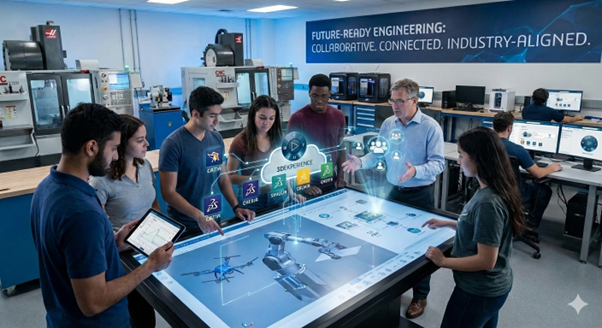
From Classroom to Industry: Empowering Future Engineers with the 3DEXPERIENCE Platform
In today’s fast-evolving engineering and design landscape, educational institutions must go beyond conventional CAD teaching methods. While standalone tools like CATIA V5, SOLIDWORKS, or traditional…
-
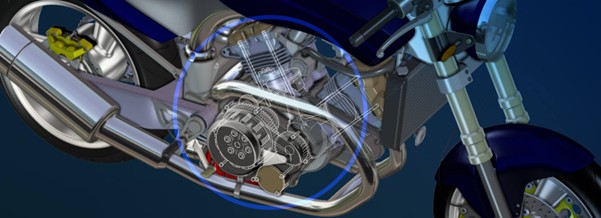
CATIA Composer – Transforming Engineering Data into Interactive Technical Documentation
CATIA Composer is a powerful desktop application from Dassault Systemes designed to transform engineering 3D CAD data into highly intuitive and interactive technical documentation. In…
- Jaspreet Sidhu
- July 24, 2026
From Prototypes to Production: How Additive Manufacturing is Shaping Atmanirbhar Bharat
The conversation around additive manufacturing (AM) in India has evolved considerably over the past decade. What was once viewed primarily as a prototyping technology is increasingly finding applications in aerospace, defence, healthcare, automotive, energy and heavy engineering. The ability to manufacture complex geometries, reduce material wastage, shorten product development cycles and produce parts on demand has made AM an important element of modern manufacturing strategies.
For India, the opportunity extends beyond technology adoption. As the country seeks to strengthen domestic manufacturing under the Make in India and Atmanirbhar Bharat initiatives, additive manufacturing offers the possibility of reducing import dependence while creating indigenous capabilities in materials, machines, software and advanced manufacturing processes.
The National Centre for Additive Manufacturing (NCAM) has emerged as one of the institutions driving this transition. Rather than functioning as a conventional research laboratory, NCAM has positioned itself as a national platform that connects policy makers, industry, academia, startups and research organisations to accelerate the adoption of additive manufacturing across the country.
A National Strategy for an Emerging Technology
The growth of any advanced manufacturing technology requires more than technological capability. It needs policy direction, industry participation, skilled manpower and a supporting ecosystem.
Recognising this need, NCAM played a pivotal role in the implementation of the National Strategy on Additive Manufacturing (NSAM). As the national coordinating agency, NCAM has been responsible for translating the strategy into actionable programmes that encourage technology development, industrial adoption, research collaboration and entrepreneurship.
The strategy provides a roadmap for developing indigenous capabilities across the additive manufacturing value chain while creating an enabling environment for innovation. Since its introduction, NCAM has worked with government departments, academic institutions, industry bodies and manufacturing enterprises to convert policy objectives into practical initiatives that support long-term growth of the sector.
Creating the Infrastructure for Industrial Adoption
One of the barriers to wider adoption of additive manufacturing has been the high cost of advanced equipment and the limited availability of specialised facilities for process development and validation.
To address this challenge, NCAM has established advanced additive manufacturing infrastructure that enables industries, researchers and startups to access technologies that would otherwise require significant capital investment. The Centre’s facilities support product development, process optimisation, qualification studies and application validation across multiple industrial sectors.
Beyond infrastructure, NCAM works closely with companies to identify applications where additive manufacturing can deliver measurable advantages over conventional manufacturing. This includes component redesign, topology optimisation, lightweight structures, tooling, repair applications and production of complex engineering components.
Such collaborative projects are helping industries evaluate additive manufacturing not merely as a replacement for existing processes but as a manufacturing technology capable of creating entirely new design possibilities.
Supporting Indigenous Materials and Manufacturing
While machines often receive the greatest attention, the long-term success of additive manufacturing depends equally on the availability of high-quality materials.
Recognising this, NCAM has initiated programmes focused on the indigenisation of metal powders and specialised alloys required for industrial additive manufacturing. Working with material manufacturers and research institutions, the Centre is supporting the development of AM-grade titanium, aluminium and nickel-based alloys that are essential for high-performance applications.
Reducing dependence on imported feedstock remains an important objective, particularly for strategic sectors where uninterrupted access to critical materials is vital. These efforts also contribute to developing a domestic supply chain capable of supporting the growing adoption of additive manufacturing across Indian industry.
Qualification for Defence Applications
Among NCAM’s most notable achievements has been its work with the Indian Armed Forces in demonstrating the reliability of additive manufacturing for critical applications.
The successful demonstration and qualification of additive manufacturing technology with the Indian Armed Forces has led to the acceptance and adoption of the technology across various Core Zone Workshops. This represents an important milestone in the deployment of additive manufacturing within defence maintenance and production environments, where component reliability and process validation are of paramount importance.
Beyond the technical accomplishment, the initiative supports India’s broader localisation objectives. By enabling indigenous manufacture and repair of selected components, additive manufacturing can reduce dependence on imported spares, improve equipment availability and shorten procurement cycles for critical systems.
The success of these demonstrations also provides confidence to other strategic sectors considering the adoption of additive manufacturing for mission-critical applications.
Establishing Standards and Building Confidence
Industrial adoption depends not only on technology availability but also on confidence in quality, repeatability and certification.
NCAM has therefore worked closely with organisations including CDSCO, CEMILAC, ASM and ASTM to facilitate the development of guideline documents for additive manufacturing materials, processes and components. These initiatives aim to provide industry with clear pathways for qualification while aligning Indian manufacturing practices with internationally accepted standards.
The Centre also facilitates technical discussions, workshops and knowledge-sharing programmes that help manufacturers understand evolving standards and best practices in additive manufacturing.
Developing Skilled Human Resources
The expansion of additive manufacturing has created demand for engineers with expertise in design optimisation, process parameter development, material science and quality assurance.
NCAM addresses this requirement through specialised training programmes, certification courses and collaborative educational initiatives with academic institutions and industry partners. Programmes covering Design for Additive Manufacturing (DfAM), process optimisation, post-processing and inspection are helping develop the skilled workforce required for wider industrial deployment.
Equally important is NCAM’s effort to align academic curricula with industrial requirements, ensuring that graduates possess practical knowledge relevant to modern manufacturing environments.
Enabling Innovation Beyond Large Industries
While large manufacturing organisations have been early adopters of additive manufacturing, startups and MSMEs often face challenges arising from limited access to equipment, technical expertise and validation facilities.
NCAM provides these enterprises with access to infrastructure, mentoring and technical support that allows innovative ideas to progress from concept development to industrial implementation. By reducing entry barriers associated with expensive capital equipment, the Centre encourages wider participation in advanced manufacturing and supports the commercialisation of indigenous technologies.
This collaborative model has also created opportunities for researchers, entrepreneurs and established manufacturers to work together on application development and technology transfer.
Looking Ahead
India’s additive manufacturing ecosystem is still evolving, but the foundations required for sustained growth are steadily taking shape. Policy support, industrial investment, research capability and skilled manpower are gradually converging to create an environment where advanced manufacturing technologies can move beyond pilot projects into mainstream industrial production.
NCAM’s contribution to this journey has been distinctive because it extends across the entire ecosystem rather than focusing on a single aspect of technology development. From helping shape national policy and building advanced infrastructure to supporting defence qualification, indigenous material development, standards, skills and international collaboration, the Centre has created an enabling framework for the wider adoption of additive manufacturing in India.
As industries increasingly seek resilient supply chains, faster product development and greater manufacturing flexibility, additive manufacturing is expected to play an expanding role in India’s industrial future. Institutions such as NCAM will continue to be central to this transformation by ensuring that technological capability is matched by policy support, industrial readiness and a strong domestic ecosystem.