From Engineering to Service: Unified BOM is the Future of Product Lifecycle
- Surendiran R
- July 23, 2025
In the era of digital transformation, managing a product’s lifecycle efficiently is critical. As product complexity increases and global collaboration becomes the norm, traditional siloed BOM approaches where Engineering BOM (E-BOM), Manufacturing BOM (M-BOM), and Service BOM (S-BOM) are maintained separately, lead to major challenges such as:
- Data Inconsistencies: Different departments often work on different versions of the product structure, leading to misalignment between design, manufacturing, and service functions
- Manual Data Duplication: Maintaining BOMs in separate systems leads to duplicate data entry and higher risk of errors
- Inadequate Change Tracking: When E-BOM, M-BOM, and S-BOM are not synchronized, tracking and implementing changes across the product lifecycle becomes difficult, delaying product releases and increasing costs
- Lack of Collaboration: Isolated BOM’s hinder team collaboration, leading to designs that are hard to manufacture or service due to lack of early input from downstream teams
- Delayed Time-to-Market: Disconnected processes slow down development cycles, with BOM mismatches causing delays in manufacturing and service readiness
- Increased Cost and Rework: Without a unified BOM, errors propagate downstream, leading to rework, scrap, warranty claims, and higher support costs.
Challenges of Siloed BOM’s
Maintaining separate BOM’s causes several operational bottlenecks like:
- Manual Data Entry
- Poor Change Traceability
- Design-to-Manufacture Gaps
- Limited Reuse
- Data Duplication
What is Unified BOM Management?
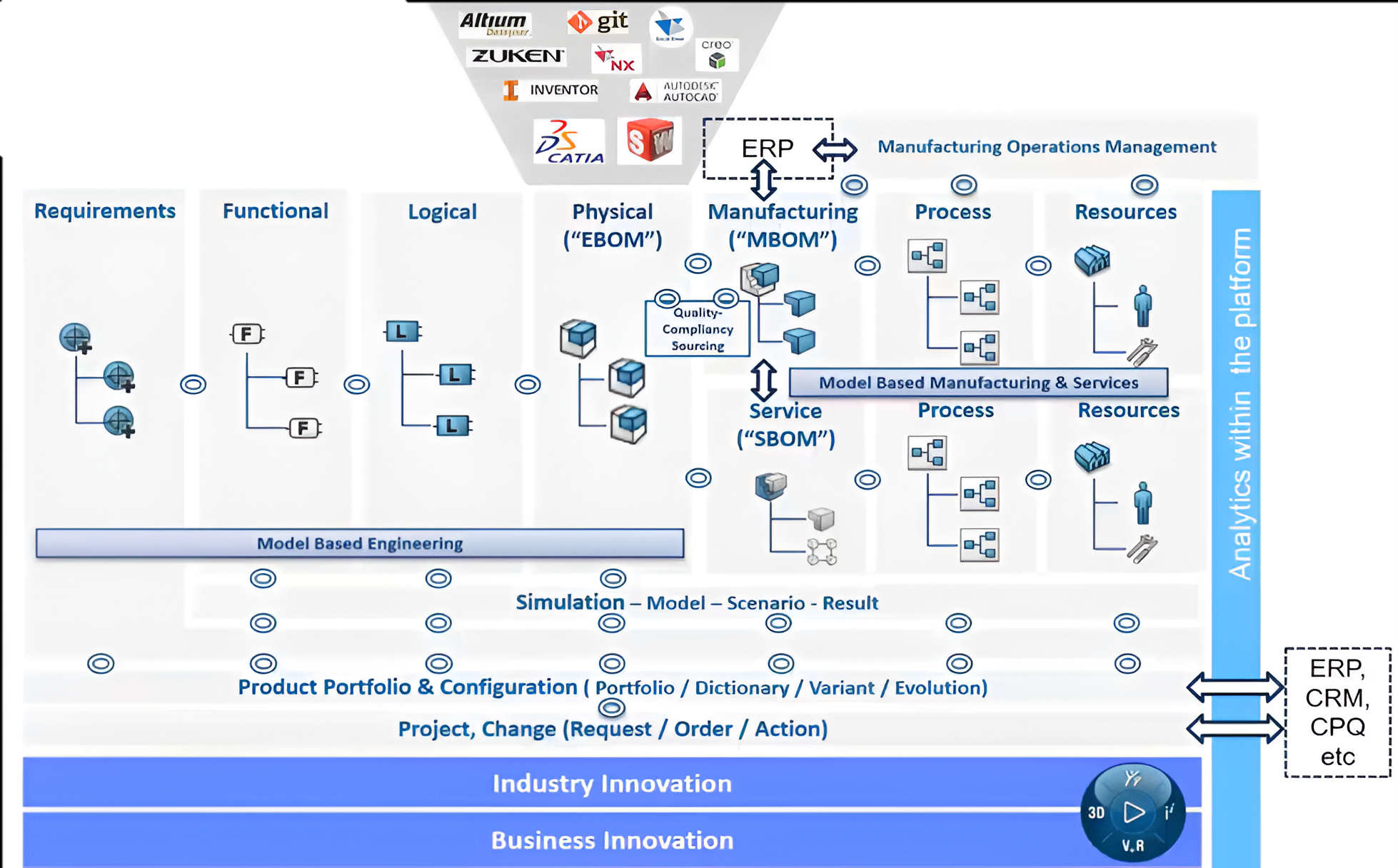
Unified BOM Management refers to maintaining a single, consistent product structure that can be extended and tailored across multiple departments – Engineering, Manufacturing, and Service. Instead of working in silos, teams can collaborate using a common data model.
Model-based Engineering is the backbone that supports real-time collaboration, traceability, and change propagation across departments.
Unified BOM Is Not Just a Trend – It’s a Necessity
To stay competitive in today’s connected, product-as-a-service world, businesses must adopt a Unified BOM strategy. It enables seamless collaboration, faster product development, and more efficient service delivery.
Organizations should think about unifying engineering, manufacturing, and service data into a cohesive digital model, ensuring end-to-end visibility and agility.
How 3DEXPERIENCE Platform fosters Unified BOM Management
The 3DEXPERIENCE Platform fosters a Unified Bill of Materials (BOM) Management by providing a centralized and collaborative environment that integrates people, processes, and data across the entire product lifecycle. It enables unified BOM management through the following key capabilities:
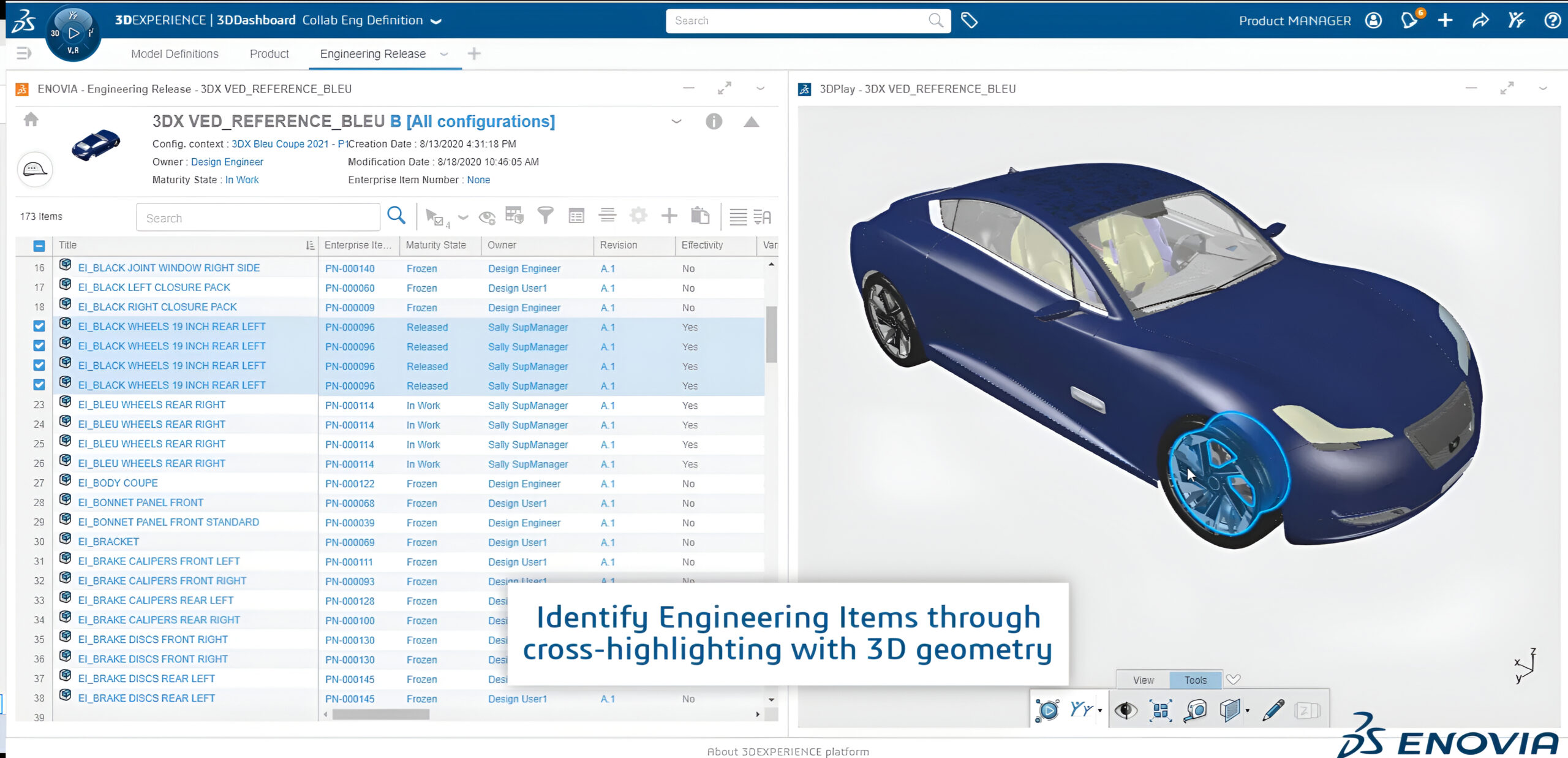
- Collaborative Engineering Definition: Enables cross-functional teams to define and manage the engineering BOM in a shared digital environment.
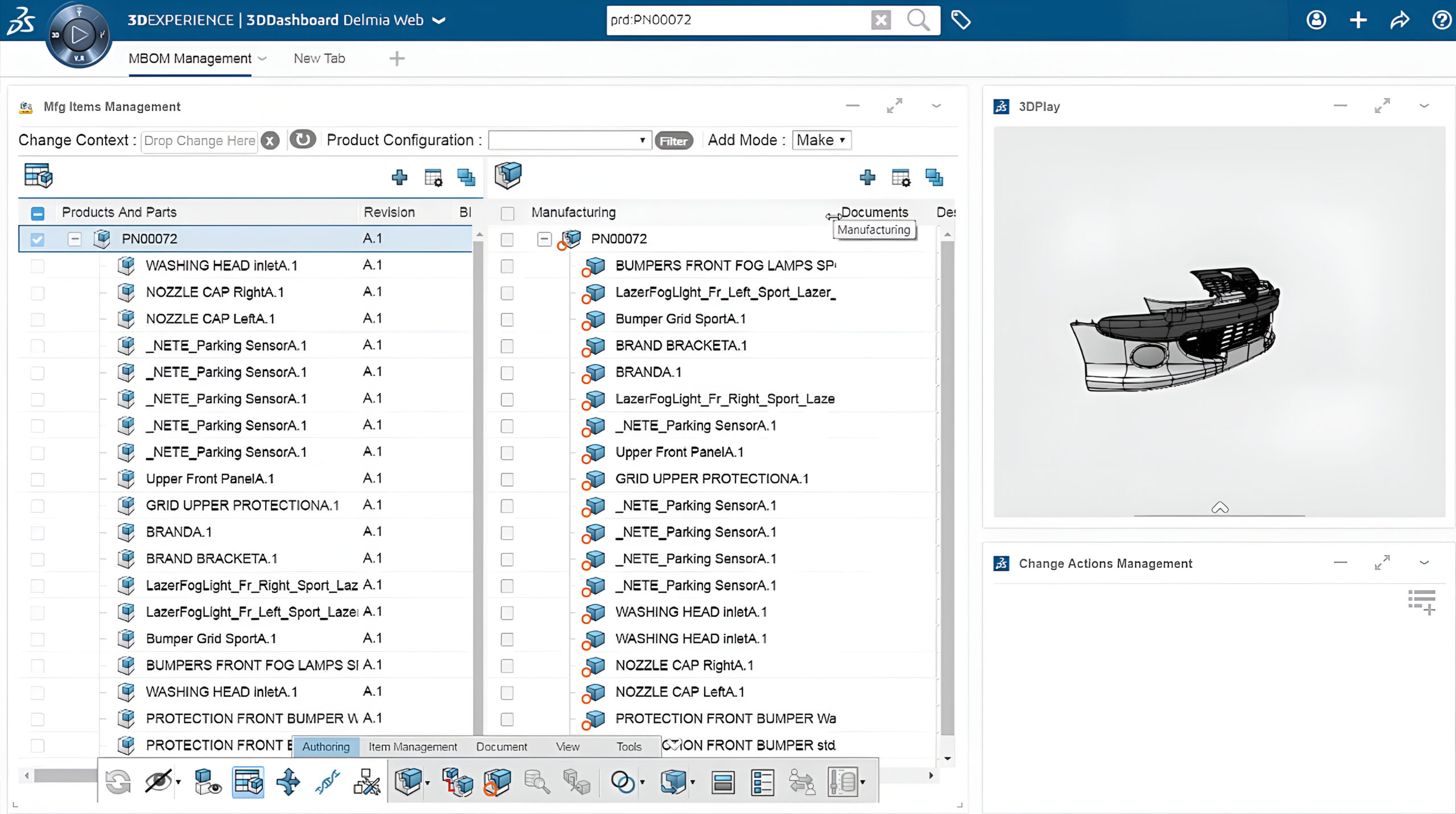
- Collaborative Engineering to Manufacturing: Ensures seamless transformation of the engineering BOM into a manufacturing BOM, supporting alignment between design and production
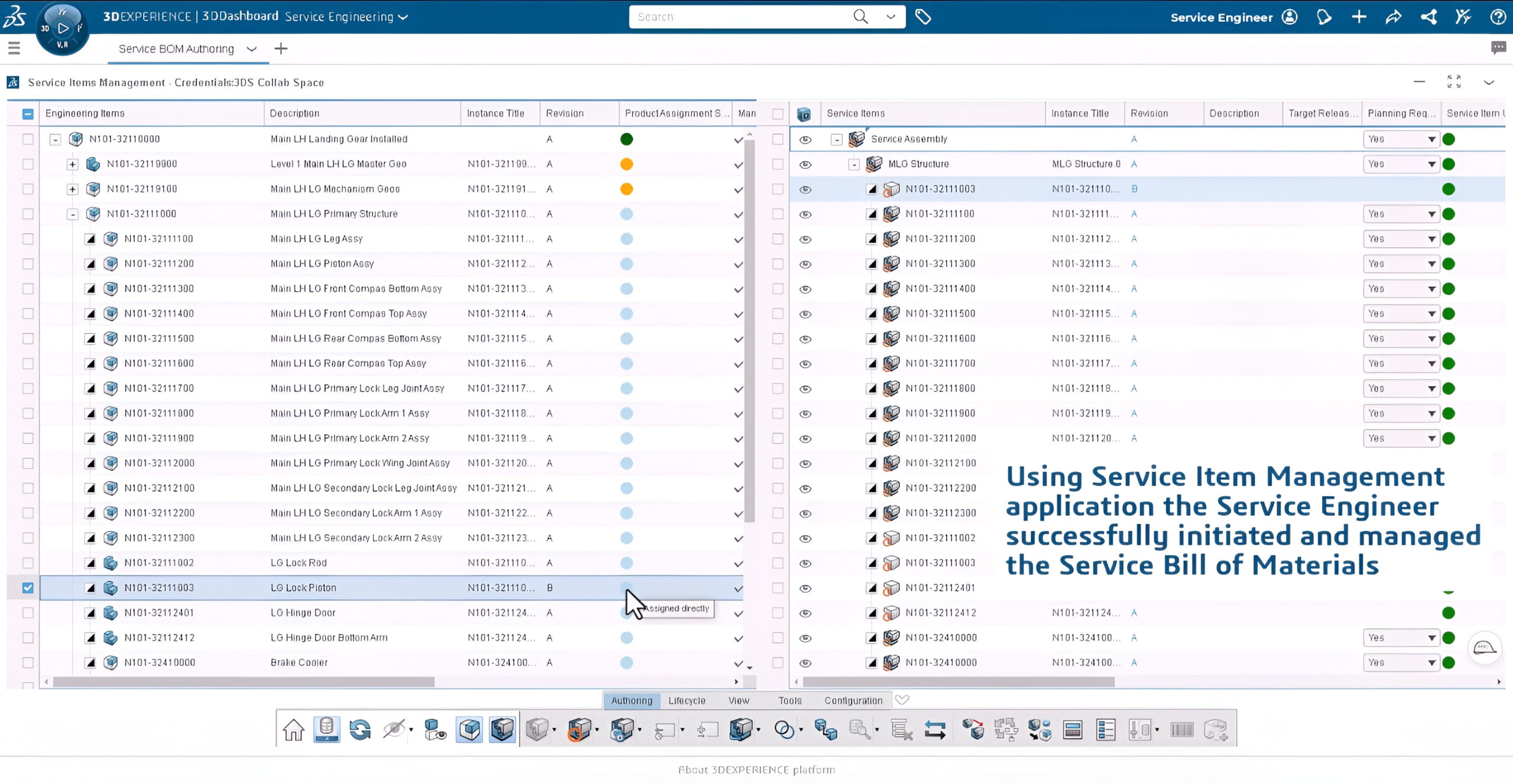
- Service Process Engineering: Extends BOM usability into service planning by incorporating service requirements and creating service BOM’s linked to the product definition
To get more information & insights on how the 3DEXPERIENCE Platform drives Unified BOM Management, please reach out to us at marketing@edstechnologies.com

Recent Posts
-
From Prototypes to Production: How Additive Manufacturing is Shaping Atmanirbhar Bharat
The conversation around additive manufacturing (AM) in India has evolved considerably over the past decade. What was once viewed primarily as a prototyping technology is…
-
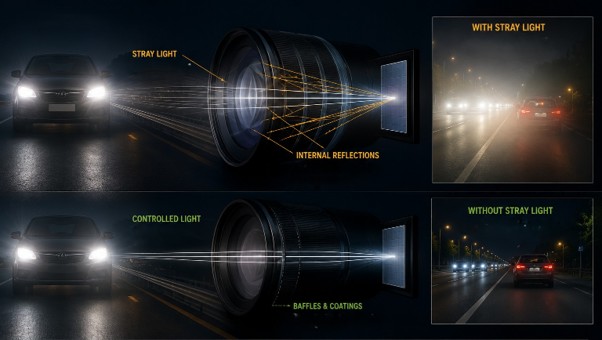
Identify Stray Light in Imaging Systems with LightTools
Stray light is undesired light radiation that interacts with the components of a system and degrades its performance by generating noise, that significantly reduces image…
-
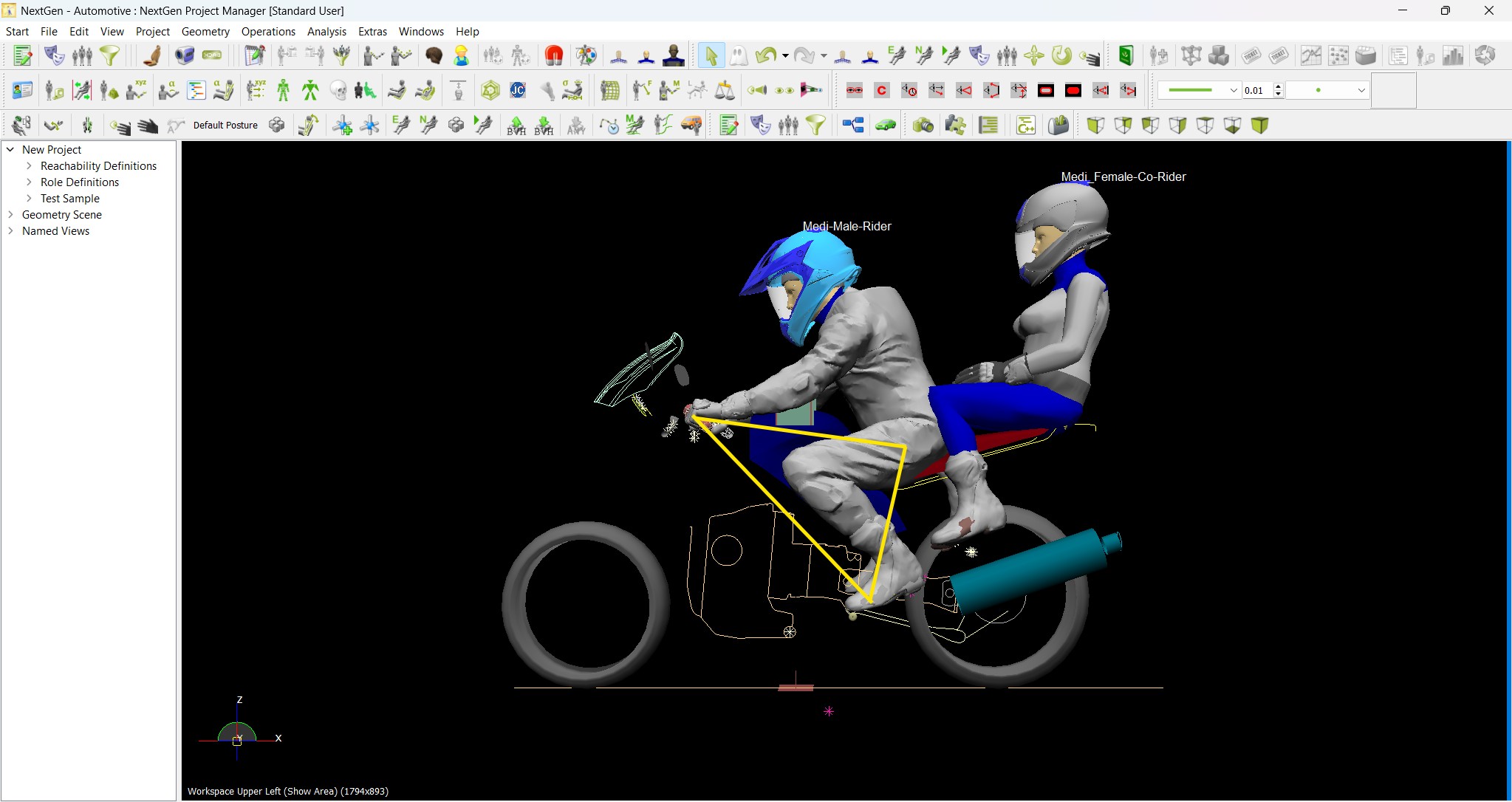
Redefining the Riding Experience with RAMSIS
In two‑wheeler design, comfort and safety start with the rider. RAMSIS (Realistic Anthropometric Mathematical System of Interior Comfort Simulation) is an ergonomic simulation platform that…
-
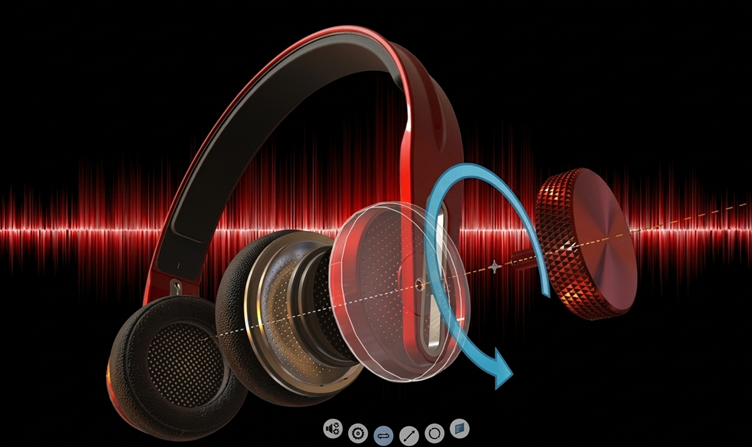
Enhancing Product Understanding through 3D Technical Illustrator
The 3D Technical Illustrator role within the 3DEXPERIENCE Platform enables organizations to transform complex engineering data into clear, interactive, and visually rich technical documentation. In…
-

Transforming Physical Parts into Digital Models with CATIA 3DEXPERIENCE Reverse Engineer role
Reverse engineering has become a critical capability in modern product development, especially when working with legacy components, competitor benchmarking, or physical prototypes that lack digital…
-
Fixing Search Service Down Issue in 3DEXPERIENCE Platform
Search is one of the most critical features in the 3DEXPERIENCE platform. If the search service goes down, users cannot find objects, documents, or data—impacting…
-
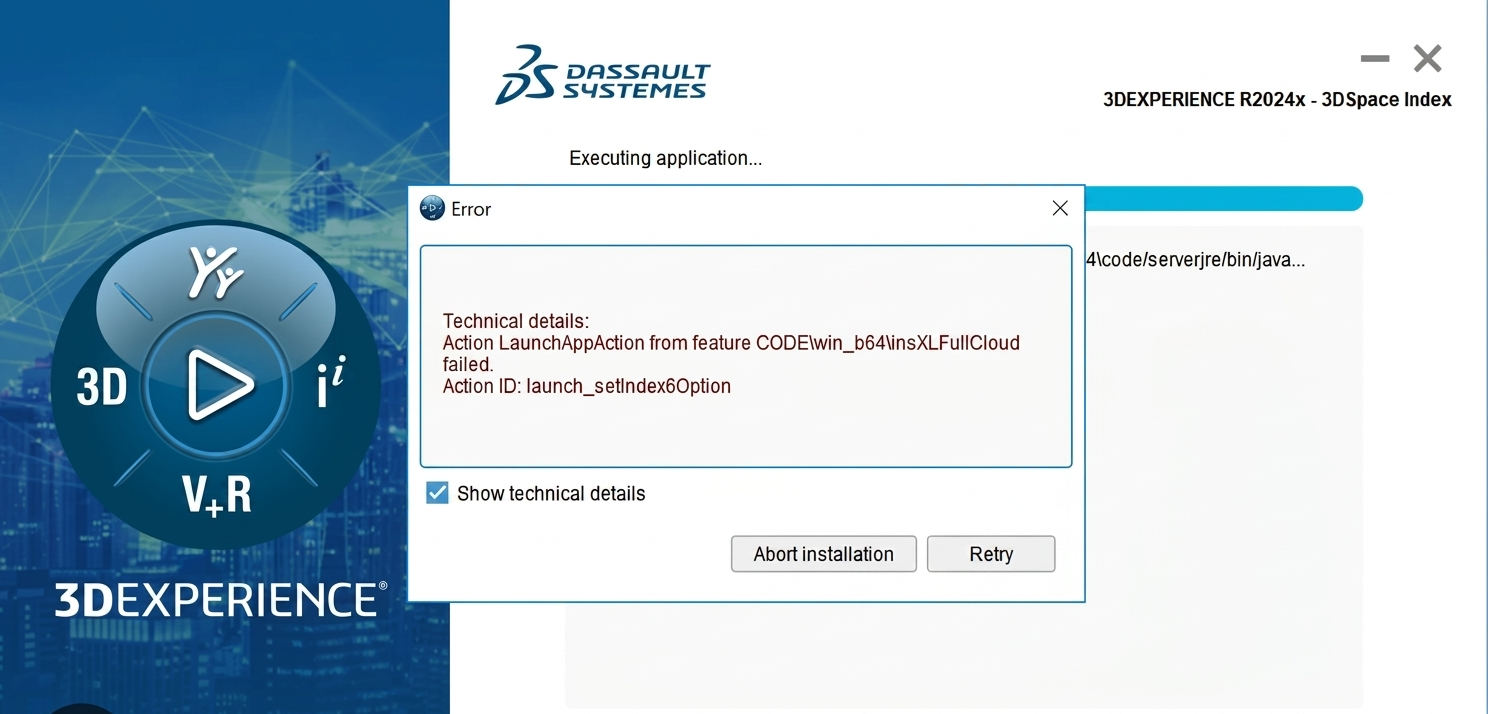
Common Installation Errors and How to Fix Them in 3DEXPERIENCE
The 3DEXPERIENCE Platform is a powerful solution used by industries worldwide for product lifecycle management (PLM), simulation, and collaboration. However, installing 3DEXPERIENCE—especially on-premise—can be complex…
-
From Classroom to Industry: Empowering Future Engineers with the 3DEXPERIENCE Platform
In today’s fast-evolving engineering and design landscape, educational institutions must go beyond conventional CAD teaching methods. While standalone tools like CATIA V5, SOLIDWORKS, or traditional…
- Surendiran R
- July 23, 2025
From Engineering to Service: Unified BOM is the Future of Product Lifecycle
In the era of digital transformation, managing a product’s lifecycle efficiently is critical. As product complexity increases and global collaboration becomes the norm, traditional siloed BOM approaches where Engineering BOM (E-BOM), Manufacturing BOM (M-BOM), and Service BOM (S-BOM) are maintained separately, lead to major challenges such as:
- Data Inconsistencies: Different departments often work on different versions of the product structure, leading to misalignment between design, manufacturing, and service functions
- Manual Data Duplication: Maintaining BOMs in separate systems leads to duplicate data entry and higher risk of errors
- Inadequate Change Tracking: When E-BOM, M-BOM, and S-BOM are not synchronized, tracking and implementing changes across the product lifecycle becomes difficult, delaying product releases and increasing costs
- Lack of Collaboration: Isolated BOM’s hinder team collaboration, leading to designs that are hard to manufacture or service due to lack of early input from downstream teams
- Delayed Time-to-Market: Disconnected processes slow down development cycles, with BOM mismatches causing delays in manufacturing and service readiness
- Increased Cost and Rework: Without a unified BOM, errors propagate downstream, leading to rework, scrap, warranty claims, and higher support costs.
Challenges of Siloed BOM’s
Maintaining separate BOM’s causes several operational bottlenecks like:
- Manual Data Entry
- Poor Change Traceability
- Design-to-Manufacture Gaps
- Limited Reuse
- Data Duplication
What is Unified BOM Management?
Unified BOM Management refers to maintaining a single, consistent product structure that can be extended and tailored across multiple departments – Engineering, Manufacturing, and Service. Instead of working in silos, teams can collaborate using a common data model.
Model-based Engineering is the backbone that supports real-time collaboration, traceability, and change propagation across departments.
Unified BOM Is Not Just a Trend – It’s a Necessity
To stay competitive in today’s connected, product-as-a-service world, businesses must adopt a Unified BOM strategy. It enables seamless collaboration, faster product development, and more efficient service delivery.
Organizations should think about unifying engineering, manufacturing, and service data into a cohesive digital model, ensuring end-to-end visibility and agility.
How 3DEXPERIENCE Platform fosters Unified BOM Management
The 3DEXPERIENCE Platform fosters a Unified Bill of Materials (BOM) Management by providing a centralized and collaborative environment that integrates people, processes, and data across the entire product lifecycle. It enables unified BOM management through the following key capabilities:
- Collaborative Engineering Definition: Enables cross-functional teams to define and manage the engineering BOM in a shared digital environment.
- Collaborative Engineering to Manufacturing: Ensures seamless transformation of the engineering BOM into a manufacturing BOM, supporting alignment between design and production
- Service Process Engineering: Extends BOM usability into service planning by incorporating service requirements and creating service BOM’s linked to the product definition
To get more information & insights on how the 3DEXPERIENCE Platform drives Unified BOM Management, please reach out to us at marketing@edstechnologies.com