Transforming Business Operations with Mining Intelligence

Data is the backbone of the mining industry. Every mine must have reliable, up-to-date information to make the best possible decisions, from first dig to end of life. 

Historically, mining data has been confined to departmental silos, limiting its utility for mining organizations at large. Mining data helps gain an understanding of the “what” in data. Mining Intelligence answers the “how” and “why” to provide a comprehensive view of data. Together they enable mining companies to perform, test, and interpret sophisticated analyses quickly. 

Miners can at once respond to worldwide and mine-specific challenges with evidence-based decisions, cutting through silos and interlinking various departments. This enables enhanced collaboration and knowledge sharing, while ensuring knowledge is retained across the organization even during multiple staff changes. 

In the current scenario, more and more technological advancements are made in data collection. It is easy to become overwhelmed by the sheer volume of new, incredibly detailed information arriving every day. And to be confused about exactly how you are going to collect, store, and analyze it all. The reality is that not every mine has the expertise and experience it needs to complete a complex data analytics project. Yet in the current mining environment, it is becoming increasingly vital that mines use all the data at their disposal in order not just to maintain the status quo, but to get ahead in a competitive industry. 


Need for Data Intelligence in Mining Industry 

Data intelligence plays a crucial role in the mining industry for enhanced decision-making, optimizing operations, and improving safety and sustainability. Data converted into valuable information is particularly useful in key areas such as predictive maintenance, resource estimation & optimization, risk assessment, incident analysis, waste management, environmental impact monitoring, inventory management, logistics & transportation, exploration, transparency & reporting.  

Embracing data intelligence in the mining industry not only drives efficiency and profitability but also fosters a safer and more sustainable approach to resource extraction. As technology continues to evolve, the potential for leveraging right data and information will only increase. 


Big Data – A Fact of Life for Mining Companies 

Mines must gather a vast amount of information and verify it against economic calculations and regulatory compliance. During mine design and planning, engineers must add information about how the site will be rehabilitated and relinquished. Later, once the mine is in operation, mine-to-mill optimisation demands up-to-date data from every stage of the process – such as data on the effectiveness of blast design, or on recovery rate, co-product valorisation, water recirculation, waste dewatering, etc. at the processing plant to make each stage more productive and therefore more profitable. At the same time other data such as data related to the effect of fleet powering choices (fossil fuel, natural gas or electricity) on the mine’s carbon footprint, is required to ensure sustainability.  

A lot of mining data today is what is known as “big data.” Potentially many terabytes in size, most big data is “soft”, or unstructured (qualitative) data as opposed to “hard” or structured (quantitative) data. 

Hard data is directly observed and measured and easily put into searchable rows and columns. Soft data includes text, video, photographs, scans, etc., as well as metadata – in other words, data without structure that cannot be put into rows and columns. To understand and take advantage of all your data, your soft data must be able to work with and be stored, viewed, and analysed alongside – your traditional hard data, such as the lithologies, assays, and other physical drilling information used in resource estimations.  


Why Virtual Twin Experiences are Key to Mining Intelligence 

Modern mining operations are intricate systems of systems, surpassing the capabilities of industry solutions to analyze them. To fully harness the potential of big data, it’s important to identify the different systems generating it, understand their functions, and delineate their boundaries and interconnections. This enables effective management of data flow between these systems. 

This level of interconnected data management is achievable through virtual twin experiences. Unlike standard digital twins, virtual twin experiences offer a dynamic, live virtual representation of the real world. 

The applications linked to this system of systems incorporate smart algorithms that empower AI techniques to suggest decision options based on past data, current behaviour, and possible simulated outcomes based on those decision options. 

Having a digital continuity between financial assumptions based on commodity prices, energy cost and so on as well as geology, terrain, and in-field operational information enables mining companies to achieve consistency in planning from short-term to long-term and vice-versa. This also helps avoid having contradicting decisions implemented at the same time in different parts of the mine, which can hurt Net Present Value. 

The virtual twin enables three levels of data analytics:  

  • Descriptive:   Examining what happened
  • Predictive: Examining possible outcomes based on what happened 
  • Prescriptive: Prescribing roadmaps based on possible decision options to adjust to various evolving factors on the go, thereby permanently pursuing value in all operations 

This approach minimizes waste and risk and maximizes productivity by reducing unnecessary material re-handling. 


How can Mining Industries turn Data into Valuable Business Insights 

Turning data into valuable business insights through data analytics involves several key steps. Here’s a structured approach that is required for business transformation:  

  • Identify your issues 
  • Collect, store, and integrate your data 
  • Analyze your data/define your dashboards 
  • Publish your data 
  • Share your data 


Once all the data is in a single repository, it can be well organized and integrated using the most appropriate GEOVIA Mining Intelligence applications on the 3DEXPERIENCE platform as detailed below: 


Exploration Intelligence  
  • Index all geological data, both structured and unstructured, from various source systems  
  • Create a visual overview of all exploration data  
  • Measure, analyze, display, and share data, and  
  • Develop detailed, drilldown views of specific exploration activities, such as drilling sampling results sorted by their campaign code, status and period 


Geology Intelligence  
  • Index, analyze and report tonnages, grade, volume, material type and other metrics  
  • Compare multiple versions of the block model  
  • Share results internally with other teams or stakeholders across the mine 
  • Display and share specific analytics, such as an analysis of the estimated weight of ore, waste and average grade for various cut-off grades, or a comparison of the mathematical (spherical) model and variogram curve from the drill hole


Production Intelligence  

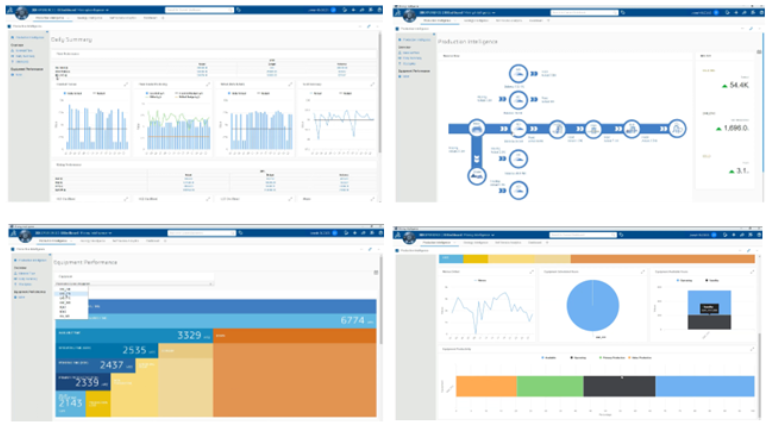
Index production data at source, analyze it and visualize the results using a range of standard dashboards, including dashboards that 

  • Monitor production actuals against targets, ore processing metrics and equipment performance  
  • Review stockpile balances and equipment fuel consumption 
  • Reveal material flow and key performance indicators 


Traditionally, mining processes were manual, with strategic planning conducted by engineers across various disciplines using Excel while managing data in silos. The Dassault Systèmes’ 3DEXPERIENCE platform leverages the existing mining engine to introduce a cloud-based data analytics layer on top of it to democratize data. 

The platform integrates and automates mining processes, dismantles silos and enables executives to focus on higher-value areas and optimized geotechnical, economic, productivity and ESG parameters. The optimization ensures positive cash flow or net present value (NPV) while adhering to sustainability and compliance goals. 

Overall, GEOVIA Mining Intelligence on the 3DEXPERIENCE platform represents a leap forward in the quest to gain a competitive edge. 

Its four powerful applications provide efficient and effective methods for: 

  • Gathering all your big data into one place 
  • Indexing it so it is immediately ready to retrieve and analyze as required, and 
  • Understanding it more deeply than you ever thought possible through multiple visualizations, leading to Better-informed decisions and greater productivity.  

To get more information & insights on how the 3DEXPERIENCE Platform drives business transformation in the mining industry, please reach out to us at marketing@edstechnologies.com   

Innovating with Light: Advanced Optical Solutions for Automotive, Medical, and Photonic Systems

The rapidly evolving optical industry demands cutting-edge systems with exceptional precision and accuracy. As the market for these advanced solutions grows, engineers and manufacturers must swiftly introduce unique and affordable lighting technologies. With the rise of virtual prototyping and digital twins, the capability to meticulously design, simulate, analyze and optimize light behaviour is paramount. Combining Synopsys’ optical software suite of LightTools, CODE V, LucidShape, and RSoft makes it possible to create a diverse range of optical systems for industries like automotive, aerospace, telecommunications, and healthcare. These powerful tools streamline the development process, reducing reliance on expensive physical prototypes and minimizing risks.   


Automotive Optical Solutions

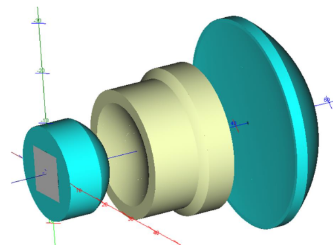
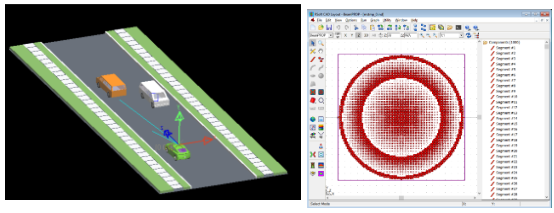
Autonomous driving technology (ADS) and advanced driver assistance systems (ADAS) are revolutionizing the automotive industry. These systems require sophisticated lighting solutions, including pixel headlights, high and low beam lamps, tail lights, indicators, and head-up displays, to enhance safety and reduce driver distractions. 

Beyond these external components, dashboard illumination, light guides, and interior lighting are crucial elements of a modern vehicle. To ensure optimal performance, it’s essential not only to design the system and analyze light distribution but also to visualize the system under various lighting conditions and conduct on-road simulations to evaluate its real-world behavior. 


Imaging Lenses Design

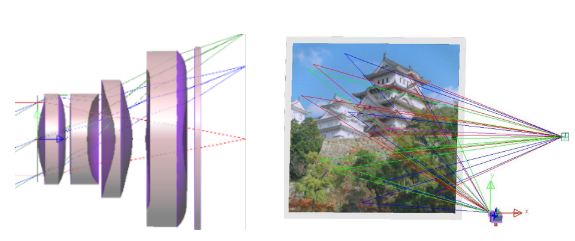
The lens design is the foundation of numerous optical systems, including cameras, projection displays, medical instrumentation, space and defence technologies, and microlithographic lenses for imaging intricate patterns on computer chips. Optimizing key features like wavefront variance, modulation transfer function (MTF), and coupling efficiency is preeminent in creating high-performance imaging systems.  


Analyzing stray light and simulating ghost images arising from total internal reflections is crucial for understanding potential image degradation. Additionally, factors like lens element weight, cost analysis, system alignment, and interactive tolerancing help assess the impact of manufacturing variations on system performance, ensuring the delivery of an optimal as-built optical system. 


Medical Instrumentation

By mastering the fabrication of optical and photonic devices, we can pave the way for innovative medical solutions that revolutionize healthcare. Biological sensors are designed to analyze the optical characteristics of biological samples, determine their molecular composition, aid in disease diagnosis, and track drug delivery.  

Metal lens used in endoscopes and optical coherence tomography (OCT) offer advantages such as miniaturization and improved imaging capabilities. Additionally, reflector cups for surgical lights must adhere to stringent illuminance distribution regulations to ensure optimal illumination and patient safety. 


Silicon Photonic Systems

Semiconductor lasers are fundamental for modern optical communication systems, enabling high-speed data transmission over long distances. Efficient fiber coupling, achieved through carefully designing fibers, couplers, and coupling lenses, is critical for minimizing optical losses. Modulators, including electro-optic, thermo-optic, and carrier modulators, enable the control and manipulation of light signals. 

LiDAR systems, which utilize laser technology for ranging and detection, are gaining prominence in applications like autonomous vehicles and robotics. On-chip LiDAR systems, incorporating components like transmitters, phased arrays, and multi-physics utilities, offer advantages in size and integration. 

Synopsys’ comprehensive suite of optical solutions provides unparalleled capabilities for design, visualization, and simulation. As the demand for advanced optical technologies continues to grow, Synopsys’ solutions are poised to play a vital role in driving future innovations. 

Synopsys’ comprehensive optical solutions suite provides unparalleled design, visualization, and simulation capabilities. As the demand for advanced optical technologies continues to grow, Synopsys’ solutions are poised to play a vital role in driving future innovations. 

A Deep Dive into the Future of Additive Manufacturing

Additive Manufacturing (AM)

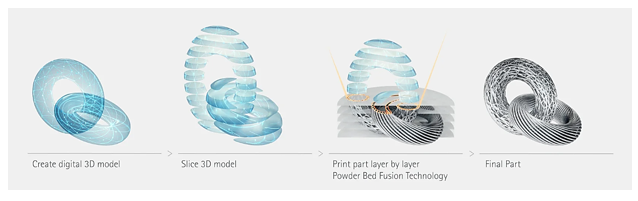
Additive Manufacturing (AM), commonly referred to as 3D printing is a manufacturing process to form 3D physical parts from CAD DATA. In AM process, hundreds or thousands of layers come together to form the physical 3-dimensional part by means of either binders or direct energy deposited on the material.

Fig 1: 3D Printing process at a glance; Courtesy – EOS GmbH

Due to very short lead time involved in the development of parts, the AM process used for manufacturing the prototypes rapidly is referred to as Rapid Prototyping. AM has gradually attained its importance in many industries like Aerospace, Healthcare etc. where use cases are proven for series or batch production also. This is only possible through high throughput and productivity of the latest systems that companies like EOS GmBH are manufacturing to yield the best of its productivity and optimized outcome. This brings down the ultimate cost of the parts produced through AM process.


Benefits of Industrial AM Process
  • Tool free technology to develop parts through only Digital Data.
  • Short lead time to market.
  • High performance materials engineered for different applications.
  • High accuracy in first outcome.
  • Design Flexibility at any time.
  • High Repeatability with systems like EOS.
  • Sustainability due to less environmental impact and sustainable material supply chain.
  • Material reusability of highly efficient AM processes like SLS and DMLS.
  • High strength of the printed materials in AM processes like SLS and DMLS.
  • Reduced Physical inventory and practical possibility for JIT in supply chain.

Workflow of Industrial AM Process

The Industrial AM process typically involves three stages –

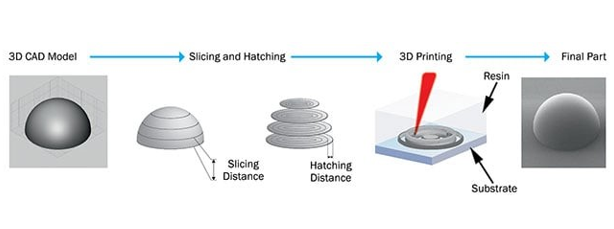
  • Pre-processing (Designing/ Data Preparation/ Build Simulation/ Build Optimization/ Slicing/ Programming for 3D printer or Parameter Assignment)
  • Printing Process and
  • Post Processing (Depowdering/ cleaning/ shot blasting/ Heat treatment/ support removal/ post machining etc.)
Fig 2: 3D Printing Workflow

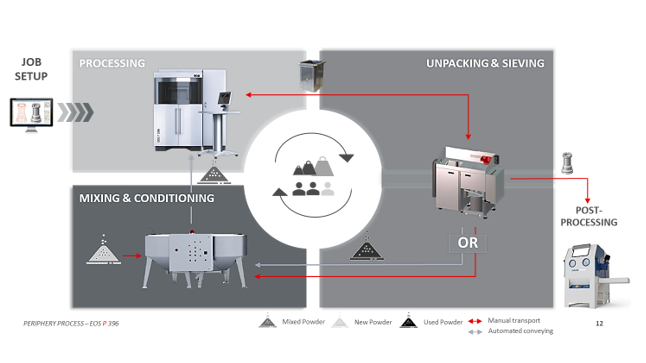
Fig 3: 3D printing workflow for Selective Laser Sintering (SLS) process; Courtesy – EOS GmbH


Classification of Industrial Additive Manufacturing

Based on the raw material form, energy source used and technology workflow, the AM process is broadly classified into 7 Categories as follows:

  • VAT Photopolymerization
  • Material Jetting
  • Binder Jetting
  • Material Extrusion
  • Powder Bed Fusion
  • Sheet Lamination
  • Direct Energy Deposition

We shall discuss in detail about the above categories and subcategories of the AM processes in coming series.

Reinvent Business Process Management by Leveraging the Power of 3DEXPERIENCE Platform

Introduction to Business Process Management

Business process management (BPM) is a discipline that optimizes and manages an organization’s business processes via the use of tools, techniques, and methods. Analyzing, measuring, refining, and putting new processes into place are all part of BPM. BPM also considers how the processes tie in with the overall goals and strategy of the organization. It is a continuous cycle of improvement rather than an isolated event. Every piece of solution that is introduced to the company’s technological stack lessens the workload for managers, but it also makes the organization more complex. Optimizing operations involves enhancing efficiency and effectiveness in business processes.

Complexity and progress are frequently connected. This is particularly true about the improvements in technology. The good news is that technologies are becoming more accurate and effective even as they get increasingly complicated.

To make sure that businesses are utilizing their resources as efficiently as possible, business process management can be implemented in such scenarios.


What is Business Process & Why Companies need to Implement BPM

A business process is defined as a collection of business tasks and activities (that when performed by people or systems in a structured course) produce an outcome that contributes to the business goals.


The way businesses manage and enhance their processes is called business process management. BPM includes:

  • Examining every procedure independently
  • Considering how each step fits into the overall business plan

BPM Standard & its Importance in Business Process Management

Designing and mapping business processes in a business process model is done using the modelling standard BPMN 2.0. It is frequently used in business process management because it allows technical users to represent and implement complex processes in a way that is easily understood by business users, facilitating productive collaboration between the two groups. Using graphical representations of internal procedures, BPMN facilitates standard communication among users.

Dassault Systèmes’ 3DEXPERIENCE Platform is a comprehensive solution that combines engineering, quality, and regulatory compliance business processes. Organizations can configure forms and automate activities and KPIs to increase efficiency and standardization.

The Business Process Management roles on the 3DEXPERIENCE Platform enable organizations to simulate and optimize processes to identify and measure opportunities for improvement. Upon the definition of the business process, one can then test and deploy the process to ensure secure and scalable processes.


Business Process Management Roles on 3DEXPERIENCE Platform


Benefits of Business Process Management

Business Process Management on the 3DEXPERIENCE Platform enables process capitalization, instrumentation, and execution where one can:

  • Maximize enterprise efficiency through Knowledge & know-how capturing and optimization.
  • Increase process definition and configuration experience through a simplified user interface that enables to easily capture the enterprise processes.
  • Improve the efficiency and traceability of enterprise business processes.
  • Eliminate costly business process execution through secure compliance with regulations.

To get more information on how the 3DEXPERIENCE Platform drives Business Process Management, please reach out to us at marketing@edstechnologies.com

Unveiling Engineering Insights: A Professional Guide to Mastering Data Analysis with SIMULIA Isight

In the ever-evolving realm of engineering simulation, the need for sophisticated tools that automate and optimize the design process has reached a crucial point. SIMULIA Isight from Dassault Systèmes is a potent simulation process automation and design optimization software. This blog post unfolds a strategic walkthrough, unraveling the indispensable steps to harness Isight’s prowess for impactful data analysis in engineering projects.


Defining the Simulation Process

It starts with meticulously evaluating the engineering objectives. Then, identify the specific simulations or analyses that Isight will automate or optimize.Understanding stress analysis, fluid flow simulation, and thermal studies is crucial for a successful workflow using SIMULIA Isight. Understanding stress analysis, fluid flow simulation, and thermal studies is crucial for a successful workflow using SIMULIA Isight.This can be demonstrated through a complex engineering problem involving hyperelastic materials such as a rubber bush, highlighting an optimization-based approach using parametric data analysis with Isight.


Integrating Simulation Tools

Isight excels at integrating various simulation tools seamlessly into one unified environment. By establishing connections with specific tools such as Abaqus or other third-party software, this integration ensures a cohesive workflow. It enables smooth data transfer between these tools, ultimately boosting efficiency and accuracy in the overall process.


Creating a Workflow

Creating a logical workflow is key to making the most of Isight.This includes outlining the precise sequence Isight will follow to execute simulations seamlessly. It encompasses detailing the transfer of input information among various simulation tools to establish a streamlined and automated simulation procedure. Isight’s intuitive interface facilitates the visual design of workflows, making it accessible to both seasoned engineers and those new to simulation process automation.


Case Studies: Hyperelastic Material

Hyperelastic materials, also termed green elastic materials, possess the unique ability to undergo significant elastic deformations and revert to their original shape upon load removal. These materials, often described using a strain-energy density function like the neo-Hookean model, are used in fields such as biomechanics, rubber-like substances, and the mechanics of soft tissues.In engineering simulations, accurately modelling hyperelastic materials is vital for predicting responses to large deformations, making tools like Isight crucial for design optimization and simulation automation involving such materials.

Step 1: A parametric file was crafted in Abaqus, followed by analyses under diverse loading conditions such as axial, radial, conical, and torsional loads. All associated files, including CAE and ODB files, were consolidated in a single folder.


Step 2: Defining Design Variables – In projects geared towards optimization, pinpoint the design variables that Isight will manipulate to achieve desired outcomes. These variables could include material properties, geometric parameters, or any other factors influencing your simulation. Set constraints and allowable ranges, guiding Isight in its optimization process. In our case, geometrical parameters were defined rather than material inputs, as illustrated in the below snapshot of the DOE Editor windows with parameters defined.


Step 3: Setting Up Design of Experiments (DOE) – Efficiently navigate the parameter space by definingDesign of Experiments. Isight helps by letting you systematically change input values to check many scenarios.You can specify the number of simulations and the range of values for each variable, enabling Isight to navigate the design space. Different components can be aligned either parallelly or in series for data flow and execution. In our methodology, two Abaqus components were utilized for different loading conditions and physics, and Isight performed the Design of Experiment using optimal Latin hypercube methodology.


Step 4: Running Simulations – Withmeticulously designed workflow in place, execute the Isight workflow and witness the seamless automation unfold. Isight automates simulations with specified parameters, saving valuable time and reducing the likelihood of manual errors. Once the DOE Study is complete, all the results can be saved and further utilized for approximation studies.


Step 5: Analyzing Results

Upon completion of simulations, Isight equips engineers with robust tools for result analysis. They can visualize data, generate plots, and extract meaningful insights from the simulation results. Isight’s post-processing capabilities empower engineers to delve deep into the system’s behaviour and performance.


Step 6: Optimization

For projects focused on optimization, Isight automatically adjusts design variables to meet predefined objectives. Results can be reviewed, improvements can be assessed and iterated further if necessary.


Step 7: Iterate and Refine

Isight’s flexibility allows for iterative refinement, enabling engineers to progressively enhance their simulation process.


Step 8: Documentation and Reporting

A step often overlooked is comprehensive documentation. Isight enables the generation of detailed reports covering the simulation process, results, and any optimizations achieved. These reports serve as invaluable resources for communication with project stakeholders, offering a clear overview of the analysis methodology and outcomes.


By following these steps, unlock the full power of Isight, automating and optimizing your engineering simulations. This, in turn, drives efficiency and innovation in your projects. Stay tuned for more insights into the evolving landscape of simulation technology.

Overcoming Electric Vehicle Design Challenges with SaberRD

Introduction: Addressing Electric Vehicle Design Challenges

Designing electric vehicles (EVs) comes with unique challenges, from optimizing battery performance to ensuring efficient power distribution. However, most of these hurdles can be overcome with the right tools and technologies, paving the way for a more sustainable future. In partnership with Synopsys, EDS Technologies offers SaberRD, which addresses some specific design challenges EV manufacturers face. In this blog, we will discuss some challenges and explore key features that can address these challenges.


The Complexities of Electric Vehicle Design

Designing electric vehicles brings new challenges compared to traditional combustion-engine vehicles. The complexities lie in the powertrain and battery systems and other crucial components such as motor controllers, sensors, and charging infrastructure.


  • Driving Range: One of the primary concerns in EV design is range anxiety. EV manufacturers strive to extend the range of their vehicles to alleviate customer concerns about running out of power. Achieving a balance between range, battery size, and weight is a delicate task that requires advanced modellingand simulation tools.


  • Charging Infrastructure: In the future, we expect improved charging infrastructure and faster chargers to make electric vehicles (EVs) competitive with gas cars. Long-distance travel poses a challenge due to sparse charging stations along routes. While expanding this infrastructure requires significant investment, daily recharging in home garages, workplaces, and commercial areas could eliminate the need for regular stops at filling stations for EV drivers.


  • Reliability: Ensuring the reliability of powertrain elements like the battery, motor, and power electronics while in use poses a significant challenge for engineers in powertrain design. These components are susceptible to various environmental stressors, including temperature fluctuations and mechanical impacts. Designers of automotive power ICs prioritize meticulous design and manufacturing of integrated power devices. The effectiveness of thermal management systems is crucial in ensuring the efficient and dependable operation of e-powertrain components. Suppliers and original equipment manufacturers (OEMs) must carefully consider material properties and the non-uniform distribution of current, voltage, magnetic flux, and component temperature. The performance of a single component can significantly affect the distribution of flux in others.


Introducing Synopsys SaberRD: The Solution to EV Design Challenges

The Saber® platform by Synopsys offers robust capabilities in design, modeling, and simulation to analyze and validate system interactions spanning various physical domains thoroughly. Saber encompasses an extensive array of models and utilities designed for simulating Hybrid Electric Vehicle (HEV) systems, encompassing:

  • Motors (utilizing both analytical and Finite Element Analysis (FEA)-based models)
  • Power devices such as IGBTs, MOSFETs, and BJTs
  • Batteries, ultracapacitors, and charging systems
  • Inverters, DC/DC converters, switches, speed controllers, and capacitors
  • Mechanical components


Robust Design and Electric Vehicle Design Challenges

A comprehensive design approach, known as robust design, is critical in enhancing vehicle safety and reliability. This approach ensures that reliability concerns are integrated into the design process itself. Design teams rely on robust design methodologies to effectively handle and enhance complex system interactions, particularly when faced with operational and environmental variations. This makes such methods ideal for the development of hybrid and electric vehicles. The following outlines a typical flow of robust design.


Moreover, SaberRD provides advanced analytics and visualization tools that allow engineers to effectively interpret and communicate simulation results. This facilitates collaboration and decision-making throughout the design process.


  • Simulate the complete system: Capture all the device effects and multi-domain interactions critical to power system design
  • High accuracy results, faster: Robust simulation technology and distributed processing capabilities come standard with SaberRD
  • Design for robustness and reliability: Built-in capability for analyzing effects of variation, parameter sensitivity, worst-case behaviours, faults and more


In conclusion, the key features and benefits of SaberRD position it as the ultimate solution for overcoming design challenges faced by the electric vehicle industry. In the next section, we will explore how SaberRD integrates seamlessly into the existing design workflow, making it easily accessible and adaptable for manufacturers.


Case Studies: Success Stories of Overcoming Design Challenges with SaberRD

One of the most compelling aspects of SaberRD is its proven track record in helping manufacturers overcome electric vehicle design challenges. In this section, we will delve into a few case studies that highlight the real-world benefits of using SaberRD.


Case Study 1: Optimizing Battery Performance

An electric vehicle manufacturer struggled to maximise their vehicles’ range while ensuring optimal battery performance. By utilizing SaberRD’s comprehensive modelling and simulation capabilities, engineers could analyse various factors accurately, such as battery capacity, voltage levels, and power distribution. With this information, they could fine-tune the battery system, resulting in vehicles that offered an extended range without compromising overall performance.


Case Study 2: Enhancing Vehicle Safety

Safety is paramount in the electric vehicle industry, and one manufacturer faced challenges in detecting and mitigating potential electrical faults. With SaberRD, engineers could simulate numerous safety scenarios and fault analyses, stress-test the electrical system, and identify potential weaknesses. By implementing necessary improvements, such as redundant safety features and enhanced insulation, the manufacturer significantly improved the overall safety of their electric vehicles.


Conclusion:  SaberRD for EV

In conclusion, SaberRD has proven to be a game-changer in the electric vehicle industry, enabling manufacturers to overcome various design challenges. Through case studies focused on optimizing battery performance and enhancing vehicle safety, we have seen the real-world benefits of utilizing SaberRD’s modelling and simulation capabilities.

By using SaberRD, manufacturers can design high-performance, safe, and sustainable electric vehicles. The seamless integration of SaberRD into the existing design workflow, with its user-friendly interface and compatibility with industry standards, makes it an invaluable tool for engineers.


Subscribe to our newsletter

Get all the latest information on Events, Sales and Offers.