Leverage the power of 3DEXPERIENCE platform

The 3DEXPERIENCE platform from Dassault Systemes is a business platform that provides organizations with a holistic, real-time vision of their business activity and ecosystem. It connects people, ideas, data, and solutions in a single collaborative environment empowering industries, from startups to large enterprises, to transform, produce and trade in entirely new ways. It provides access to multiple CAD, CAM, CAE, PLM applications, and many more on a single platform. This is an entirely scalable platform in multiple dimensions. It is available on the premise & the cloud. It has a unified user interface so that users with knowledge of one module can learn and adopt other modules with less effort in adoption and the learning curve. It improves overall product design and development processes.


Following are some of the capabilities of 3DEXPERIENCE Platform


  • It helps in Real-Time Concurrent Engineering: Several designers from multiple locations can collaborate & design simultaneously on the same data. There is no need for an intermediate release or version. Parallel design tasks are possible. It enables real-time collaboration for design work and shortens the design cycle time.


  • Dashboarding Capability for Social Collaboration: Helps to manage projects, variants, design changes, share ideas and concepts with 3Dswim communities. It enables to organize unstructured information in structured way.


  • Easy on Cloud Platform Management: No more complex IT tasks to manage Project, People & Data. It is a simple client software installation and is very easy to invite new collaborators to engage in the platform.


  • Large Assembly Management: Multiple options for large data management. It has capacity to manage large and multi-site data connecting multiple contributors and reviewers.


  • 3D Search Capability: Enhanced 3D Search capabilities for fast data searching. There are options for multiple bounding box queries and capability for large and multisite data search.


  • Real-Time Visualization & Ambient Occlusion: CATIA 3DEXPERIENCE delivers natively high-end visualization. There is need for only fewer physical prototypes. It enables team reviews for accurate decisions. It offers advanced level of shadow rendering for high quality visualization. This ensure better design as it is closer to reality.


  • Parallel Design and Session Refresh: Update CATIA session dynamically to reflect concurrent changes in 3D.


  • Natural Shape: Create or edit any geometry rapidly without the need to know the original part structure. The group of elements will behave as features. There is capability to edit directly imported IGES or STEP geometry. The natural modeling editor enables early prototyping of ideas.


  • 3D Text Creation: Ability to create text in 3D, which was not possible in V5. The new feature also enables creation of associative 3D sketch of complex shapes. These help to create lifelike 3D Mechanical Design in 3D for engraving and embossing.


  • Natural Assembly: Navigate & edit your product structure in 3D, create products & subproducts, Rearrange the structure, Insert & position components, automatically create engineering connections with smart positioning, reuse assembly definition to create kinematic mechanisms.


  • Kinematic Mechanisms in Assembly: Engineering connections can be created from assembly constraints, define the kinematic behavior while defining assembly, joints are maintained when the components are moved in product structure, engineering connections leverage the PLM integration, fastening, interference checking, FEA. It is possible to define kinematics with multi-level mechanisms.


  • 3D Pattern Definition: Ability to pattern in 3D Assembly components. It enables to define complex 3D patterns from set of axis systems. The 3D pattern includes assembly feature impact and covers canonical shapes- linear, circular, rectangular.  


  • Dynamic Experience of Mechanical Products: Perform physically accurate simulations with forces, inertia and gravity. Contacts can be created with restitution/friction parameters.




Evolution of Geospatial technology and emerging trends in the industry

A few years back, if you had to travel from point A to point B and had never been to that area, you had to depend on the local people for directions. A few would know the exact direction. Depending on how busy they were, they directed you to your required destination. Sometimes they may also misguide you. You might have also traveled to a remote area where no one is around to help get the direction. What would you have done in such a scenario? Fortunately, remote sensing and GIS have come up with innovative techniques and methodologies that have enabled us not only to pinpoint your location but also to find the best route to your required location. This is just one example of the use of GIS technology. GIS now helps us to manage our day-to-day activities, and we are totally dependent on it. Did this happen overnight? No. Like other technologies, GIS also had its evolution. Academic institutes and governments first started using computer aided system to create and analyze geographical datasets. Progressively people got involved in data creation, analysis, and software development. Numerous geographers, planners, computer scientists, and others from many fields came together to create the first visualization and spatial analysis software. ESRI, one of the well-known companies, was established in 1969 to help land use planners and land resource managers to make informed decisions. GIS has come a long way since it was first used in the 1960s.

Today, GIS technology is used in various industries for decision making. ESRI is one of the largest and oldest companies which is providing end to end GIS solutions for industries viz Mining, Retail, Agriculture, Architecture, Engineering, and Construction, Asset Management, Financial Services, Insurance, Logistics and Distribution, Real Estate, Utilities, Aviation, Natural Resources, Forestry, Petroleum, Renewables, Telecommunications, Transportation etc.


Though multiple open-source GIS software exists, ESRI provides users with the most advanced, user-friendly GIS platforms. Due to its simplicity, learning ArcGIS is very quick. In contrast, open-source software takes a lot of time to understand processes. ArcGIS allows you to understand your data more intuitively. Various important spatial datasets are made available through the living atlas and Indo-ArcGIS. These datasets are not readily available anywhere else. One can easily import these datasets into ArcGIS platforms for desired analysis.
ArcGIS also has various readily available robust tools that do not need separate installations (plugins). ArcGIS model builder allows building models to reduce the processing time for iterative processes. ArcGIS provides Arc Scene and Arc Globe for 3D visualization and data processing. One can easily import data from ArcMap to Arc Scene on the fly. It is easy to create and share maps through ArcGIS online. Even previously created maps in ArcMap can be published as web maps through ArcGIS online. Using these maps, one can also create story maps. We can narrate the story using text, maps, and multimedia, making it attractive and easily understood by the audience.

ArcGIS provides industry specific robust geoprocessing tools for fast and easy analysis. Using a business analyst tool, a retail company can easily find locations of their potential customers, check market penetration, and focus on expansion in that area. Using image processing tools such as change detection, one can find the pixel level changes or the Matic changes in Land Use Land Cover in a few clicks. This tool provides statistics such as the conversion from one class to another or several other specified classes. These tools are very user friendly and intuitive, so a new user can use them without much guidance.

Meanwhile, ESRI provides self-paced web-based training for beginners and experts. ESRI offers in-depth documentation on how to use tools and delivers sample data for you to get hands-on experience. The training and software updates for open-source software are often not structured well.

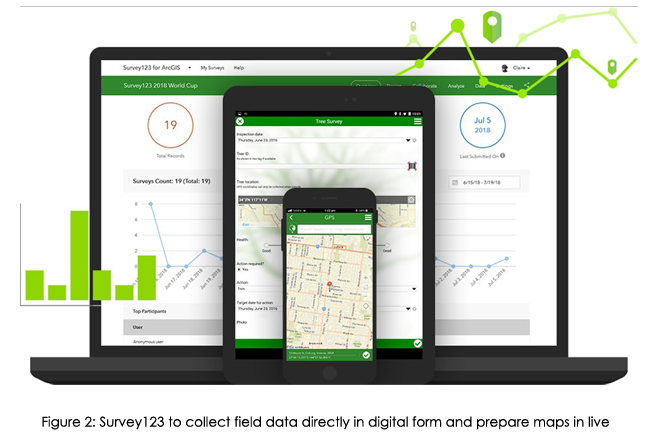
ESRI provides end-to-end solutions. For example, it provides platforms for data collection, manipulation, and presentations. These apps/tools are interlinked and updated in live. Hence, as soon as data is updated by field staff using Field collector or Survey123, it gets updated on online maps. The data can also be published in dashboards, story maps, and even ArcGIS hub (where you can create your websites).


As soon as you install a particular solution, all the relevant tools and apps get installed in your system, which you can customize and deploy for your stakeholders. ESRI also provide APIs and SDKs for customization so organizations can develop the ESRI software/apps as per their own need.

A few of the app needs installation on a laptop/desktop. While ESRI cloud platforms such as ArcGIS online, Site Scan, ArcGIS velocity, etc. do not require installation, users can sign in and use these platforms from any computer system. ArcGIS Online is a Cloud-based software to create and share interactive web maps. Site Scan for ArcGIS is the end-to-end cloud-based drone mapping software designed to revolutionize imagery data collection, processing, and analysis. ArcGIS velocity enables users to ingest data from the Internet of Things (IoT) platforms, message brokers, or third-party APIs. It also helps users process, visualize, and analyze real-time data feeds; store these as big data, and perform fast queries and analyses.


ArcGIS Business Analyst

It is a extension that helps you make smarter decisions for market planning, site selection, and customer segmentation by combining demographic, business, lifestyle, spending, and census data with map-based analytics. Business Analyst helps you identify underperforming markets, pinpoint the suitable growth sites, find where your target customers live, and share the analysis across your organization as accurate infographic reports and dynamic presentations.

ArcGIS CityEngine 

It is a stand-alone software product that provides a design and modeling solution for efficiently creating 3D cities.


To know more about upcoming GIS technologies and to understand how to use ESRI platforms for your business, please get in touch with us at edst@edstechnologies.com

What’s New in SIMULIA 2022x?

It’s both an exciting and challenging time for manufacturers to bring new products to market in this era of rapid innovation. Changing customer expectations and shrinking budgets are among the challenges. Manufacturers are therefore utilizing realistic simulation to gain a competitive advantage by lessening the need for physical testing, increasing product reliability, and reducing the time to market. For realistic structural simulation, SIMULIA Unified FEA provides a comprehensive solution that covers routine and advanced workflows across various industrial applications. Among the many updated features and improvements in SIMULIA 2022 (Abaqus, Isight, TOSCA, FESAFE), there are several significant ones. Following is a summary of some of the new features:


ABAQUS 2022

Users can easily create, edit, monitor, diagnose, and visualize advanced analyses using the Abaqus/CAE Complete Abaqus Environment. Using the intuitive interface, modeling, analysis, job management, and results visualization are integrated into a consistent, easy-to-use workspace, even for new users. With Abaqus/CAE, one can interact with computer-aided engineering concepts such as feature-based, parametric modeling, interactive and scripted operations, and user interface customization. The following paragraph covers the recent updates in different categories.


Structural Mechanics
  • The LaRC05 damage initiation criteria for fiber-reinforced composites are now available in Abaqus/Standard.
  • The Hosford-Coulomb damage initiation criteria for ductile metals are now available in both Abaqus/Standard and Abaqus/Explicit.
  • The Valanis-Landel hyper elastic material model to analyse rubber-like materials is now available in Abaqus/Standard.
  • Band-limited damping in Abaqus/Explicit allows the user to apply a desired uniform damping ratio over a specified frequency range.
  • Distortion control is now available for the C3D10 element in Abaqus/Explicit.
  • Distributions to specify layer thicknesses for composite solid elements and use wedge (triangular prism) elements with a composite solid section definition.


Analysis Techniques
  • Cyclic symmetry analysis technique can be used now in Abaqus/Explicit to reduce simulation time and memory requirement.
  • Abaqus/Standard now enables running multiple nonlinear load cases within a single job. This new capability significantly reduces run time and the number of output files compared to running multiple jobs.
  • The import capability has been extended to transfer nodal temperatures and user-defined field variables between Abaqus/Standard and Abaqus/Explicit.
  • The extended finite element method (XFEM) now supports procedures with temperature degrees of freedom.
  • Implicit dynamic analysis in Abaqus/Standard now supports adjoint sensitivities for topology, shell thickness, and lattice sizing design variables.


Modelling and Visualisation
  • Abaqus/CAE now provides a tool to remove selected data from an odb which can significantly reduce file size.
  • CATIA V5 geometry can now be directly imported into the Linux platform.
  • SOLIDWORKS assemblies can now be imported as multiple parts.
  • User control over shear flow visualization has been improved.
  • Abaqus/CAE now supports small-sliding general contact in Abaqus/Standard
  • Abaqus/CAE now supports analytical fields when defining composite ply thickness distributions.


Performance and HPC
  • Abaqus/Explicit can now be executed in hybrid mode using a combination of MPI and threads, with each MPI process launching a user-specified number of threads. Hybrid execution takes advantage of the Non-Uniform Memory Access (NUMA) architecture and the trend of increasing the number of cores available on each socket.
  • The iterative linear equation solver in Abaqus/Standard now supports common modelling features, including hybrid elements, connector elements, distributing couplings, and hard contact.
  • Parallel scaling of linear static simulations with many load cases is significantly improved.

ISIGHT 2022

ISight provides designers, engineers, and researchers with an open system for integrating design and simulation models—created with various CAD, CAE, and other software applications—to automate the execution of hundreds or thousands of simulations. ISight allows users to save time and improve their products by optimizing them against performance or cost metrics through statistical methods, such as Design of Experiments (DOE) or Design for Six Sigma. ISight combines cross-disciplinary models and applications in a simulation process flow, automates their execution, explores the resulting design space, and identifies the optimal design parameters based on required constraints. ISight’s ability to manipulate and map parametric data between process steps and automate multiple simulations significantly improves efficiency, reduces manual errors, and accelerates the evaluation of product design alternatives. Recently the 2022 release of ISight was announced, with new developments that include feature enhancements and component updates. Highlights of ISight R2022 include:


Abaqus Component Upgrade
  • Isight Abaqus component creates a direct link to Abaqus, allowing automated execution of Abaqus from Isight
  • In Isight 2022, the Abaqus component is enhanced to support Abaqus 6.14 through Abaqus 2022 and maintenance releases thereof
  • No other functional changes to the component
  • Middleware upgrade
  • Apache TomEE
  • Isight 2021 & previous releases shipped Apache TomEE 1.7.2
  • Isight 2022 ships Apache TomEE 8.0.5
  • All the security fixes delivered by TomEE between these versions are now automatically available for SEE, Webtop, and Web Dashboard applications running on TomEE
  • Oracle database
  • The supported version of Oracle database is upgraded to Oracle 19c
  • Microsoft SQL Server database
  • The supported version of the Microsoft SQL Server database is upgraded to Microsoft SQL Server 2019
    • Older releases of the Oracle and Microsoft SQL Server are not supported
    • Support for the Oracle WebLogic application server has is removed
    • Customers who were using Oracle WebLogic application server would need to migrate to IBM WebSphere or Apache TomEE application server
  • Isight/SEE 2022 Improved Stability and Reliability

FESAFE 2022

There are certain updates introduced in FE Safe 2022. Some are the enhancement are listed below: –

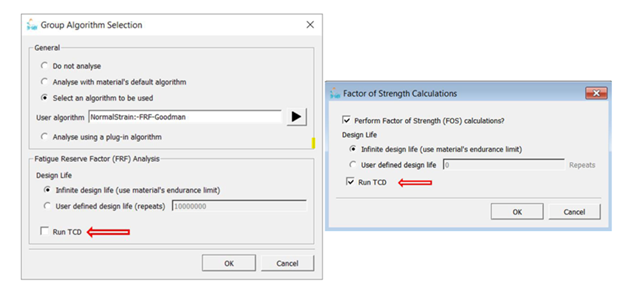
FE-SAFE: TCD (THEORY OF CRITICAL DISTANCES)
  • A new interface in 2021 FD04
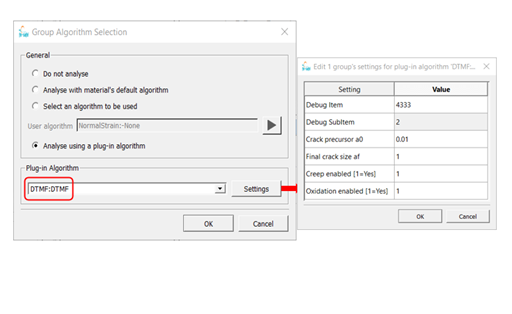
  • The algorithm used at the sub-surface location for TCD calculation = algorithm chosen for the surface as shown below in the figure.
  • Expanded MSC options
  • New TCD and FOS tabs in Analysis Options


FE-SAFE: THERMO-MECHANICAL FATIGUE FROM ELASTIC-PLASTIC FEA
  • Based on DTMF technology developed at Fraunhofer IWM over the last 20 years
  • Available as a plugin for evaluation purposes to qualified users – Contact Hawla, De Morais, or Sobczak to arrange a call with the users
  • fe-safe/TURBOlife, already in CA, will become deprecated
  • Damage (1∕?_? ) calculated per reversal and accumulated using Miner’s rule
  • Reversals determined via Wang & Brown multi-axial cycle counter
  • Damage (1⁄N_f ) calculated per reversal and accumulated using Miner’s rule
  • Reversals determined via Wang & Brown multi-axial cycle counter


FE-SAFE: GENERAL 2021 ENHANCEMENTS

FE-SAFE: GENERAL 2022 ENHANCEMENTS

  • Unified structural/fatigue licensing – 3DXEXPERIENCE
    & Fe Safe
  • Includes core-count-dependent token & credit licensing –
    same as for Abaqus
  • ANSYS RST support updated, including support for
    ANSYS Workbench Named Selections
  • Susmel-Lazzarin Infinite Life Method –previously
    only available for TCD
  • Surface Finish Definition/Property files – new .sfprop
  • Phone-home anti-cracking prevention
  • Durability execution on cloud/grid – 22xGA/FD01
  • Previously durability had to be solved locally
  • Compressive mean stress corrections for Verity line welds – 22xFD01
  • Spot Weld fatigue theory enhanced for complex loading
  • Corrections to the calculations for several algorithms, including Brown-Miller – 22xFD01
  • Qt upgrade – 22x GA


TOSCA 2022

Below are few of the recent updates incorporated in TOSCA 2022:

Usability
  • Unified Interpolation scheme for Topology optimization


Rib Design manufacturing constraint for Topology Optimization
  • More robust method to restrict the maximum member size in optimized structures.
  • It prevents floating material to a large degree and only affects the result if the thickness is violated.
  • NEW: Enforce manufacturing constraints in bead sensitivity optimization. It can improve the manufacturability of the final result.


Improved Maximum Member Constraint for Topology Optimization
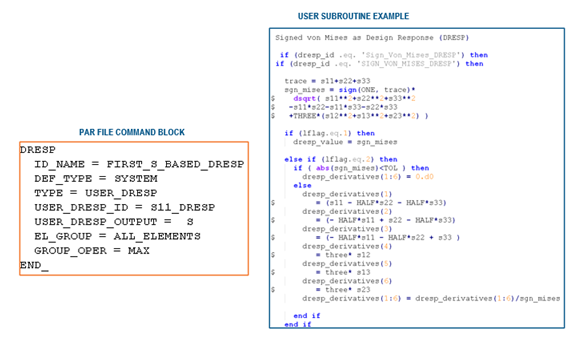
  • This feature allows the user to create responses based on abaqus user subroutines, as shown below.
  • The user can create stress based or plasticity based responses.
  • Multiple responses can be used in a single optimization.
  • Examples : laminate failure criteria, plastic strain responses etc.


Manufacturing Constraints for Bead Sensitivity Optimization
  • This allows a user to continue an optimization that has ended prematurely
  • The user can change the maximum number of design cycles
  • The modification of convergence settings is also allowed
  • This differs from restart as all the optimization parameters calculated in the last cycle are preserved.


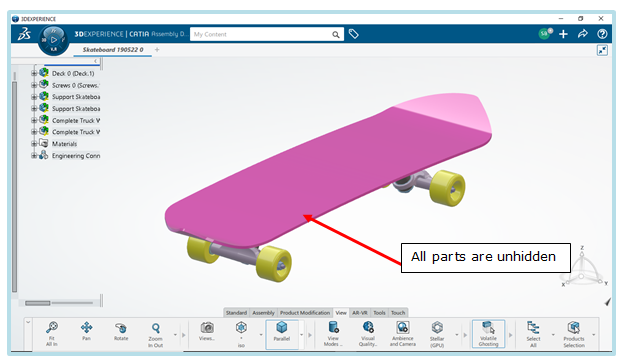
Large Assembly Management with Volatile Ghosting in 3DEXPERIENCE CATIA

When working with large assemblies, visualizing each and every component of assembly is very important in design process. Often it is tough to see all the hidden details in the large assemblies.

Thanks to the features in 3DEXPERIENCE CATIA, elements can be temporarily hidden behind or inside the model to display hidden details.

This is done with the help of Volatile Ghosting tool.


Steps to Ghost and Un-ghost objects in Assembly
  • Open the assembly in the Assembly Design App


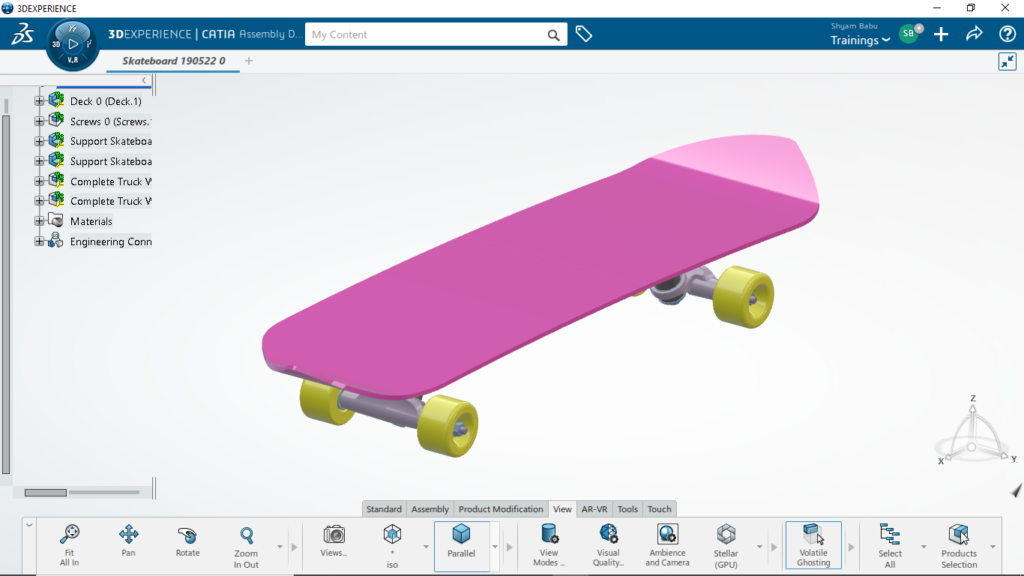
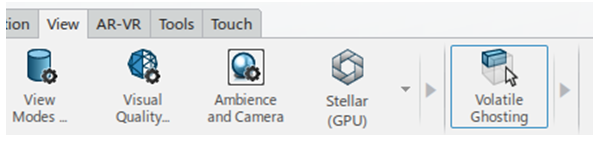
  • Go to the View section of the action bar, click Volatile Ghosting to activate the command.


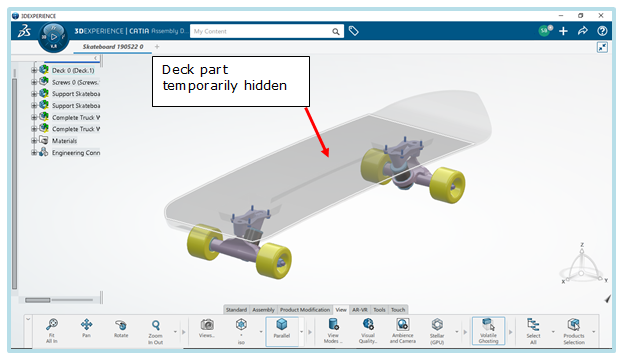
  • Once the command is activated, move the mouse cursor over the model, press ALT+G or press ALT and scroll up the mouse Parts located underneath the pointer are not visible anymore.


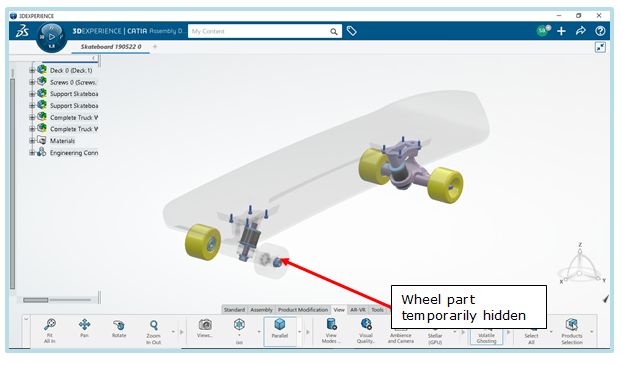
  • Repeat the press or scroll action to keep on hiding pointed parts.


Now, to show the temporarily hidden parts, the below steps have to be followed:

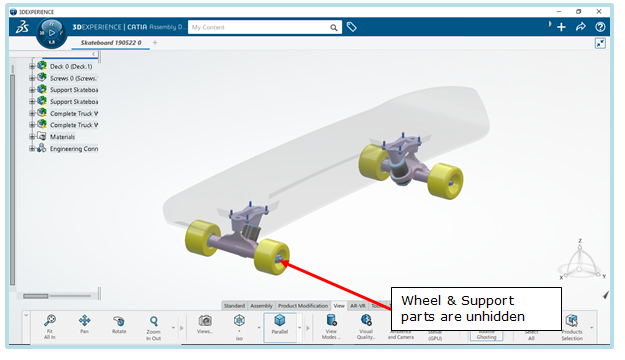
  • Press ALT + scroll down. Hidden parts reappear one by one on each scroll action.


  • HoldALT while hovering over the model, the ghosting effect is kept.
  • Leave ALT key, the ghosting effect is gone.


By following above steps, one can hide the objects temporarily and visualize the details easily with 3DEXPERIENCE CATIA

How are Companies Adapting to the Systems Engineering Approach in the New Era of Autonomous Vehicles?

ADAS (Advanced Driver Assistance System) technology is gaining traction across the globe as we look forward to Highly Automated Vehicles (Hands Off, Eyes Off – Conditional Automation & Hands Off, Mind Off – High Automation) and Autonomous Vehicles (Driver Off) with respect to Transportation and Mobility.

Several experiments are going on in the space of UAV, UGV, UUV and USV to bring a new era in the field of Autonomous Vehicles. There are several challenges to address the Automated Vehicle solutions with respect to traffic jams, auto pilot, highway auto pilot, urban auto pilot, self-driving.

Some of them are listed below:

  • How to sense the environment?
    • Which sensor to be selected keeping in mind the safety and cost factors?
    • Positioning of sensors impacting the weather conditions
  • Communication between Humans and Machines
  • Integration of Electrical/Electronic Architecture by making Vehicle centralization requires Big Data from sensors and cloud
  • Adaption of Vehicle Charging and its infrastructure
  • Remote Control of the Autonomous Vehicle
  • Collision avoidance with other Smart Systems
  • Safety alerts for pedestrians
  • Alerts for real time traffic, road conditions and so on…

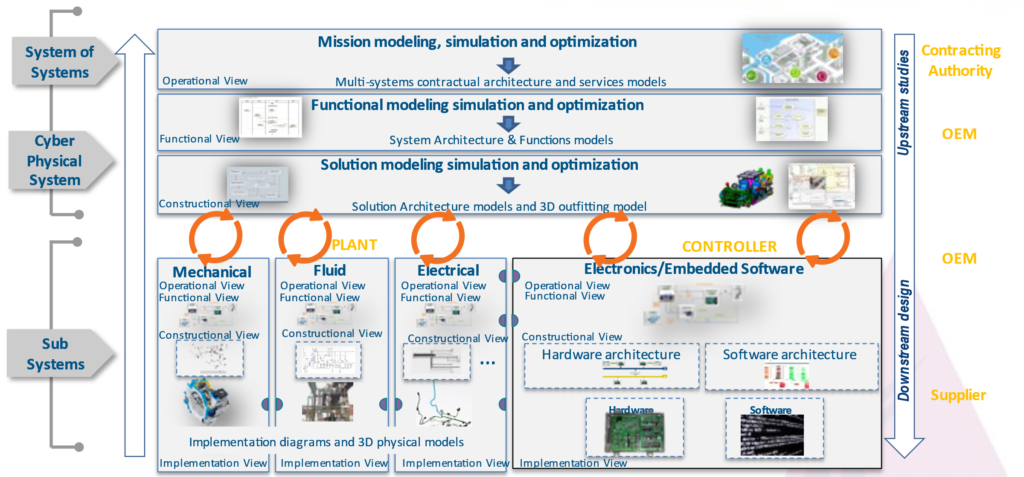
Most of companies are looking for an integrated platform to manage the entire data namely Mechanical, Fluid, Electrical and Electronics with a Model-Based Approach. To address the above challenges, Dassault Systèmes has come up with a solution on how the Systems of Systems, Cyber-Physical Systems and its Sub Systems can be integrated. To manage the entire System, System of Systems and its sub-systems, there should be a seamless integration.


3DEXPERINCE platform from Dassault Systèmes not only addresses the challenges of integration, it also addresses the Real-time Monitoring challenge by having a Virtual Twin of an entire Assembly of a Vehicle or an Aircraft or complete Factory as well. It eases the workflow to have a First-Time Right-Information along with the possibility of successful Technologies to validate virtually with respect to Model-Based Systems Engineering. The below picture indicates how detailed upstream and downstream thinking processes take place from OEM to suppliers and the different disciplines involved from different domains that need to communicate with each other.


trends1


For any autonomous vehicle, camera, radar, sonar and lidar are essential which SENSE the environment through SENSORS and process the data through Software Applications like Apps, BSW, OS. Computing & Load Balancing is done through Processors, ECUs, GPU which will COMMUNICATE with Humans and Machines through Communication Protocols & Cyber Security (Cables & Wires, Wireless Communication) and Human Machine Interface (Head-Up Display, Voice, LEDs) which Act (Power, Move, Sound, Heat, Cool) using Actuators (Mechatronic Parts) and Power Management (Power & Battery).


The above process consists of lots of sensor-based applications, software applications, and mechatronics applications which needs to communicate very strongly in the R&D Phase of any product and it is very critical to have virtual testing before moving to real testing so as to achieve the “right” design for the first time.


The validation and digitalization of some areas are very critical as they play a major role in the emerging technologies


  • As electronics is transforming the automotive experience, it is always important to manage the electronics signal & power integrity workflow to be maintained digitally by capturing the requirement, schematic capture/ component placement, circuit simulation, pre-layout simulation SI/PI, post-layout simulations after importing, EMC compliance check.


  • As compliance for any new emerging technologies will play a key role, Dassault Systèmes through the 3DEXPERIENCE Platform is offering Industry Process Experiences to address these challenges.


  • There is a need to have full traceability for all the functional, logical, and physical requirements with respect to validation, testing and communication for which performance-driven architecture process available in 3DEXPERIENCE will help to streamline the processes.


  • EV technology poses lots of challenges to the R&D department to prove the concepts. This requires complete behavior modelling and multi-scale/multi physics simulations of aerodynamics, structure, ride & handling. These can be validated using 3DEXPERIENCE On Cloud solutions from Dassault Systèmes.


  • ADAS/AV sensor design & placement virtual validation is very important as all the modern cars come with complex electronic systems on four wheels. OEMs (and suppliers) are responsible for compliance/ electromagnetic compatibility, reliability, safety and comfort which 3DEXPERIENCE Platform provides by having a digitalized workflow of sensor modelling with antenna array design, EMAG field simulations, soil performance simulations and so on.


  • Vehicle antenna design displacement plays a vital role in ADAS technology to find the optimized antenna placement and vehicle shapes based on KPI’s.


  • There is a possibility of validating the design and get experienced in immersive environment through VR for the design reviews through the 3DEXPERIENCE platform.

With the automotive industry shifting gears to autonomous vehicles and many start-ups venturing into this segment, EDST is proud to have played a significant role in business transformations with proven industry solutions and applications. To experience the seamless integration with the 3DEXPERIENCE platform, do contact our consultants at marketing@edstechnologies.com

Automate your CAD using CATIA V5 Macros

Performing repetitive tasks manually leads to a loss of productivity. This is one of the major reasons why organizations are increasingly trying to automate processes which helps to reduce manual labour, design time and increase productivity. In CATIA V5, repetitive manual tasks can be automated using CATIA V5 Macros.

There are two ways to create CATIA V5 Macros:

  • Recording a macro.
  • Writing a macro.

How to Record a Macro in CATIA V5
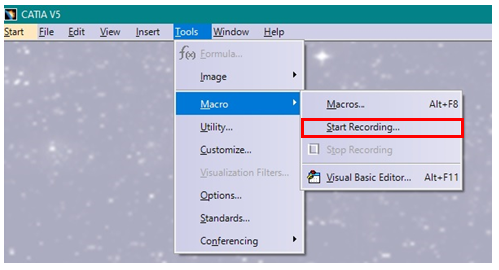
  • Launch CATIA V5 & Go to Tools ? Macro ? Start Recording.


Automate your CAD using CATIA V5 Macros-1


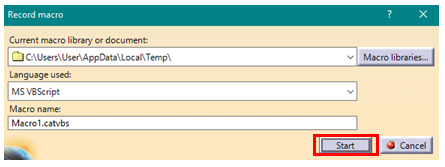
  • Now, you can specify the macro library in which you want to save the recorded macro, specify the name you want to give to the recorded macro & click Start.


Automate your CAD using CATIA V5 Macros-2


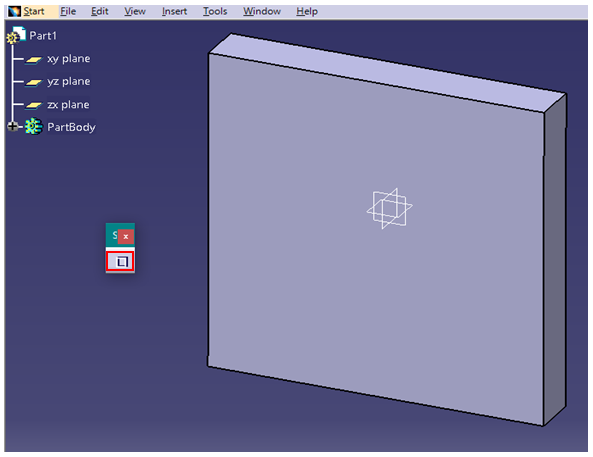
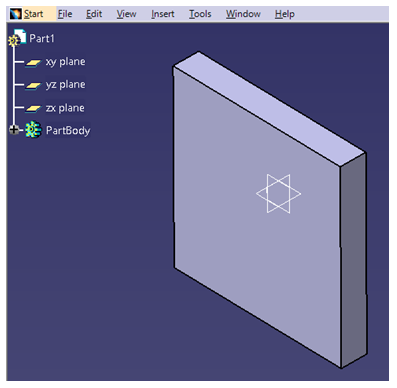
  • Now, perform the operations which you want to automate in CATIA V5 e.g., Open Part Design Workbench ? Create A Sketch ? Create Pad.


  • Once all the operations that you want to automate are completed, click on Stop Macro Recording.


Automate your CAD using CATIA V5 Macros-2


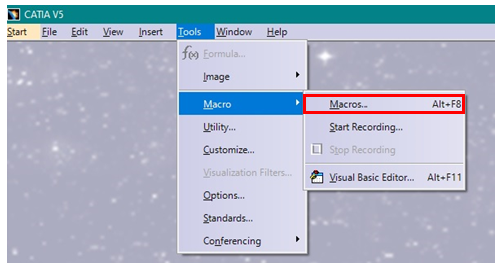
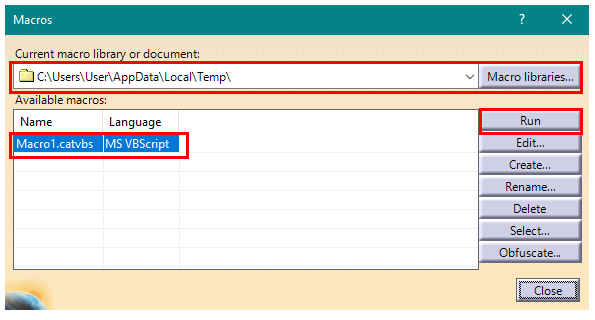
  • Now, to perform the task automatically, run the recorded macro by clicking Tools ? Macro ? Macros or simply by pressing Alt+F8 keys.


Automate your CAD using CATIA V5 Macros-2


  • Now, select the Macro Library, the macro which you want to run & click on Run.


Automate your CAD using CATIA V5 Macros-5


  • The task will now be performed automatically e.g.; pad is created automatically.


Automate your CAD using CATIA V5 Macros-6


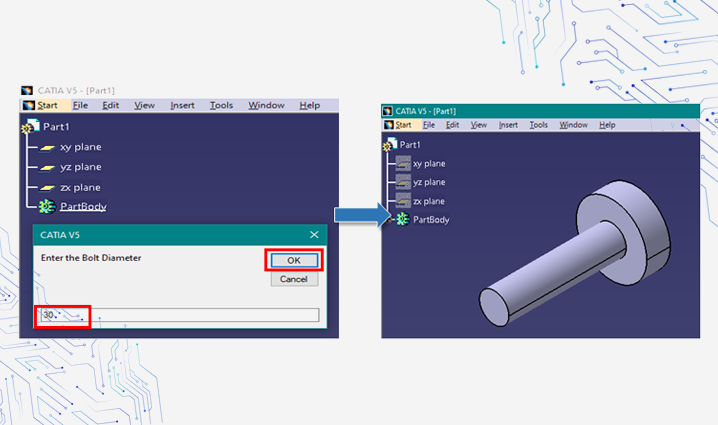
You can modify the recorded macro and use that macro to create all the variants of a product.

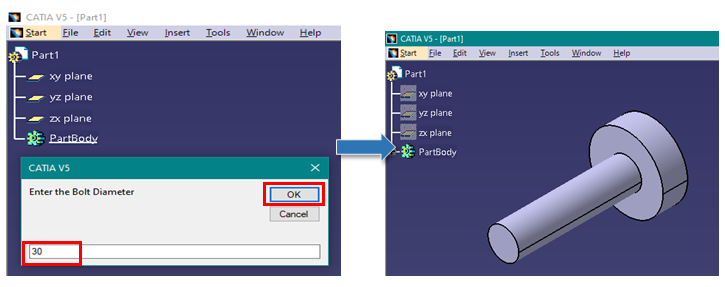
For example, if you need to create multiple bolts which are having different diameters then you don’t need to create all the bolts manually, you can automate the bolts creation process and the parameters can be entered using “input-box”.


Automate your CAD using CATIA V5 Macros-7


How to Write a Macro in CATIA V5

CATIA V5 Macro can be written in three languages:

  • Visual Basic 6
  • VBA
  • VB Script / CATScript

Applications of CATIA V5 Macros

Macros can be used for Automating the Below set of Scenarios:

  • Repeated Set of Tasks: Create/Insert customised title block, saving images of annotation views to PowerPoint, extract BOM table to excel, etc.
  • Create Templates & Standardise the Company Workflow: For example, you have a standard template of part in which only few parameters might vary. The part can be created using automation and the parameters can be put in by the user.
  • Quality Checking Process: Macros can be used to automate the predefined quality checks like checking whether material is applied, font style in drawing, proper tree structure in assembly etc. Based on the check results, we can perform additional tasks.

Advantages of CATIA V5 Macros
  • Faster Completion: 90% of the time can be saved in product design using CATIA V5 Macros.
  • Error-free: As there is no human interaction while performing the repeated set of tasks, there are minimal chances of error.
  • Run the Automation During Non-Working Hours: As macros can work automatically, repeated set of tasks can be performed during non-working hours which ultimately increases productivity by reducing design time.

Subscribe to our newsletter

Get all the latest information on Events, Sales and Offers.