RAMSIS: The Digital Human Model for Ergonomics in Vehicle Design

- Pranay Malewar
- June 21, 2025
In today’s automotive landscape, designing a vehicle is no longer just about performance or aesthetics—it’s about people. As comfort, safety, and inclusivity become essential components of vehicle design, integrating human-centric approaches right from the conceptual phase is no longer optional.
This is where RAMSIS makes all the difference.
What is RAMSIS?
RAMSIS (Realistic Anthropometric Mathematical System for Interior Comfort Simulation) is the world’s leading digital human modelling (DHM) software, developed by Humanetics Digital Europe GmbH (former know as Human Solutions). It enables engineers and designers to simulate human interaction with vehicle interiors early in the design cycle using virtual manikins derived from real-world human body data.
From driver workspace design to posture validation and reach analysis, RAMSIS ensures that products are ergonomically optimized, safe, and ready to meet international regulations before any physical prototype is built.
Why Ergonomics Matters in Vehicle Design
Every interaction—be it steering, entering and exiting, adjusting a seat, or reaching a control—affects user comfort and safety. Poor ergonomics can lead to fatigue, discomfort, or even safety hazards.
With RAMSIS, vehicle manufacturers can account for variations in body size, gender, age, and regional population characteristics, ensuring the design suits real human needs. This is especially important today, as vehicles become more diverse in form—electric, autonomous, off-road, or specialized.
Key Capabilities of RAMSIS
- Vision analysis
- Reach and accessibility validation
- Ingress/egress simulation
- Posture and seat comfort evaluation
- Customizable avatars with country-specific anthropometric data
Seamless Integration and Flexibility
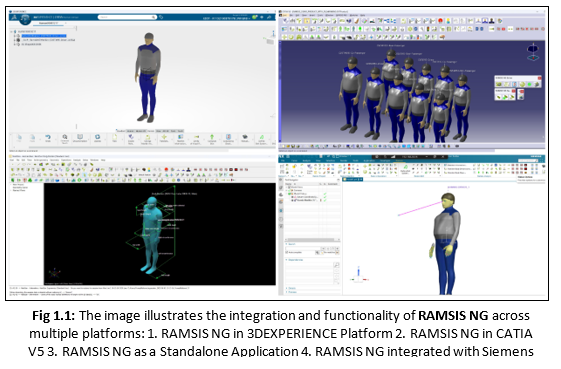
RAMSIS supports effortless integration with major
design platforms, including:
- CATIA V5
- 3DEXPERIENCE Platform
- SIEMENS NX
It is also available as a standalone application,
providing flexibility for teams using varied design tools.
Broad Industry Applications
While RAMSIS is widely used in the development of passenger vehicles, commercial vehicles, defence, and aircraft, it has also gained significant traction among two-wheeler and three-wheeler OEMs. As these industries begin prioritizing ergonomic standards, RAMSIS offers a reliable way to evaluate rider posture, seat height, and control accessibility even at early stages.
The Advantage: RAMSIS’s Core Strengths Over Its Competitors
- Anthropometric Database
One of RAMSIS’s most powerful differentiators is its extensive and validated anthropometric database.
Anthropometry is the scientific study of human body dimensions—such as height, limb length, joint angles, and sitting postures. It plays a vital role in ensuring that product designs are tailored to the target user population.
RAMSIS includes region-specific anthropometric data for nearly every major geography—except Africa—and supports multiple population groups, age ranges, and genders.
In India, RAMSIS incorporates the ARAI Size India Database, which is valid until 2040. This allows OEMs to design vehicles for future Indian populations. For instance, if you’re designing a car to launch in 2030, RAMSIS enables you to simulate what the average male and female body proportions will look like by then—ensuring future compliance and customer comfort.
- Scientifically Developed Posture Models
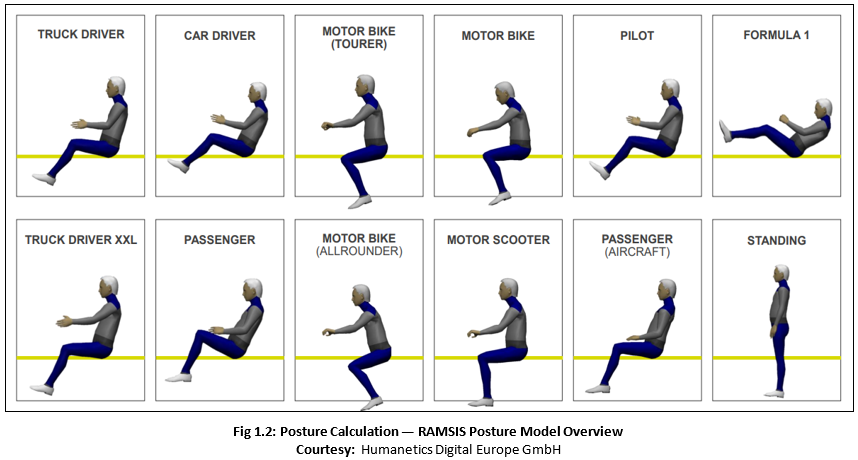
Another major advantage of RAMSIS lies in its realistic posture models—carefully developed to reflect actual human body behaviour in different scenarios.
Posture models in RAMSIS are standardized, ergonomically optimized representations of how humans sit, stand, reach, or drive in real-world conditions. These aren’t arbitrary or algorithmically guessed poses—they’re the result of detailed empirical research.
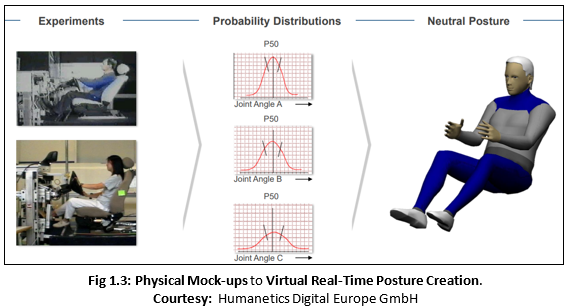
Humanetics Digital Europe GmbH (formerly known as Human Solutions) developed these posture models by conducting live physical studies. For every posture model—be it for a driver, passenger, or operator—more than 40 real participants were observed sitting or standing in the target position for up to 3 hours. Each participant was analysed for posture consistency, comfort, and biomechanical alignment, and the results were fed into RAMSIS’s model framework.
This hands-on, data-driven process ensures that RAMSIS posture models are scientifically validated and ergonomically optimized, offering unmatched realism compared to other DHM tools.
What’s New in RAMSIS NextGen
The latest version of RAMSIS—NextGen—features a refreshed interface, improved simulation accuracy, and greater flexibility for creating manikins. It supports more detailed analysis scenarios for both traditional and next-generation mobility solutions.
Conclusion
RAMSIS bridges the gap between digital design and real human experience. With its unmatched anthropometric database, scientifically validated posture models, powerful simulation capabilities, and seamless CAD integration, it enables OEMs to develop vehicles that are ergonomically sound, regulation-compliant, and ready for the future.
In the upcoming blogs, we’ll explore practical use cases, deep dive into RAMSIS modules, bodybuilder tools, and share real-world best practices for ergonomic validation across different vehicle platforms.

Recent Posts
-
3DEXPERIENCE CATIA Composite Design – Delivering Next-Generation Precision for Advanced Composite Structures
3DEXPERIENCE CATIA Composite Design is an advanced, collaborative, and highly integrated engineering solution designed to manage the complexity of modern composite structures used across aerospace,…
-

Innovating with Light: Advanced Optical Solutions for Automotive, Medical, and Photonic Systems
The rapidly evolving optical industry demands cutting-edge systems with exceptional precision and accuracy. As the market for these advanced solutions grows, engineers and manufacturers must…
-
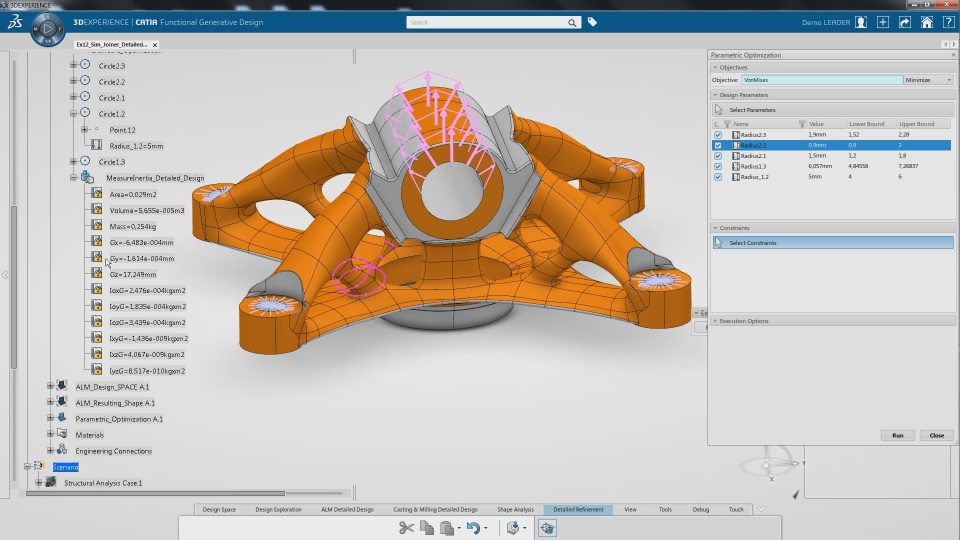
Parametric Modeling to Improve Design Efficiency in 3DEXPERIENCE CATIA
Parametric modeling is more than applying dimensions and constraints – it is about capturing design intent so that changes can be made without rework. In 3DEXPERIENCE CATIA, well-planned parametric models reduce redesign time, improve collaboration,…
-

Configuring Collaborative Spaces in 3DEXPERIENCE for Large Teams
In large organizations, effective collaboration is critical. 3DEXPERIENCE provides Collaborative Spaces, enabling teams to work concurrently on designs, manage data securely, and maintain version control.…
-
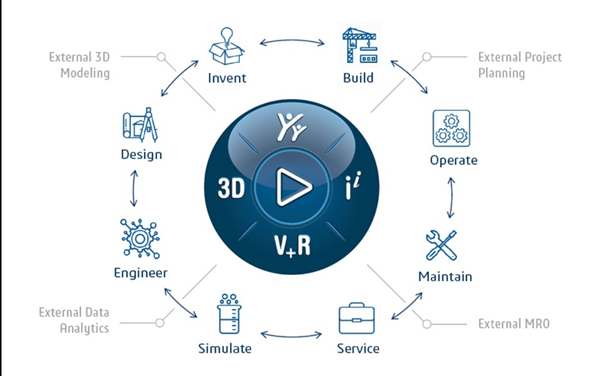
3DEXPERIENCE Web Apps – A Complete Guide to Classic Web Applications
The 3DEXPERIENCE Web Apps – Classic User’s Guide explains the common tools, user interface, and functionalities provided by Collaboration and Approvals, which are used across…
-
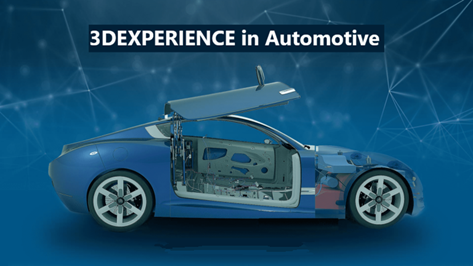
3DEXPERIENCE in the Automotive Industry: Use Cases & Benefits for OEMs, Tier-1 Suppliers, and EV Manufacturers
The automotive industry is evolving at an unprecedented pace. OEMs are under pressure to reduce time to market, Tier-1 suppliers must align closely with multiple…
-

Understanding Dashboards in the 3DEXPERIENCE Platform
In today’s digital engineering environment, information is valuable only when it is clearly visible, well connected, and easy to understand. The 3DEXPERIENCE Platform addresses this…
-

3DEXPERIENCE Native Apps: A Unified, Intelligent Design Environment
The 3DEXPERIENCE Native Apps form the core working environment for designers, engineers, and collaborators who require powerful authoring, visualization, and data management capabilities directly on…
- Pranay Malewar
- June 21, 2025
RAMSIS: The Digital Human Model for Ergonomics in Vehicle Design
In today’s automotive landscape, designing a vehicle is no longer just about performance or aesthetics—it’s about people. As comfort, safety, and inclusivity become essential components of vehicle design, integrating human-centric approaches right from the conceptual phase is no longer optional.
This is where RAMSIS makes all the difference.
What is RAMSIS?
RAMSIS (Realistic Anthropometric Mathematical System for Interior Comfort Simulation) is the world’s leading digital human modelling (DHM) software, developed by Humanetics Digital Europe GmbH (former know as Human Solutions). It enables engineers and designers to simulate human interaction with vehicle interiors early in the design cycle using virtual manikins derived from real-world human body data.
From driver workspace design to posture validation and reach analysis, RAMSIS ensures that products are ergonomically optimized, safe, and ready to meet international regulations before any physical prototype is built.
Why Ergonomics Matters in Vehicle Design
Every interaction—be it steering, entering and exiting, adjusting a seat, or reaching a control—affects user comfort and safety. Poor ergonomics can lead to fatigue, discomfort, or even safety hazards.
With RAMSIS, vehicle manufacturers can account for variations in body size, gender, age, and regional population characteristics, ensuring the design suits real human needs. This is especially important today, as vehicles become more diverse in form—electric, autonomous, off-road, or specialized.
Key Capabilities of RAMSIS
- Vision analysis
- Reach and accessibility validation
- Ingress/egress simulation
- Posture and seat comfort evaluation
- Customizable avatars with country-specific anthropometric data
Seamless Integration and Flexibility
RAMSIS supports effortless integration with major
design platforms, including:
- CATIA V5
- 3DEXPERIENCE Platform
- SIEMENS NX
It is also available as a standalone application,
providing flexibility for teams using varied design tools.
Broad Industry Applications
While RAMSIS is widely used in the development of passenger vehicles, commercial vehicles, defence, and aircraft, it has also gained significant traction among two-wheeler and three-wheeler OEMs. As these industries begin prioritizing ergonomic standards, RAMSIS offers a reliable way to evaluate rider posture, seat height, and control accessibility even at early stages.
The Advantage: RAMSIS’s Core Strengths Over Its Competitors
- Anthropometric Database
One of RAMSIS’s most powerful differentiators is its extensive and validated anthropometric database.
Anthropometry is the scientific study of human body dimensions—such as height, limb length, joint angles, and sitting postures. It plays a vital role in ensuring that product designs are tailored to the target user population.
RAMSIS includes region-specific anthropometric data for nearly every major geography—except Africa—and supports multiple population groups, age ranges, and genders.
In India, RAMSIS incorporates the ARAI Size India Database, which is valid until 2040. This allows OEMs to design vehicles for future Indian populations. For instance, if you’re designing a car to launch in 2030, RAMSIS enables you to simulate what the average male and female body proportions will look like by then—ensuring future compliance and customer comfort.
- Scientifically Developed Posture Models
Another major advantage of RAMSIS lies in its realistic posture models—carefully developed to reflect actual human body behaviour in different scenarios.
Posture models in RAMSIS are standardized, ergonomically optimized representations of how humans sit, stand, reach, or drive in real-world conditions. These aren’t arbitrary or algorithmically guessed poses—they’re the result of detailed empirical research.
Humanetics Digital Europe GmbH (formerly known as Human Solutions) developed these posture models by conducting live physical studies. For every posture model—be it for a driver, passenger, or operator—more than 40 real participants were observed sitting or standing in the target position for up to 3 hours. Each participant was analysed for posture consistency, comfort, and biomechanical alignment, and the results were fed into RAMSIS’s model framework.
This hands-on, data-driven process ensures that RAMSIS posture models are scientifically validated and ergonomically optimized, offering unmatched realism compared to other DHM tools.
What’s New in RAMSIS NextGen
The latest version of RAMSIS—NextGen—features a refreshed interface, improved simulation accuracy, and greater flexibility for creating manikins. It supports more detailed analysis scenarios for both traditional and next-generation mobility solutions.
Conclusion
RAMSIS bridges the gap between digital design and real human experience. With its unmatched anthropometric database, scientifically validated posture models, powerful simulation capabilities, and seamless CAD integration, it enables OEMs to develop vehicles that are ergonomically sound, regulation-compliant, and ready for the future.
In the upcoming blogs, we’ll explore practical use cases, deep dive into RAMSIS modules, bodybuilder tools, and share real-world best practices for ergonomic validation across different vehicle platforms.