From Engineering to Service: Unified BOM is the Future of Product Lifecycle
- Surendiran R
- July 23, 2025
In the era of digital transformation, managing a product’s lifecycle efficiently is critical. As product complexity increases and global collaboration becomes the norm, traditional siloed BOM approaches where Engineering BOM (E-BOM), Manufacturing BOM (M-BOM), and Service BOM (S-BOM) are maintained separately, lead to major challenges such as:
- Data Inconsistencies: Different departments often work on different versions of the product structure, leading to misalignment between design, manufacturing, and service functions
- Manual Data Duplication: Maintaining BOMs in separate systems leads to duplicate data entry and higher risk of errors
- Inadequate Change Tracking: When E-BOM, M-BOM, and S-BOM are not synchronized, tracking and implementing changes across the product lifecycle becomes difficult, delaying product releases and increasing costs
- Lack of Collaboration: Isolated BOM’s hinder team collaboration, leading to designs that are hard to manufacture or service due to lack of early input from downstream teams
- Delayed Time-to-Market: Disconnected processes slow down development cycles, with BOM mismatches causing delays in manufacturing and service readiness
- Increased Cost and Rework: Without a unified BOM, errors propagate downstream, leading to rework, scrap, warranty claims, and higher support costs.
Challenges of Siloed BOM’s
Maintaining separate BOM’s causes several operational bottlenecks like:
- Manual Data Entry
- Poor Change Traceability
- Design-to-Manufacture Gaps
- Limited Reuse
- Data Duplication
What is Unified BOM Management?
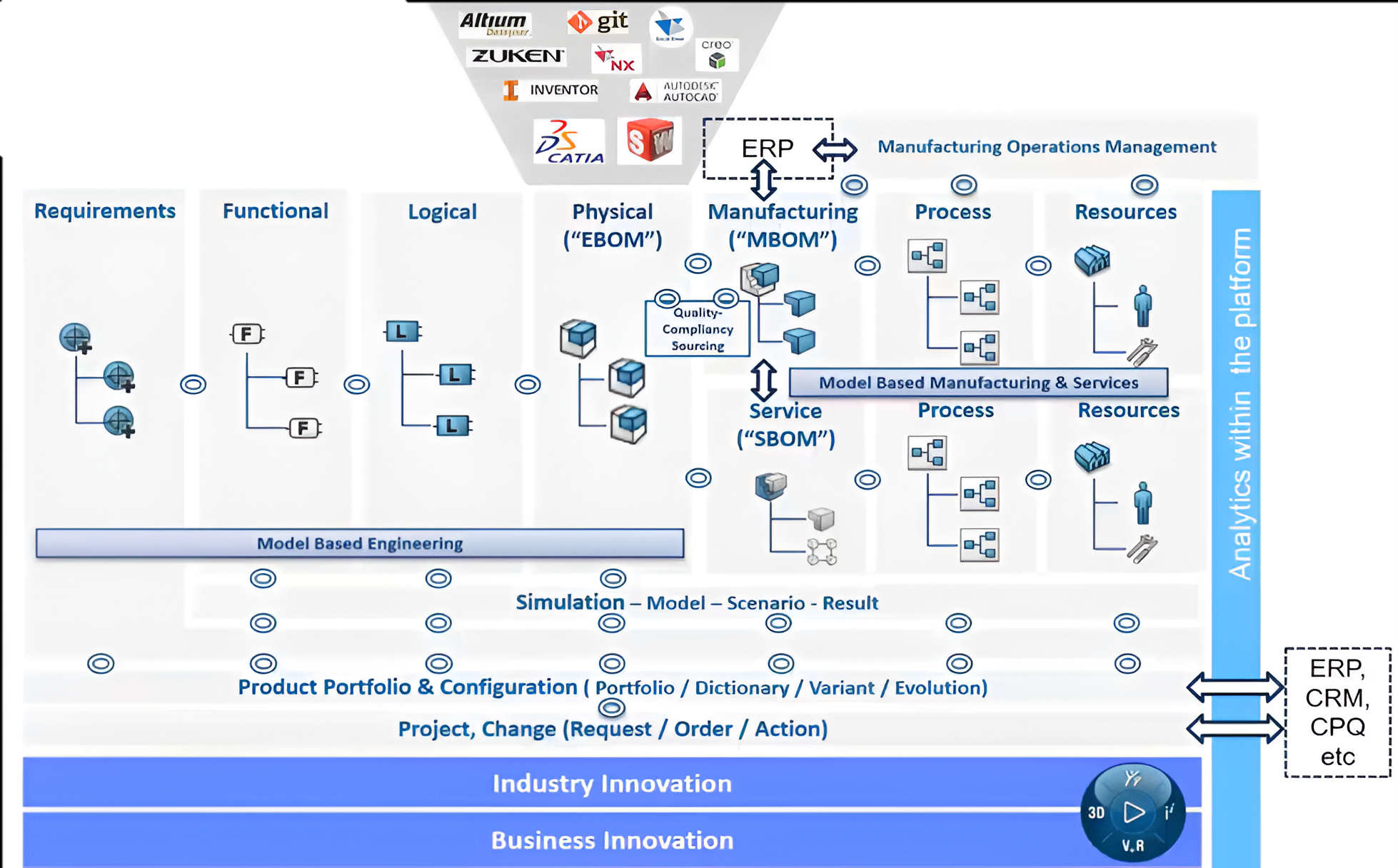
Unified BOM Management refers to maintaining a single, consistent product structure that can be extended and tailored across multiple departments – Engineering, Manufacturing, and Service. Instead of working in silos, teams can collaborate using a common data model.
Model-based Engineering is the backbone that supports real-time collaboration, traceability, and change propagation across departments.
Unified BOM Is Not Just a Trend – It’s a Necessity
To stay competitive in today’s connected, product-as-a-service world, businesses must adopt a Unified BOM strategy. It enables seamless collaboration, faster product development, and more efficient service delivery.
Organizations should think about unifying engineering, manufacturing, and service data into a cohesive digital model, ensuring end-to-end visibility and agility.
How 3DEXPERIENCE Platform fosters Unified BOM Management
The 3DEXPERIENCE Platform fosters a Unified Bill of Materials (BOM) Management by providing a centralized and collaborative environment that integrates people, processes, and data across the entire product lifecycle. It enables unified BOM management through the following key capabilities:
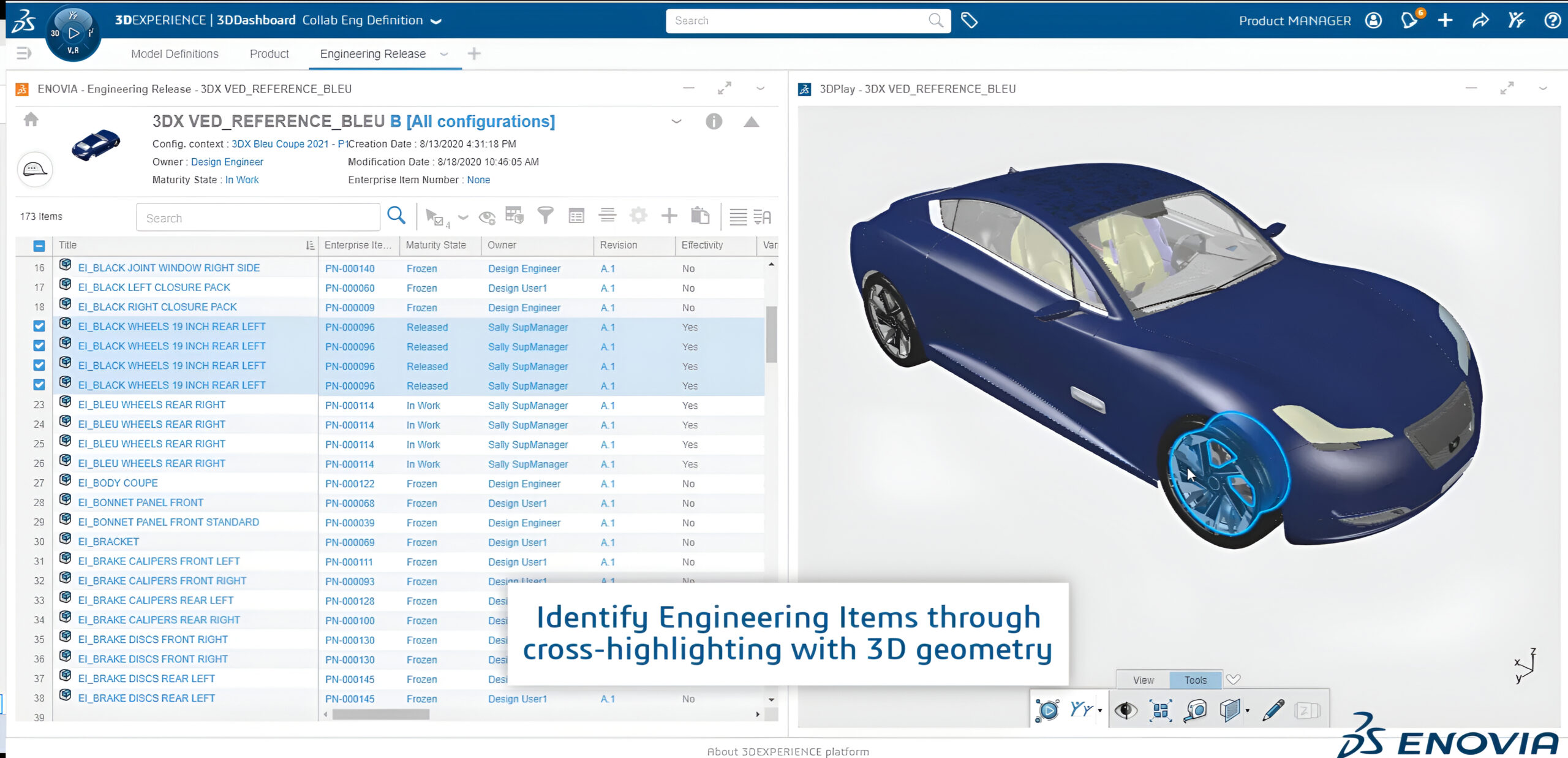
- Collaborative Engineering Definition: Enables cross-functional teams to define and manage the engineering BOM in a shared digital environment.
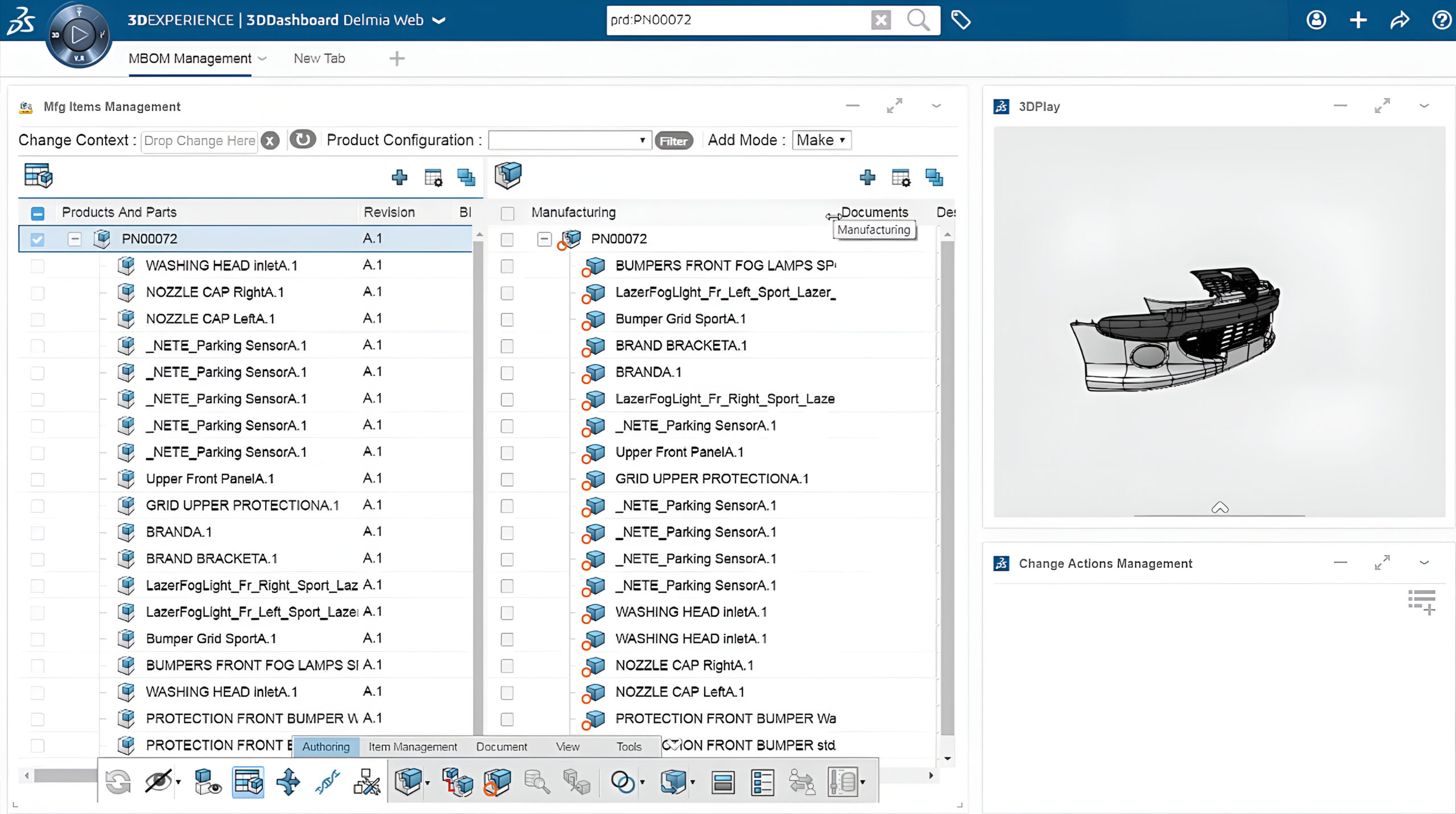
- Collaborative Engineering to Manufacturing: Ensures seamless transformation of the engineering BOM into a manufacturing BOM, supporting alignment between design and production
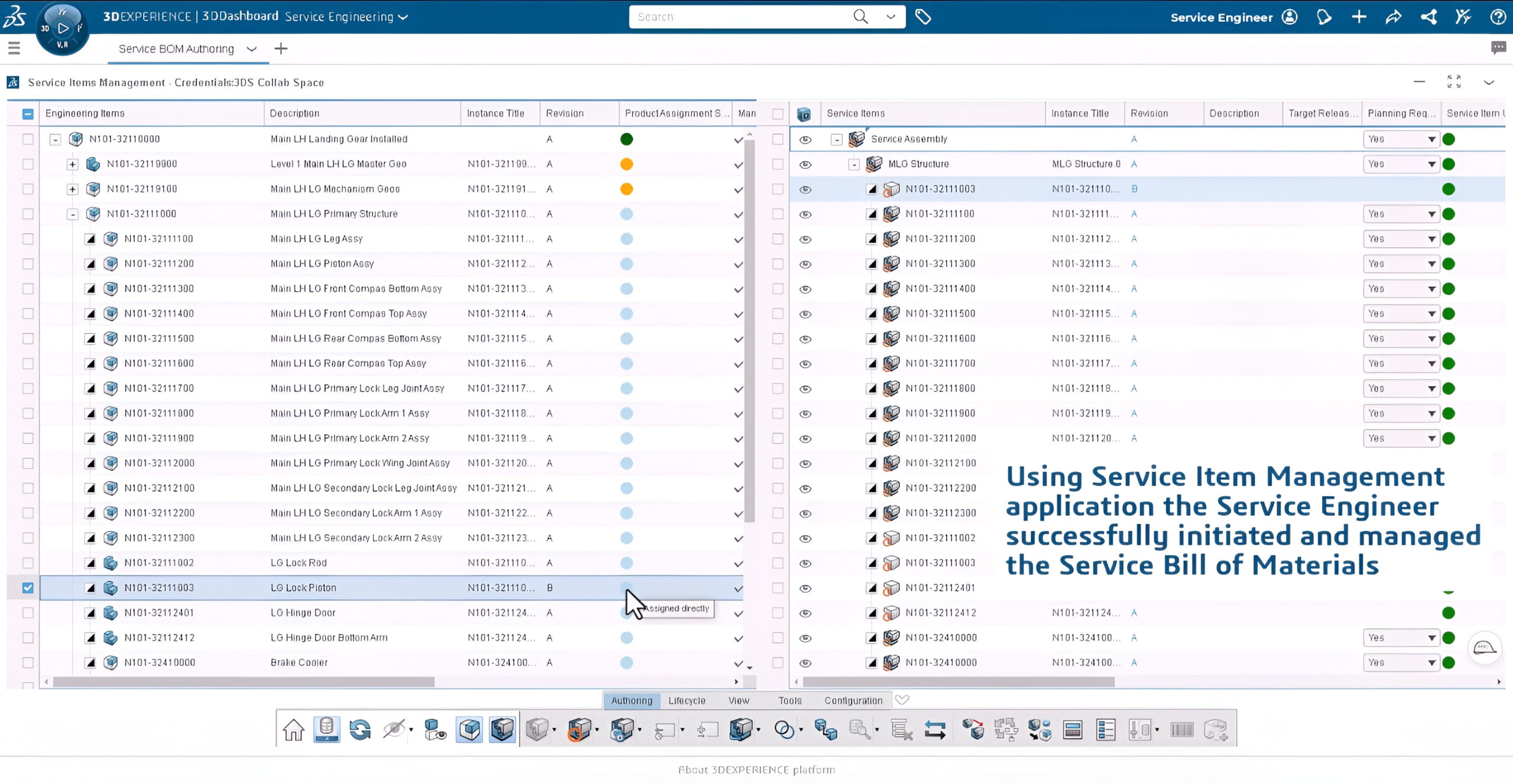
- Service Process Engineering: Extends BOM usability into service planning by incorporating service requirements and creating service BOM’s linked to the product definition
To get more information & insights on how the 3DEXPERIENCE Platform drives Unified BOM Management, please reach out to us at marketing@edstechnologies.com

Recent Posts
-
3DEXPERIENCE CATIA Composite Design – Delivering Next-Generation Precision for Advanced Composite Structures
3DEXPERIENCE CATIA Composite Design is an advanced, collaborative, and highly integrated engineering solution designed to manage the complexity of modern composite structures used across aerospace,…
-

Innovating with Light: Advanced Optical Solutions for Automotive, Medical, and Photonic Systems
The rapidly evolving optical industry demands cutting-edge systems with exceptional precision and accuracy. As the market for these advanced solutions grows, engineers and manufacturers must…
-
Parametric Modeling to Improve Design Efficiency in 3DEXPERIENCE CATIA
Parametric modeling is more than applying dimensions and constraints – it is about capturing design intent so that changes can be made without rework. In 3DEXPERIENCE CATIA, well-planned parametric models reduce redesign time, improve collaboration,…
-

Configuring Collaborative Spaces in 3DEXPERIENCE for Large Teams
In large organizations, effective collaboration is critical. 3DEXPERIENCE provides Collaborative Spaces, enabling teams to work concurrently on designs, manage data securely, and maintain version control.…
-
3DEXPERIENCE Web Apps – A Complete Guide to Classic Web Applications
The 3DEXPERIENCE Web Apps – Classic User’s Guide explains the common tools, user interface, and functionalities provided by Collaboration and Approvals, which are used across…
-
3DEXPERIENCE in the Automotive Industry: Use Cases & Benefits for OEMs, Tier-1 Suppliers, and EV Manufacturers
The automotive industry is evolving at an unprecedented pace. OEMs are under pressure to reduce time to market, Tier-1 suppliers must align closely with multiple…
-
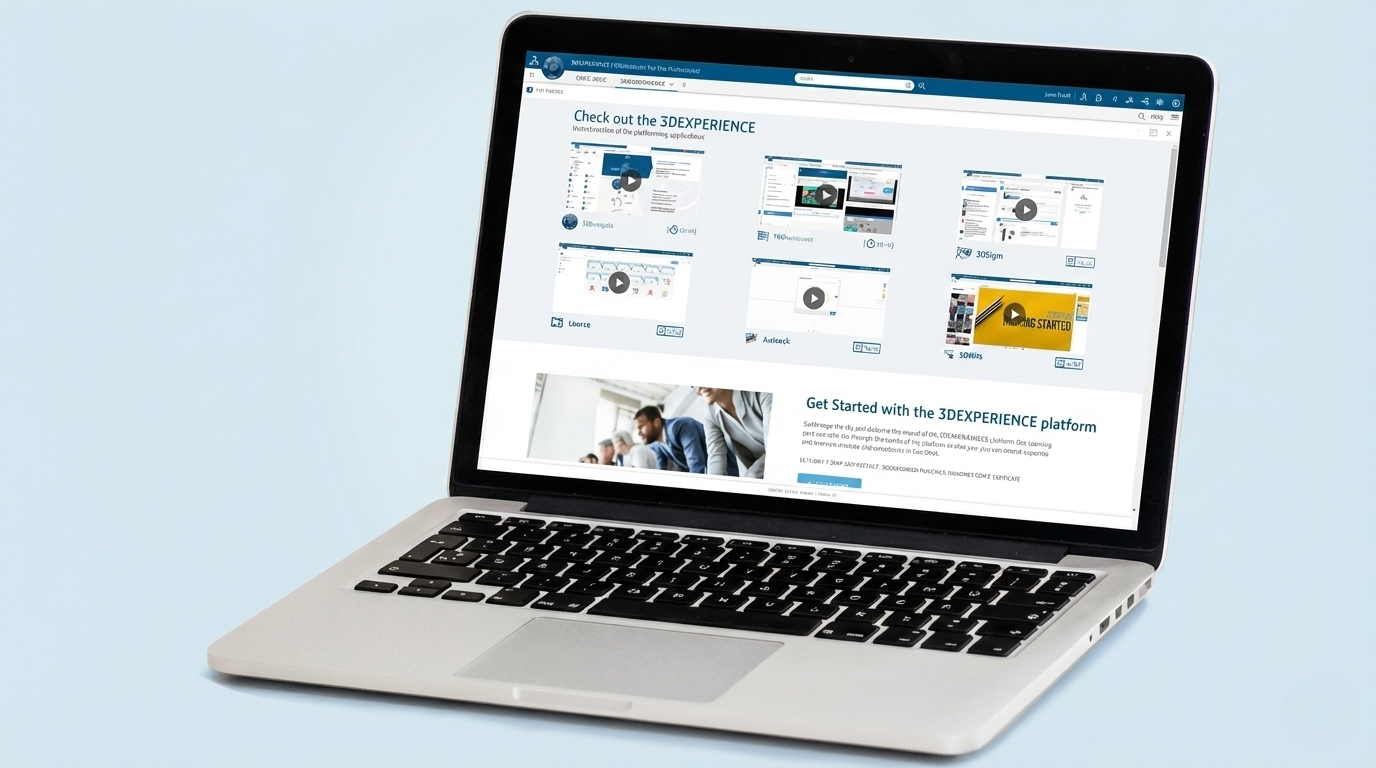
Understanding Dashboards in the 3DEXPERIENCE Platform
In today’s digital engineering environment, information is valuable only when it is clearly visible, well connected, and easy to understand. The 3DEXPERIENCE Platform addresses this…
-

3DEXPERIENCE Native Apps: A Unified, Intelligent Design Environment
The 3DEXPERIENCE Native Apps form the core working environment for designers, engineers, and collaborators who require powerful authoring, visualization, and data management capabilities directly on…
- Surendiran R
- July 23, 2025
From Engineering to Service: Unified BOM is the Future of Product Lifecycle
In the era of digital transformation, managing a product’s lifecycle efficiently is critical. As product complexity increases and global collaboration becomes the norm, traditional siloed BOM approaches where Engineering BOM (E-BOM), Manufacturing BOM (M-BOM), and Service BOM (S-BOM) are maintained separately, lead to major challenges such as:
- Data Inconsistencies: Different departments often work on different versions of the product structure, leading to misalignment between design, manufacturing, and service functions
- Manual Data Duplication: Maintaining BOMs in separate systems leads to duplicate data entry and higher risk of errors
- Inadequate Change Tracking: When E-BOM, M-BOM, and S-BOM are not synchronized, tracking and implementing changes across the product lifecycle becomes difficult, delaying product releases and increasing costs
- Lack of Collaboration: Isolated BOM’s hinder team collaboration, leading to designs that are hard to manufacture or service due to lack of early input from downstream teams
- Delayed Time-to-Market: Disconnected processes slow down development cycles, with BOM mismatches causing delays in manufacturing and service readiness
- Increased Cost and Rework: Without a unified BOM, errors propagate downstream, leading to rework, scrap, warranty claims, and higher support costs.
Challenges of Siloed BOM’s
Maintaining separate BOM’s causes several operational bottlenecks like:
- Manual Data Entry
- Poor Change Traceability
- Design-to-Manufacture Gaps
- Limited Reuse
- Data Duplication
What is Unified BOM Management?
Unified BOM Management refers to maintaining a single, consistent product structure that can be extended and tailored across multiple departments – Engineering, Manufacturing, and Service. Instead of working in silos, teams can collaborate using a common data model.
Model-based Engineering is the backbone that supports real-time collaboration, traceability, and change propagation across departments.
Unified BOM Is Not Just a Trend – It’s a Necessity
To stay competitive in today’s connected, product-as-a-service world, businesses must adopt a Unified BOM strategy. It enables seamless collaboration, faster product development, and more efficient service delivery.
Organizations should think about unifying engineering, manufacturing, and service data into a cohesive digital model, ensuring end-to-end visibility and agility.
How 3DEXPERIENCE Platform fosters Unified BOM Management
The 3DEXPERIENCE Platform fosters a Unified Bill of Materials (BOM) Management by providing a centralized and collaborative environment that integrates people, processes, and data across the entire product lifecycle. It enables unified BOM management through the following key capabilities:
- Collaborative Engineering Definition: Enables cross-functional teams to define and manage the engineering BOM in a shared digital environment.
- Collaborative Engineering to Manufacturing: Ensures seamless transformation of the engineering BOM into a manufacturing BOM, supporting alignment between design and production
- Service Process Engineering: Extends BOM usability into service planning by incorporating service requirements and creating service BOM’s linked to the product definition
To get more information & insights on how the 3DEXPERIENCE Platform drives Unified BOM Management, please reach out to us at marketing@edstechnologies.com