How an Efficient Geological Model Enhances Deposit Evaluation
- Pramod Sarangi
- June 19, 2025
In mineral exploration and mining, understanding the subsurface is everything. The success of any resource evaluation hinges on one critical component — the geological model.
This model isn’t just a technical requirement; it’s the foundation for informed decision-making, financial evaluation, and long-term mine planning. An efficient geological model transforms data into confidence — and that confidence drives value.
The Backbone of Mineral Resource Estimation
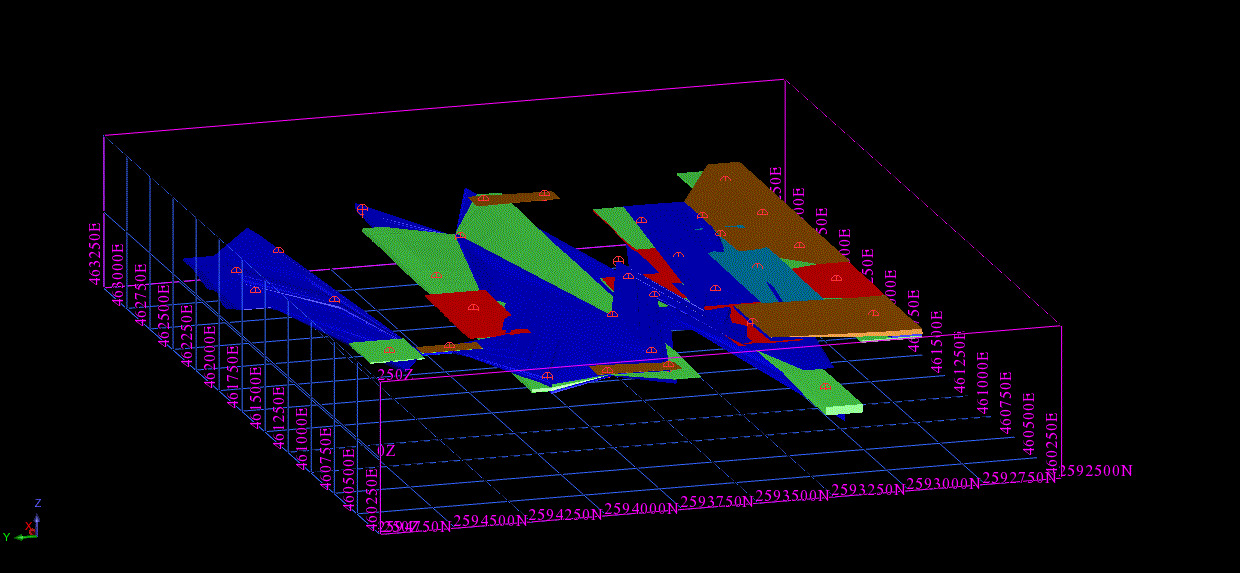
Mineral Resource estimation and classification rely heavily on the accuracy of the orebody’s geometry. That geometry is captured through a 3D geological model — a digital representation of what lies beneath the surface.
But creating that model isn’t simple. It’s shaped by structural and depositional complexity, which is initially defined through limited drilling information. At early project stages, geological interpretation must be done with caution, as the available data only tells part of the story.
As more information becomes available, the geological model must be updated and refined. This ensures that resource estimates remain well-constrained, reducing the risk associated with grade continuity assumptions and resource classification.
From Data to Understanding: The Power of Ongoing Refinement
The model’s refinement is a continuous process. Each new drillhole adds depth to the geological story — not just in data, but in interpretation. Along with updated grade statistics and spatial correlations, the working knowledge gained over the life of the mine plays a vital role. Familiarity with the deposit and the modeling software are also key.
Refinement ensures that the geological model stays current and reliable, leading to better decisions at every stage of the mining value chain.
Managing the Most Valuable Asset: Geological Data
In exploration and mining, geological data is the single most important input into any technical or financial assessment. It defines the location, geometry, and grade of the orebody — all critical for understanding the potential value of a deposit.
That’s why mining organizations invest heavily every year to:
- Acquire new geoscientific data
- Make new geological interpretations
- Maintain, manage, and interrogate historical data
As analytical technologies and interpretation methods evolve, even older data can increase in value — provided it’s well curated.
But collecting the data is just the beginning.
Turning Data into Action with Geological Modeling
To make meaningful use of that data, companies must convert it into an accurate, reliable 3D geological model. That’s where tools like GEOVIA come in — helping teams visualize subsurface geology, test hypotheses, and make smarter decisions on surface and underground.
Efficient geological data management enables:
- Better understanding of mineral distribution
- More accurate risk assessments
- Smarter mine planning and development
- Operational excellence across the value chain
What Makes a Geological Model Work?
A 3D geological model is a digital, visual, and interactive representation of subsurface structures and rock properties. It integrates various data types — from drillhole logs and geophysical surveys to rock characteristics — to build a clear picture of what’s underground.
Creating this model involves four essential steps:
- Data Collection and Analysis
Gathering comprehensive data — including drillholes, geophysics, and geochemistry — to understand the geological setting. - Interpretation and Correlation
Identifying geological structures like faults, folds, and mineralized zones. Correlating all available data builds a consistent geological narrative. - Model Construction
Using specialized software such as GEOVIA to build a three-dimensional view that integrates all geological interpretations. - Validation and Refinement
As new data becomes available, the model is updated and refined — ensuring it reflects the most accurate understanding of the subsurface.
Conclusion: The Strategic Value of Geological Modeling
An efficient geological model is more than a technical tool — it’s a strategic asset. It supports better decisions, reduces uncertainty, and unlocks the full potential of your mineral resource.
With the right processes, tools, and commitment to continuous improvement, your geological model becomes a source of confidence — from exploration through to production.

Recent Posts
-
3DEXPERIENCE CATIA Composite Design – Delivering Next-Generation Precision for Advanced Composite Structures
3DEXPERIENCE CATIA Composite Design is an advanced, collaborative, and highly integrated engineering solution designed to manage the complexity of modern composite structures used across aerospace,…
-

Innovating with Light: Advanced Optical Solutions for Automotive, Medical, and Photonic Systems
The rapidly evolving optical industry demands cutting-edge systems with exceptional precision and accuracy. As the market for these advanced solutions grows, engineers and manufacturers must…
-
Parametric Modeling to Improve Design Efficiency in 3DEXPERIENCE CATIA
Parametric modeling is more than applying dimensions and constraints – it is about capturing design intent so that changes can be made without rework. In 3DEXPERIENCE CATIA, well-planned parametric models reduce redesign time, improve collaboration,…
-

Configuring Collaborative Spaces in 3DEXPERIENCE for Large Teams
In large organizations, effective collaboration is critical. 3DEXPERIENCE provides Collaborative Spaces, enabling teams to work concurrently on designs, manage data securely, and maintain version control.…
-
3DEXPERIENCE Web Apps – A Complete Guide to Classic Web Applications
The 3DEXPERIENCE Web Apps – Classic User’s Guide explains the common tools, user interface, and functionalities provided by Collaboration and Approvals, which are used across…
-

3DEXPERIENCE in the Automotive Industry: Use Cases & Benefits for OEMs, Tier-1 Suppliers, and EV Manufacturers
The automotive industry is evolving at an unprecedented pace. OEMs are under pressure to reduce time to market, Tier-1 suppliers must align closely with multiple…
-
Understanding Dashboards in the 3DEXPERIENCE Platform
In today’s digital engineering environment, information is valuable only when it is clearly visible, well connected, and easy to understand. The 3DEXPERIENCE Platform addresses this…
-

3DEXPERIENCE Native Apps: A Unified, Intelligent Design Environment
The 3DEXPERIENCE Native Apps form the core working environment for designers, engineers, and collaborators who require powerful authoring, visualization, and data management capabilities directly on…
- Pramod Sarangi
- June 19, 2025
How an Efficient Geological Model Enhances Deposit Evaluation
In mineral exploration and mining, understanding the subsurface is everything. The success of any resource evaluation hinges on one critical component — the geological model.
This model isn’t just a technical requirement; it’s the foundation for informed decision-making, financial evaluation, and long-term mine planning. An efficient geological model transforms data into confidence — and that confidence drives value.
The Backbone of Mineral Resource Estimation
Mineral Resource estimation and classification rely heavily on the accuracy of the orebody’s geometry. That geometry is captured through a 3D geological model — a digital representation of what lies beneath the surface.
But creating that model isn’t simple. It’s shaped by structural and depositional complexity, which is initially defined through limited drilling information. At early project stages, geological interpretation must be done with caution, as the available data only tells part of the story.
As more information becomes available, the geological model must be updated and refined. This ensures that resource estimates remain well-constrained, reducing the risk associated with grade continuity assumptions and resource classification.
From Data to Understanding: The Power of Ongoing Refinement
The model’s refinement is a continuous process. Each new drillhole adds depth to the geological story — not just in data, but in interpretation. Along with updated grade statistics and spatial correlations, the working knowledge gained over the life of the mine plays a vital role. Familiarity with the deposit and the modeling software are also key.
Refinement ensures that the geological model stays current and reliable, leading to better decisions at every stage of the mining value chain.
Managing the Most Valuable Asset: Geological Data
In exploration and mining, geological data is the single most important input into any technical or financial assessment. It defines the location, geometry, and grade of the orebody — all critical for understanding the potential value of a deposit.
That’s why mining organizations invest heavily every year to:
- Acquire new geoscientific data
- Make new geological interpretations
- Maintain, manage, and interrogate historical data
As analytical technologies and interpretation methods evolve, even older data can increase in value — provided it’s well curated.
But collecting the data is just the beginning.
Turning Data into Action with Geological Modeling
To make meaningful use of that data, companies must convert it into an accurate, reliable 3D geological model. That’s where tools like GEOVIA come in — helping teams visualize subsurface geology, test hypotheses, and make smarter decisions on surface and underground.
Efficient geological data management enables:
- Better understanding of mineral distribution
- More accurate risk assessments
- Smarter mine planning and development
- Operational excellence across the value chain
What Makes a Geological Model Work?
A 3D geological model is a digital, visual, and interactive representation of subsurface structures and rock properties. It integrates various data types — from drillhole logs and geophysical surveys to rock characteristics — to build a clear picture of what’s underground.
Creating this model involves four essential steps:
- Data Collection and Analysis
Gathering comprehensive data — including drillholes, geophysics, and geochemistry — to understand the geological setting. - Interpretation and Correlation
Identifying geological structures like faults, folds, and mineralized zones. Correlating all available data builds a consistent geological narrative. - Model Construction
Using specialized software such as GEOVIA to build a three-dimensional view that integrates all geological interpretations. - Validation and Refinement
As new data becomes available, the model is updated and refined — ensuring it reflects the most accurate understanding of the subsurface.
Conclusion: The Strategic Value of Geological Modeling
An efficient geological model is more than a technical tool — it’s a strategic asset. It supports better decisions, reduces uncertainty, and unlocks the full potential of your mineral resource.
With the right processes, tools, and commitment to continuous improvement, your geological model becomes a source of confidence — from exploration through to production.