3DEXPERIENCE CATIA Composite Design – Delivering Next-Generation Precision for Advanced Composite Structures
- Jayesh Darji
- February 27, 2026
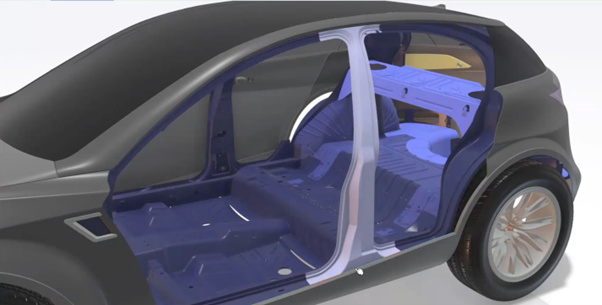
3DEXPERIENCE CATIA Composite Design is an advanced, collaborative, and highly integrated engineering solution designed to manage the complexity of modern composite structures used across aerospace, automotive, marine, defence, energy, and high-performance industrial applications. Unlike conventional metallic parts, composite materials are engineered from multiple stacked plies with different orientations, materials, and thicknesses, where overall structural performance depends significantly on fiber direction, laminate sequence, and draping behaviour. The 3DEXPERIENCE platform elevates this capability further by providing a unified digital environment that connects design, simulation, manufacturing, and data management, ensuring composite development is accurate, traceable, and fully aligned with enterprise workflows.
A key strength of 3DEXPERIENCE CATIA Composite Design is its robust ply-based design methodology, enabling engineers to build laminates layer by layer with exceptional precision. Each ply can be defined with exact boundaries, material definitions, thickness, fiber orientations (0°, ±45°, 90°, or custom), and stacking sequences, while zones and groups help manage large and complex components efficiently. The platform provides powerful draping simulation capabilities that allow designers to visualize how composite material behaves on curved or freeform surfaces and automatically adapts ply geometry to minimize wrinkles, overlaps, fiber distortion, and misalignment. This ensures that designs are not only structurally accurate but also realistic for manufacturing conditions.
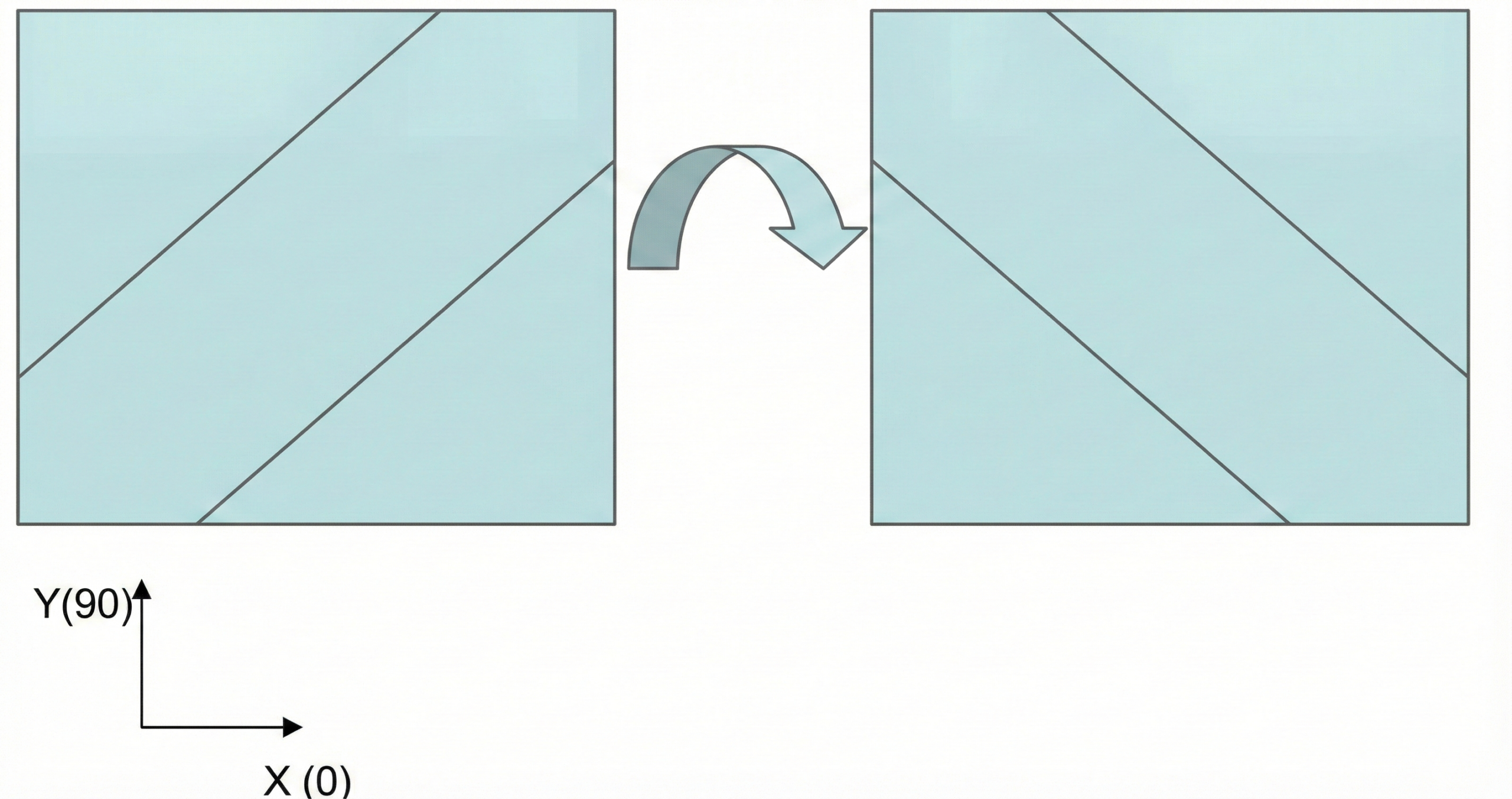
Fig- Ply Fiber Direction
Visualization, validation, and decision-making are significantly enhanced in 3DEXPERIENCE CATIA. Engineers can review laminate buildup step-by-step, analyse thickness variations, verify stack sequences, and evaluate overlaps and gaps with high clarity. Composite grid definitions and fiber direction maps support continuity and precision across complex aerodynamic, structural, or ergonomic surfaces. With the platform’s integrated data management capabilities, every design iteration remains traceable, controlled, and synchronized, reducing the risk of errors and rework while strengthening digital continuity from concept to production.
Another major advantage of 3DEXPERIENCE CATIA Composite Design is its strong alignment with manufacturing needs. The system supports automated flat pattern generation while considering draping effects and real fiber behaviour. Engineers can produce ply books, detailed manufacturing documentation, optimized nesting layouts, and laser projection data to support both manual lay-up and automated fiber placement processes. Through the unified 3DEXPERIENCE ecosystem, manufacturing teams, engineering teams, and suppliers can collaborate seamlessly, enabling faster decision-making, reduced material waste, shorter lead times, and higher production reliability.
From a structural performance perspective, 3DEXPERIENCE CATIA connects seamlessly with SIMULIA tools such as Abaqus for advanced composite analysis. Laminate definitions, stacking sequences, material details, and fiber orientations can be transferred directly for simulation to assess stiffness, load-bearing capability, failure criteria, delamination risks, fatigue performance, and optimization opportunities. This integrated simulation-driven design approach enables engineers to validate concepts early and refine them efficiently within the same platform without losing design intent or data integrity.
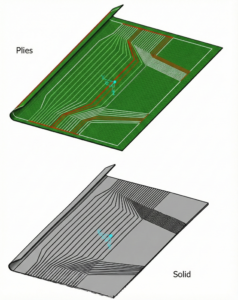
Fig- Solid representation of Plies
In conclusion, 3DEXPERIENCE CATIA Composite Design offers a comprehensive, intelligent, and collaborative environment for engineering composite structures with unmatched accuracy and efficiency. By integrating detailed ply-based modeling, advanced visualization, manufacturability assessment, enterprise collaboration, and simulation connectivity within a single platform, it empowers industries to deliver lighter, stronger, and more reliable composite products. Organizations benefit from reduced development cycles, enhanced product quality, minimized manufacturing risks, and accelerated innovation. For companies looking to master composite engineering while ensuring digital continuity and manufacturing readiness, 3DEXPERIENCE CATIA Composite Design stands as a future-ready and industry-leading solution

Recent Posts
-

Innovating with Light: Advanced Optical Solutions for Automotive, Medical, and Photonic Systems
The rapidly evolving optical industry demands cutting-edge systems with exceptional precision and accuracy. As the market for these advanced solutions grows, engineers and manufacturers must…
-
Parametric Modeling to Improve Design Efficiency in 3DEXPERIENCE CATIA
Parametric modeling is more than applying dimensions and constraints – it is about capturing design intent so that changes can be made without rework. In 3DEXPERIENCE CATIA, well-planned parametric models reduce redesign time, improve collaboration,…
-

Configuring Collaborative Spaces in 3DEXPERIENCE for Large Teams
In large organizations, effective collaboration is critical. 3DEXPERIENCE provides Collaborative Spaces, enabling teams to work concurrently on designs, manage data securely, and maintain version control.…
-
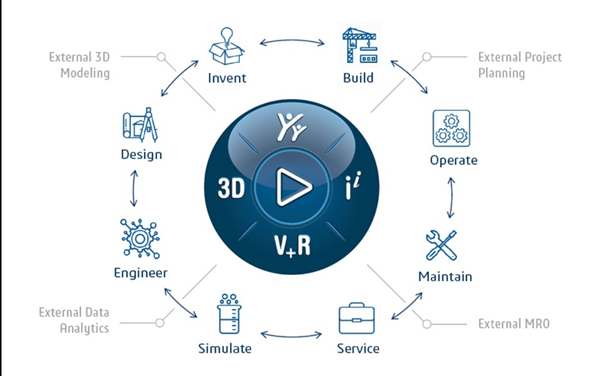
3DEXPERIENCE Web Apps – A Complete Guide to Classic Web Applications
The 3DEXPERIENCE Web Apps – Classic User’s Guide explains the common tools, user interface, and functionalities provided by Collaboration and Approvals, which are used across…
-
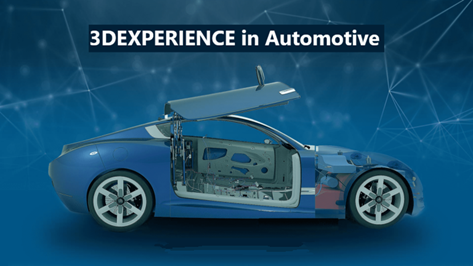
3DEXPERIENCE in the Automotive Industry: Use Cases & Benefits for OEMs, Tier-1 Suppliers, and EV Manufacturers
The automotive industry is evolving at an unprecedented pace. OEMs are under pressure to reduce time to market, Tier-1 suppliers must align closely with multiple…
-

Understanding Dashboards in the 3DEXPERIENCE Platform
In today’s digital engineering environment, information is valuable only when it is clearly visible, well connected, and easy to understand. The 3DEXPERIENCE Platform addresses this…
-

3DEXPERIENCE Native Apps: A Unified, Intelligent Design Environment
The 3DEXPERIENCE Native Apps form the core working environment for designers, engineers, and collaborators who require powerful authoring, visualization, and data management capabilities directly on…
-

PLM Components in 3DEXPERIENCE: Enabling Digital Continuity Across the Product Lifecycle
Product Lifecycle Management (PLM) Components form the digital foundation of the 3DEXPERIENCE Platform. They define how product data is created, structured, related, governed, and reused across the…
- Jayesh Darji
- February 27, 2026
3DEXPERIENCE CATIA Composite Design – Delivering Next-Generation Precision for Advanced Composite Structures
3DEXPERIENCE CATIA Composite Design is an advanced, collaborative, and highly integrated engineering solution designed to manage the complexity of modern composite structures used across aerospace, automotive, marine, defence, energy, and high-performance industrial applications. Unlike conventional metallic parts, composite materials are engineered from multiple stacked plies with different orientations, materials, and thicknesses, where overall structural performance depends significantly on fiber direction, laminate sequence, and draping behaviour. The 3DEXPERIENCE platform elevates this capability further by providing a unified digital environment that connects design, simulation, manufacturing, and data management, ensuring composite development is accurate, traceable, and fully aligned with enterprise workflows.
A key strength of 3DEXPERIENCE CATIA Composite Design is its robust ply-based design methodology, enabling engineers to build laminates layer by layer with exceptional precision. Each ply can be defined with exact boundaries, material definitions, thickness, fiber orientations (0°, ±45°, 90°, or custom), and stacking sequences, while zones and groups help manage large and complex components efficiently. The platform provides powerful draping simulation capabilities that allow designers to visualize how composite material behaves on curved or freeform surfaces and automatically adapts ply geometry to minimize wrinkles, overlaps, fiber distortion, and misalignment. This ensures that designs are not only structurally accurate but also realistic for manufacturing conditions.
Fig- Ply Fiber Direction
Visualization, validation, and decision-making are significantly enhanced in 3DEXPERIENCE CATIA. Engineers can review laminate buildup step-by-step, analyse thickness variations, verify stack sequences, and evaluate overlaps and gaps with high clarity. Composite grid definitions and fiber direction maps support continuity and precision across complex aerodynamic, structural, or ergonomic surfaces. With the platform’s integrated data management capabilities, every design iteration remains traceable, controlled, and synchronized, reducing the risk of errors and rework while strengthening digital continuity from concept to production.
Another major advantage of 3DEXPERIENCE CATIA Composite Design is its strong alignment with manufacturing needs. The system supports automated flat pattern generation while considering draping effects and real fiber behaviour. Engineers can produce ply books, detailed manufacturing documentation, optimized nesting layouts, and laser projection data to support both manual lay-up and automated fiber placement processes. Through the unified 3DEXPERIENCE ecosystem, manufacturing teams, engineering teams, and suppliers can collaborate seamlessly, enabling faster decision-making, reduced material waste, shorter lead times, and higher production reliability.
From a structural performance perspective, 3DEXPERIENCE CATIA connects seamlessly with SIMULIA tools such as Abaqus for advanced composite analysis. Laminate definitions, stacking sequences, material details, and fiber orientations can be transferred directly for simulation to assess stiffness, load-bearing capability, failure criteria, delamination risks, fatigue performance, and optimization opportunities. This integrated simulation-driven design approach enables engineers to validate concepts early and refine them efficiently within the same platform without losing design intent or data integrity.
Fig- Solid representation of Plies
In conclusion, 3DEXPERIENCE CATIA Composite Design offers a comprehensive, intelligent, and collaborative environment for engineering composite structures with unmatched accuracy and efficiency. By integrating detailed ply-based modeling, advanced visualization, manufacturability assessment, enterprise collaboration, and simulation connectivity within a single platform, it empowers industries to deliver lighter, stronger, and more reliable composite products. Organizations benefit from reduced development cycles, enhanced product quality, minimized manufacturing risks, and accelerated innovation. For companies looking to master composite engineering while ensuring digital continuity and manufacturing readiness, 3DEXPERIENCE CATIA Composite Design stands as a future-ready and industry-leading solution