Parametric Modeling to Improve Design Efficiency in 3DEXPERIENCE CATIA
- Ketan Kalake
- January 8, 2026
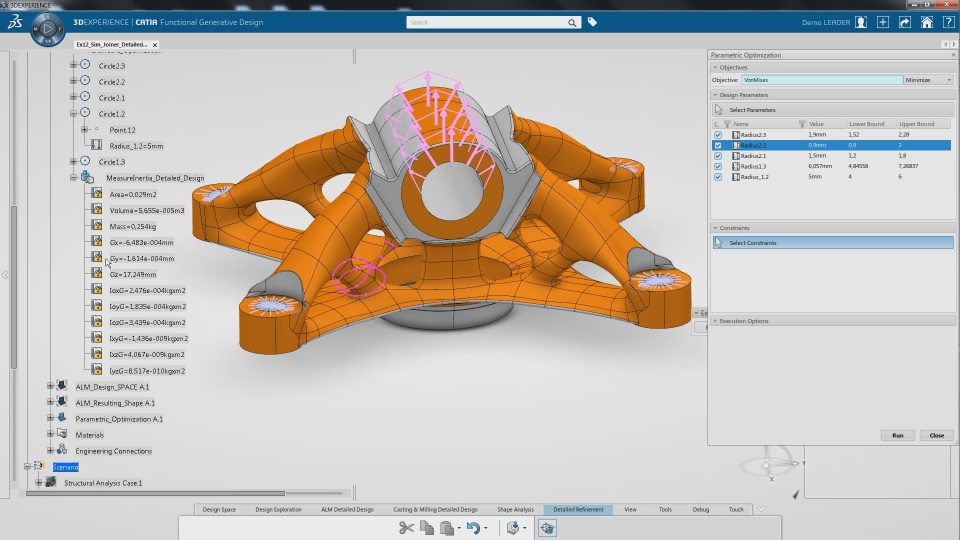
Parametric modeling is more than applying dimensions and constraints – it is about capturing design intent so that changes can be made without rework. In 3DEXPERIENCE CATIA, well-planned parametric models reduce redesign time, improve collaboration, and ensure long-term stability.
This blog focuses on core principles which describe how parametric modelling improves design efficiency.
Design Intent is the Foundation
Efficient models start with a clear understanding of what will change and what must remain constant. Before creating geometry, identify functional dimensions, interfaces, and relationships between features.
Defining design intent early allows CATIA parameters and formulas to control geometry predictably. Models built without intent often fail when updates are required later in the development cycle.
Sketch Quality Determines Model Stability
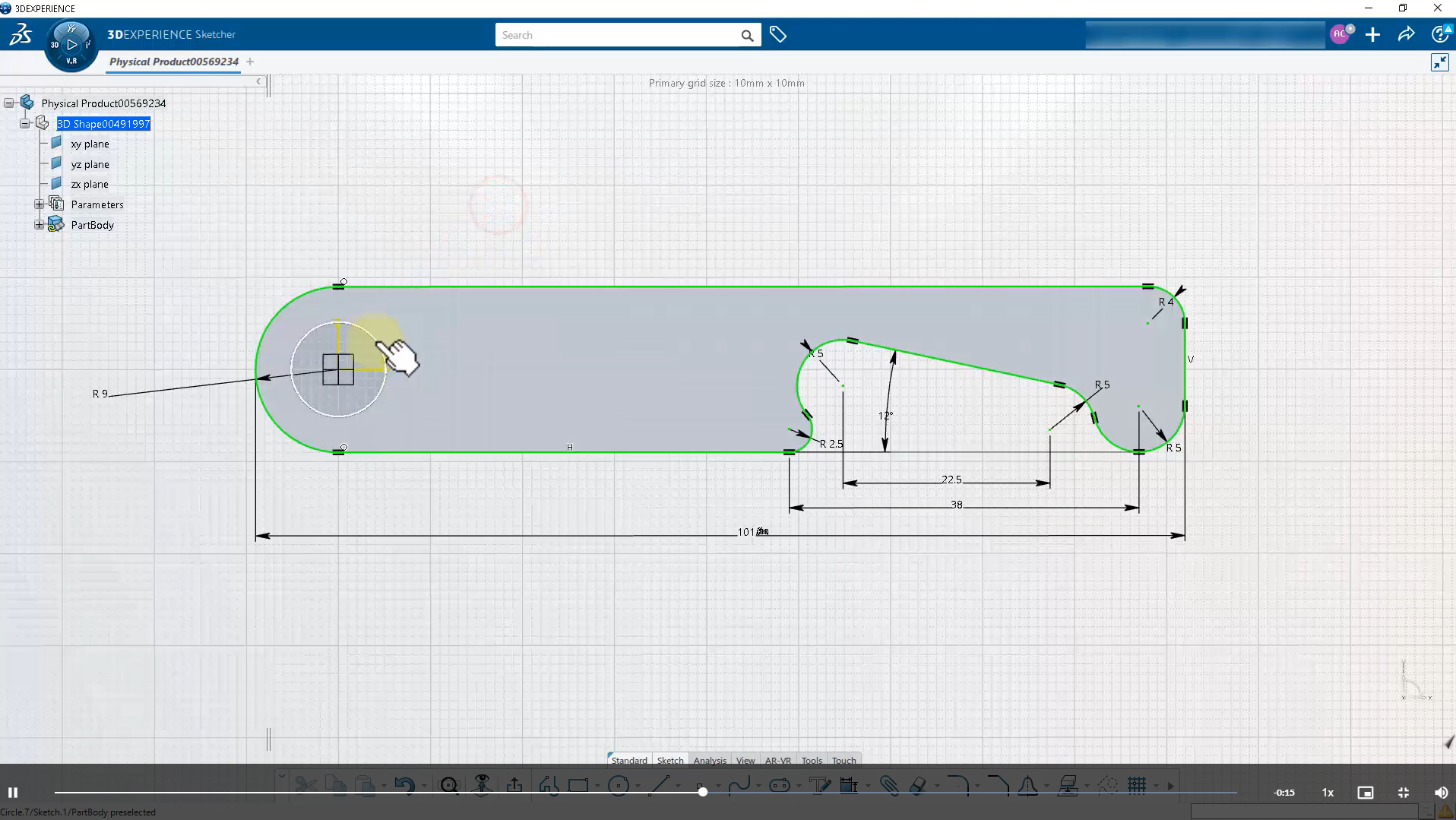
A model is only as strong as its sketches. Fully constrained sketches ensure predictable behaviour and prevent unintended geometry movement.
Avoid over-dimensioning; rely on geometric constraints such as symmetry, parallelism, and concentricity. This approach simplifies modifications and clearly communicates intent to team members.
Use Stable References, Not Faces
Excessive reliance on face-based references is a common cause of model failure. Faces may change or disappear, breaking dependent features.
Instead, use datum planes, axes, published geometry, or master sketches. Stable references are especially important in parametric and top-down designs, keeping models resilient to changes.
Keep the Feature Tree Structured
A clean, organized feature tree improves performance and collaboration. Name features logically and arranges them in design order, not creation order.
Place reference geometry at the top, core shape features in the middle, and finishing features such as fillets and chamfers at the end. This structure makes troubleshooting and future modifications easier.
Drive Geometry with Parameters
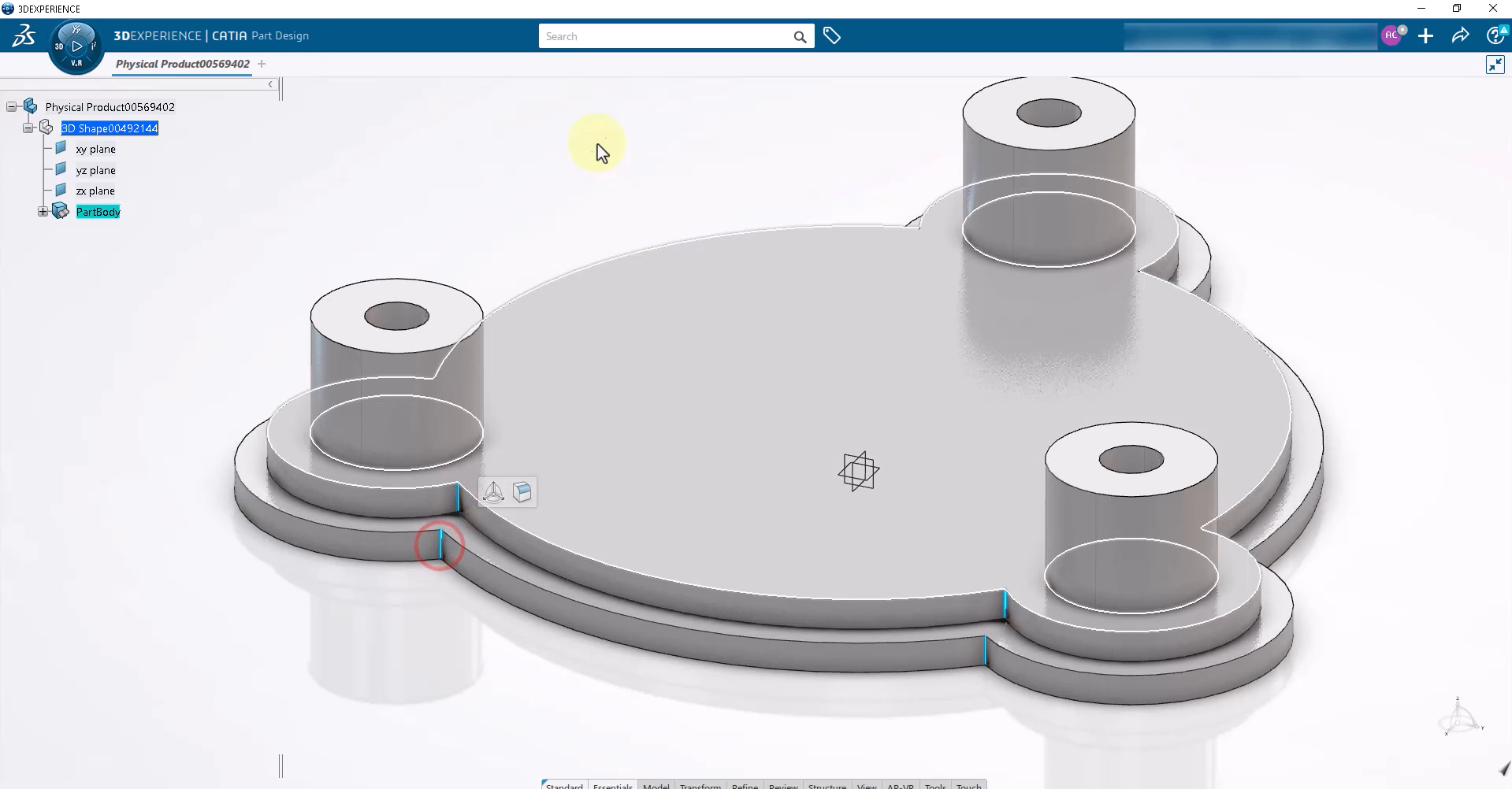
Manual edits defeat the purpose of parametric modeling. Key dimensions should be driven by parameters and formulas that reflect functional relationships.
For instance, wall thicknesses, hole depths, and clearances can link to primary dimensions. This ensures consistent updates and reduces design errors.
Apply Finishing Features Last
Fillets and chamfers are important but fragile. Applying them too early can cause failures during updates.
Treat finishing features as final operations and group them together. This makes it easy to modify or suppress them during redesigns.
Plan for Change Before Release
A robust parametric model should be tested by modifying key dimensions to ensure the geometry reacts predictably. This “what-if” validation confirms readiness for lifecycle progression.
In a collaborative 3DEXPERIENCE environment, this step is critical before moving a model to Frozen or Released states.
Conclusion
Professional parametric modeling in 3DEXPERIENCE CATIA relies on clarity, structure, and foresight. Models with stable references, clean sketches, and meaningful parameters adapt smoothly to change and support efficient team collaboration.
By applying these principles, designers can reduce rework, improve model reliability, and accelerate product development.

Recent Posts
-

From Prototypes to Production: How Additive Manufacturing is Shaping Atmanirbhar Bharat
The conversation around additive manufacturing (AM) in India has evolved considerably over the past decade. What was once viewed primarily as a prototyping technology is…
-

Identify Stray Light in Imaging Systems with LightTools
Stray light is undesired light radiation that interacts with the components of a system and degrades its performance by generating noise, that significantly reduces image…
-
Redefining the Riding Experience with RAMSIS
In two‑wheeler design, comfort and safety start with the rider. RAMSIS (Realistic Anthropometric Mathematical System of Interior Comfort Simulation) is an ergonomic simulation platform that…
-

Enhancing Product Understanding through 3D Technical Illustrator
The 3D Technical Illustrator role within the 3DEXPERIENCE Platform enables organizations to transform complex engineering data into clear, interactive, and visually rich technical documentation. In…
-

Transforming Physical Parts into Digital Models with CATIA 3DEXPERIENCE Reverse Engineer role
Reverse engineering has become a critical capability in modern product development, especially when working with legacy components, competitor benchmarking, or physical prototypes that lack digital…
-
Fixing Search Service Down Issue in 3DEXPERIENCE Platform
Search is one of the most critical features in the 3DEXPERIENCE platform. If the search service goes down, users cannot find objects, documents, or data—impacting…
-
Common Installation Errors and How to Fix Them in 3DEXPERIENCE
The 3DEXPERIENCE Platform is a powerful solution used by industries worldwide for product lifecycle management (PLM), simulation, and collaboration. However, installing 3DEXPERIENCE—especially on-premise—can be complex…
-

From Classroom to Industry: Empowering Future Engineers with the 3DEXPERIENCE Platform
In today’s fast-evolving engineering and design landscape, educational institutions must go beyond conventional CAD teaching methods. While standalone tools like CATIA V5, SOLIDWORKS, or traditional…
- Ketan Kalake
- January 8, 2026
Parametric Modeling to Improve Design Efficiency in 3DEXPERIENCE CATIA
Parametric modeling is more than applying dimensions and constraints – it is about capturing design intent so that changes can be made without rework. In 3DEXPERIENCE CATIA, well-planned parametric models reduce redesign time, improve collaboration, and ensure long-term stability.
This blog focuses on core principles which describe how parametric modelling improves design efficiency.
Design Intent is the Foundation
Efficient models start with a clear understanding of what will change and what must remain constant. Before creating geometry, identify functional dimensions, interfaces, and relationships between features.
Defining design intent early allows CATIA parameters and formulas to control geometry predictably. Models built without intent often fail when updates are required later in the development cycle.
Sketch Quality Determines Model Stability
A model is only as strong as its sketches. Fully constrained sketches ensure predictable behaviour and prevent unintended geometry movement.
Avoid over-dimensioning; rely on geometric constraints such as symmetry, parallelism, and concentricity. This approach simplifies modifications and clearly communicates intent to team members.
Use Stable References, Not Faces
Excessive reliance on face-based references is a common cause of model failure. Faces may change or disappear, breaking dependent features.
Instead, use datum planes, axes, published geometry, or master sketches. Stable references are especially important in parametric and top-down designs, keeping models resilient to changes.
Keep the Feature Tree Structured
A clean, organized feature tree improves performance and collaboration. Name features logically and arranges them in design order, not creation order.
Place reference geometry at the top, core shape features in the middle, and finishing features such as fillets and chamfers at the end. This structure makes troubleshooting and future modifications easier.
Drive Geometry with Parameters
Manual edits defeat the purpose of parametric modeling. Key dimensions should be driven by parameters and formulas that reflect functional relationships.
For instance, wall thicknesses, hole depths, and clearances can link to primary dimensions. This ensures consistent updates and reduces design errors.
Apply Finishing Features Last
Fillets and chamfers are important but fragile. Applying them too early can cause failures during updates.
Treat finishing features as final operations and group them together. This makes it easy to modify or suppress them during redesigns.
Plan for Change Before Release
A robust parametric model should be tested by modifying key dimensions to ensure the geometry reacts predictably. This “what-if” validation confirms readiness for lifecycle progression.
In a collaborative 3DEXPERIENCE environment, this step is critical before moving a model to Frozen or Released states.
Conclusion
Professional parametric modeling in 3DEXPERIENCE CATIA relies on clarity, structure, and foresight. Models with stable references, clean sketches, and meaningful parameters adapt smoothly to change and support efficient team collaboration.
By applying these principles, designers can reduce rework, improve model reliability, and accelerate product development.