PLM Components in 3DEXPERIENCE: Enabling Digital Continuity Across the Product Lifecycle

- Lalit Gore
- December 24, 2025
Product Lifecycle Management (PLM) Components form the digital foundation of the 3DEXPERIENCE Platform. They define how product data is created, structured, related, governed, and reused across the entire lifecycle—from early concept and system definition to detailed design, simulation, manufacturing, and beyond. Unlike traditional file-based approaches, PLM Components represent intelligent objects that carry context, behavior, and relationships.
At their core, PLM Components ensure that all stakeholders work on a single, consistent source of truth, enabling collaboration across domains without losing data integrity.
The IRPC Foundation of PLM Data
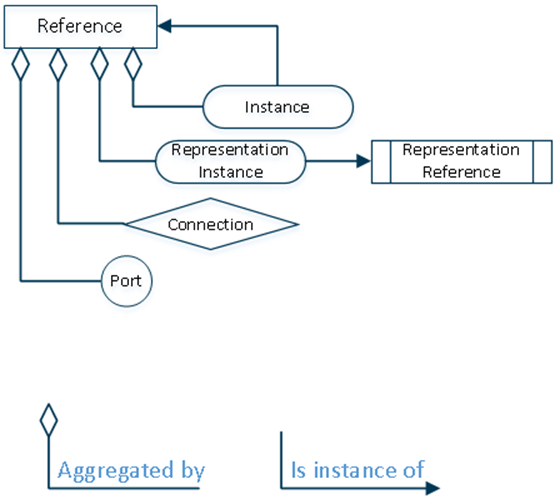
The structure of PLM Components is based on the IRPC conceptual model, which stands for Instance, Reference, Port, and Connection. This model provides a clear separation between definition, usage, and interaction, allowing complex products and systems to be managed efficiently.
A Reference represents the definition of an object. It describes what the object is, such as a product, assembly, or functional element. References act as the parents in a structure and can aggregate other components, forming the backbone of product definitions.
An Instance represents the usage of a reference in a specific context. While the reference defines the object, the instance defines where and how it is used. This distinction enables reuse of the same definition across multiple products or assemblies while maintaining contextual clarity.
A Representation Reference defines the detailed realization of an object, such as 3D geometry, drawings, or visualization data. These representations may be reusable, allowing multiple usages, or non-reusable, allowing a single dedicated usage depending on design intent and governance needs.
A Representation Instance reflects the contextual usage of that representation, maintaining a strong link between definition and application.
Structured Relationships and System Connectivity
PLM Components are organized through parent–child relationships that describe how products are built and how systems are composed. These structures allow organizations to manage complex assemblies, variants, and configurations in a controlled and traceable manner.
To support system and functional engineering, PLM objects can include Ports and Connections. Ports define interaction points, while connections describe relationships or flows between objects. This capability is essential for modeling logical, functional, and system-level architectures within the same PLM environment.
Attributes, Identity, and Governance
Each PLM object carries a rich set of attributes that define its identity, lifecycle, and ownership. Human-readable titles support understanding, while system-generated names and revisions ensure uniqueness and traceability across the platform.
Attributes such as ownership, collaboration space, collaborative policy, and effectivity play a critical role in enterprise governance. They define who can access or modify data and under what conditions, ensuring secure and compliant collaboration.
The Identifier Set further strengthens data integrity by defining a clear scope of uniqueness based on platform, service, object type, name, and revision. This enables multiple teams to work in parallel without data conflicts.
Readability and Collaborative Access
PLM Components follow intelligent readability and access rules. Within a collaborative space, visibility is inherited across aggregated objects, enabling teams to seamlessly access related data without manual intervention. At the same time, access boundaries are respected across different collaborative spaces, protecting sensitive or restricted information.
This approach balances openness and control, allowing collaboration to scale while maintaining security and compliance.
Modelers: Domain-Specific Views on the Same Data
The 3DEXPERIENCE Platform offers a wide range of modelers—such as product, functional, logical, simulation, material, system, portfolio, and CAD-integrated modelers like SOLIDWORKS. Each modeler works on the same PLM Components but applies domain-specific rules, behaviors, and lifecycle logic.
Supporting modelers, including component family, feature specialization, filters, favorites, and business rules, enhance reuse, standardization, and decision-making. This ensures that different disciplines can collaborate on the same product definition without duplicating or breaking data.
Conclusion
PLM Components are the backbone of digital continuity in the 3DEXPERIENCE Platform. By transforming product data into intelligent, structured, and governed objects, they enable reuse instead of duplication, collaboration instead of silos, and traceability instead of fragmentation.
Through the IRPC model, rich attributes, structured relationships, and domain-specific modelers, PLM Components provide a scalable and secure foundation for modern engineering organizations. They allow businesses to manage complexity, improve collaboration, and maintain a consistent digital thread across the entire product lifecycle—making PLM not just a system of record, but a system of innovation.

Recent Posts
-
From Prototypes to Production: How Additive Manufacturing is Shaping Atmanirbhar Bharat
The conversation around additive manufacturing (AM) in India has evolved considerably over the past decade. What was once viewed primarily as a prototyping technology is…
-
Identify Stray Light in Imaging Systems with LightTools
Stray light is undesired light radiation that interacts with the components of a system and degrades its performance by generating noise, that significantly reduces image…
-
Redefining the Riding Experience with RAMSIS
In two‑wheeler design, comfort and safety start with the rider. RAMSIS (Realistic Anthropometric Mathematical System of Interior Comfort Simulation) is an ergonomic simulation platform that…
-
Enhancing Product Understanding through 3D Technical Illustrator
The 3D Technical Illustrator role within the 3DEXPERIENCE Platform enables organizations to transform complex engineering data into clear, interactive, and visually rich technical documentation. In…
-

Transforming Physical Parts into Digital Models with CATIA 3DEXPERIENCE Reverse Engineer role
Reverse engineering has become a critical capability in modern product development, especially when working with legacy components, competitor benchmarking, or physical prototypes that lack digital…
-
Fixing Search Service Down Issue in 3DEXPERIENCE Platform
Search is one of the most critical features in the 3DEXPERIENCE platform. If the search service goes down, users cannot find objects, documents, or data—impacting…
-
Common Installation Errors and How to Fix Them in 3DEXPERIENCE
The 3DEXPERIENCE Platform is a powerful solution used by industries worldwide for product lifecycle management (PLM), simulation, and collaboration. However, installing 3DEXPERIENCE—especially on-premise—can be complex…
-
From Classroom to Industry: Empowering Future Engineers with the 3DEXPERIENCE Platform
In today’s fast-evolving engineering and design landscape, educational institutions must go beyond conventional CAD teaching methods. While standalone tools like CATIA V5, SOLIDWORKS, or traditional…
- Lalit Gore
- December 24, 2025
PLM Components in 3DEXPERIENCE: Enabling Digital Continuity Across the Product Lifecycle
Product Lifecycle Management (PLM) Components form the digital foundation of the 3DEXPERIENCE Platform. They define how product data is created, structured, related, governed, and reused across the entire lifecycle—from early concept and system definition to detailed design, simulation, manufacturing, and beyond. Unlike traditional file-based approaches, PLM Components represent intelligent objects that carry context, behavior, and relationships.
At their core, PLM Components ensure that all stakeholders work on a single, consistent source of truth, enabling collaboration across domains without losing data integrity.
The IRPC Foundation of PLM Data
The structure of PLM Components is based on the IRPC conceptual model, which stands for Instance, Reference, Port, and Connection. This model provides a clear separation between definition, usage, and interaction, allowing complex products and systems to be managed efficiently.
A Reference represents the definition of an object. It describes what the object is, such as a product, assembly, or functional element. References act as the parents in a structure and can aggregate other components, forming the backbone of product definitions.
An Instance represents the usage of a reference in a specific context. While the reference defines the object, the instance defines where and how it is used. This distinction enables reuse of the same definition across multiple products or assemblies while maintaining contextual clarity.
A Representation Reference defines the detailed realization of an object, such as 3D geometry, drawings, or visualization data. These representations may be reusable, allowing multiple usages, or non-reusable, allowing a single dedicated usage depending on design intent and governance needs.
A Representation Instance reflects the contextual usage of that representation, maintaining a strong link between definition and application.
Structured Relationships and System Connectivity
PLM Components are organized through parent–child relationships that describe how products are built and how systems are composed. These structures allow organizations to manage complex assemblies, variants, and configurations in a controlled and traceable manner.
To support system and functional engineering, PLM objects can include Ports and Connections. Ports define interaction points, while connections describe relationships or flows between objects. This capability is essential for modeling logical, functional, and system-level architectures within the same PLM environment.
Attributes, Identity, and Governance
Each PLM object carries a rich set of attributes that define its identity, lifecycle, and ownership. Human-readable titles support understanding, while system-generated names and revisions ensure uniqueness and traceability across the platform.
Attributes such as ownership, collaboration space, collaborative policy, and effectivity play a critical role in enterprise governance. They define who can access or modify data and under what conditions, ensuring secure and compliant collaboration.
The Identifier Set further strengthens data integrity by defining a clear scope of uniqueness based on platform, service, object type, name, and revision. This enables multiple teams to work in parallel without data conflicts.
Readability and Collaborative Access
PLM Components follow intelligent readability and access rules. Within a collaborative space, visibility is inherited across aggregated objects, enabling teams to seamlessly access related data without manual intervention. At the same time, access boundaries are respected across different collaborative spaces, protecting sensitive or restricted information.
This approach balances openness and control, allowing collaboration to scale while maintaining security and compliance.
Modelers: Domain-Specific Views on the Same Data
The 3DEXPERIENCE Platform offers a wide range of modelers—such as product, functional, logical, simulation, material, system, portfolio, and CAD-integrated modelers like SOLIDWORKS. Each modeler works on the same PLM Components but applies domain-specific rules, behaviors, and lifecycle logic.
Supporting modelers, including component family, feature specialization, filters, favorites, and business rules, enhance reuse, standardization, and decision-making. This ensures that different disciplines can collaborate on the same product definition without duplicating or breaking data.
Conclusion
PLM Components are the backbone of digital continuity in the 3DEXPERIENCE Platform. By transforming product data into intelligent, structured, and governed objects, they enable reuse instead of duplication, collaboration instead of silos, and traceability instead of fragmentation.
Through the IRPC model, rich attributes, structured relationships, and domain-specific modelers, PLM Components provide a scalable and secure foundation for modern engineering organizations. They allow businesses to manage complexity, improve collaboration, and maintain a consistent digital thread across the entire product lifecycle—making PLM not just a system of record, but a system of innovation.