Digitalization of Lean Practices in Shop Floor

Lean Manufacturing

The word “lean” means no excess. So lean manufacturing can be explained simply as manufacturing which involves nominal waste. Lean manufacturing is all about reducing waste, not just physical waste, but labor and time waste caused by some processes. When all of these wastes have been eliminated from the system, only then can it be said that the system is truly lean and optimized. In short, lean manufacturing involves continual efforts to decrease or eliminate waste starting from the design process to the manufacturing, distribution and towards the product support and the phases beyond. This necessitates work and the development of a lean culture within the workforce, which ultimately leads to added value both for the customer and the company.


Managing a Lean Manufacturing Plant

The burden to deliver quality parts on schedule and at the same time to keep throughput times, residues and missing parts to a minimum is increasing in manufacturing planning. Shop floor management helps manufacturing companies achieve this goal. Companies have multiple teams which work to achieve the required level of productivity. Below is the representation of how many teams work to produce a product.
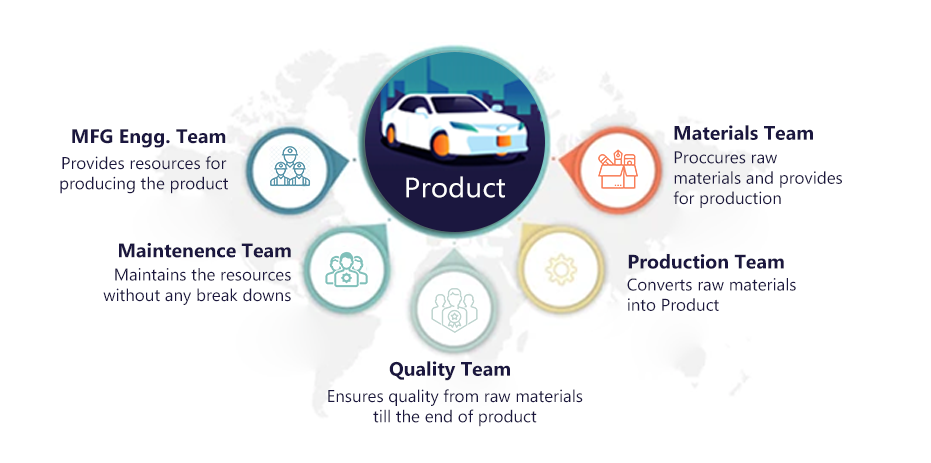
incorporation of Digitalization in Lean Practices on the Shop Floor-1

Deviating, even by any one team at any stage is not acceptable because it would affect the entire productivity of the plant.


Shop Floor Management

Constant practice of shop floor management approaches helps to form choices, recognize deviations in productivity results and successfully solve problems. Workplace meetings are the core for creating the culture of LEAN – embedding the behavior in all operators by making it part of their work to share learnings and ideas. Also key for sustainability, part of the daily process post which managers can customize the agenda.

However, each department within the company must collect a lot of information and compile it before having the meeting. Information flow in a company for a single department is shown in the below representation.
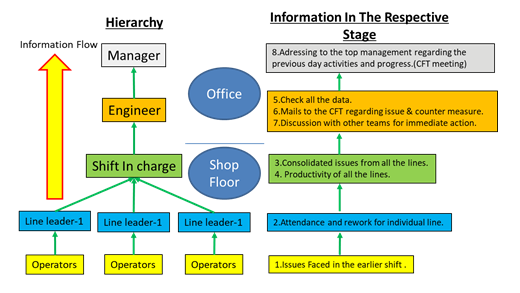
incorporation of Digitalization in Lean Practices on the Shop Floor-6

Collecting this information and compiling has to be done for easy understanding and discussion. More specifically, there are four paper practices:

(1) creating and adapting individual information spaces

(2) reinterpreting information

(3) combining information handover with social interaction

(4) visual cuing

After collecting and compiling, this information goes to the boards as shown below.
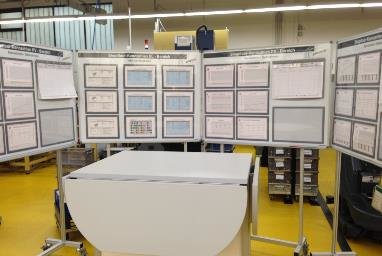
incorporation of Digitalization in Lean Practices on the Shop Floor-6


Challenges within the paper-based shop floor meeting
  1. Time taken for updating the boards.
  2. Information transparency is missed and reviewing previous days’ issues by management is very challenging.
  3. No track/update of issues discussed, if they were closed or not.
  4. Data retrievability could be a huge issue.

Digitalize Lean Practices

DELMIA 3DLean is a modern, customizable and interactive solution that gives managers the ability to capture, monitor, and track operational meetings on the shop floor. It enables manufacturers to bring about lean practices to make them an integral part of shop floor operations by providing critical coordination and communication capabilities. Enacting Lean practices on the shop floor help improve communication. Built on the 3DEXPERIENCE platform, DELMIA 3DLean has a widget-based web app called HIGHLIGHTS that uses touchscreen technology to deploy Lean practices to team leaders, workers, and support teams.
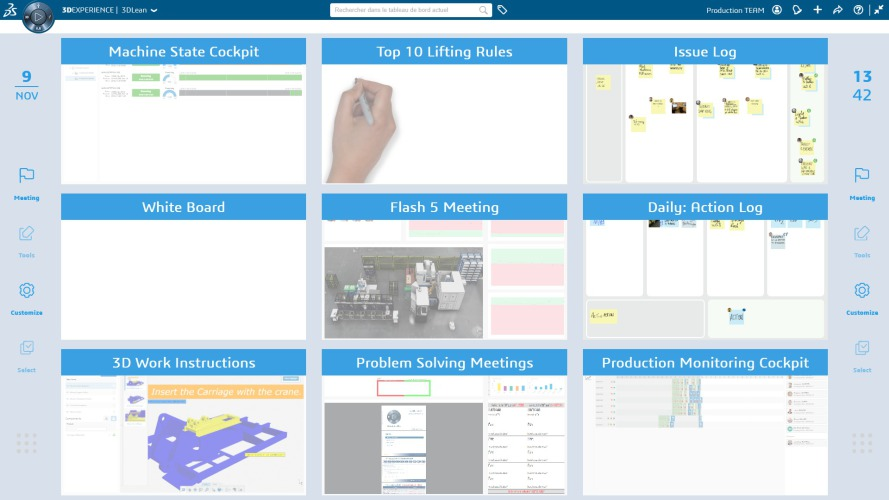
incorporation of Digitalization in Lean Practices on the Shop Floor-6

Digitalization unites shop floor data with engineers’ intellect and breaks down organizational barriers and allows each team to take the correct actions, cascade results to stakeholders, and collaborate effortlessly regardless of their role or job. It helps companies by allowing teams to add human intelligence to shop floor data when addressing operational needs. It also animates Lean work place meetings with graphically presented functions for immediate action and follow through.
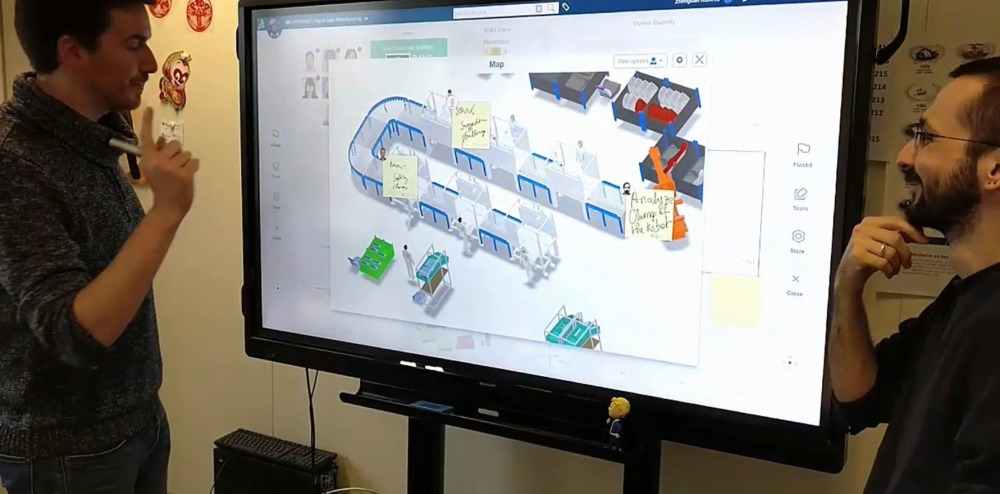
incorporation of Digitalization in Lean Practices on the Shop Floor-6

It also helps to track the discussed points. Each issue can be assigned in the board and status of the work can be checked and followed up with the responsible person for the details and solve the issues without any waste of time.
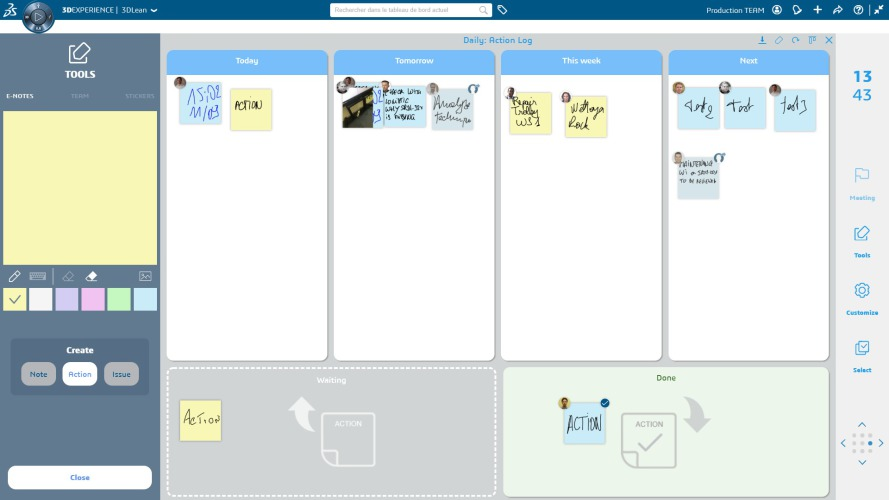
incorporation of Digitalization in Lean Practices on the Shop Floor-6

DELMIA 3DLean makes ‘Lean thinking’ a standard part of business, teams and culture by:

  • Allowing flexibility to adapt to new team scenarios and context.
  • Putting lean principles into action to handle operational waste, variability and efficiency.
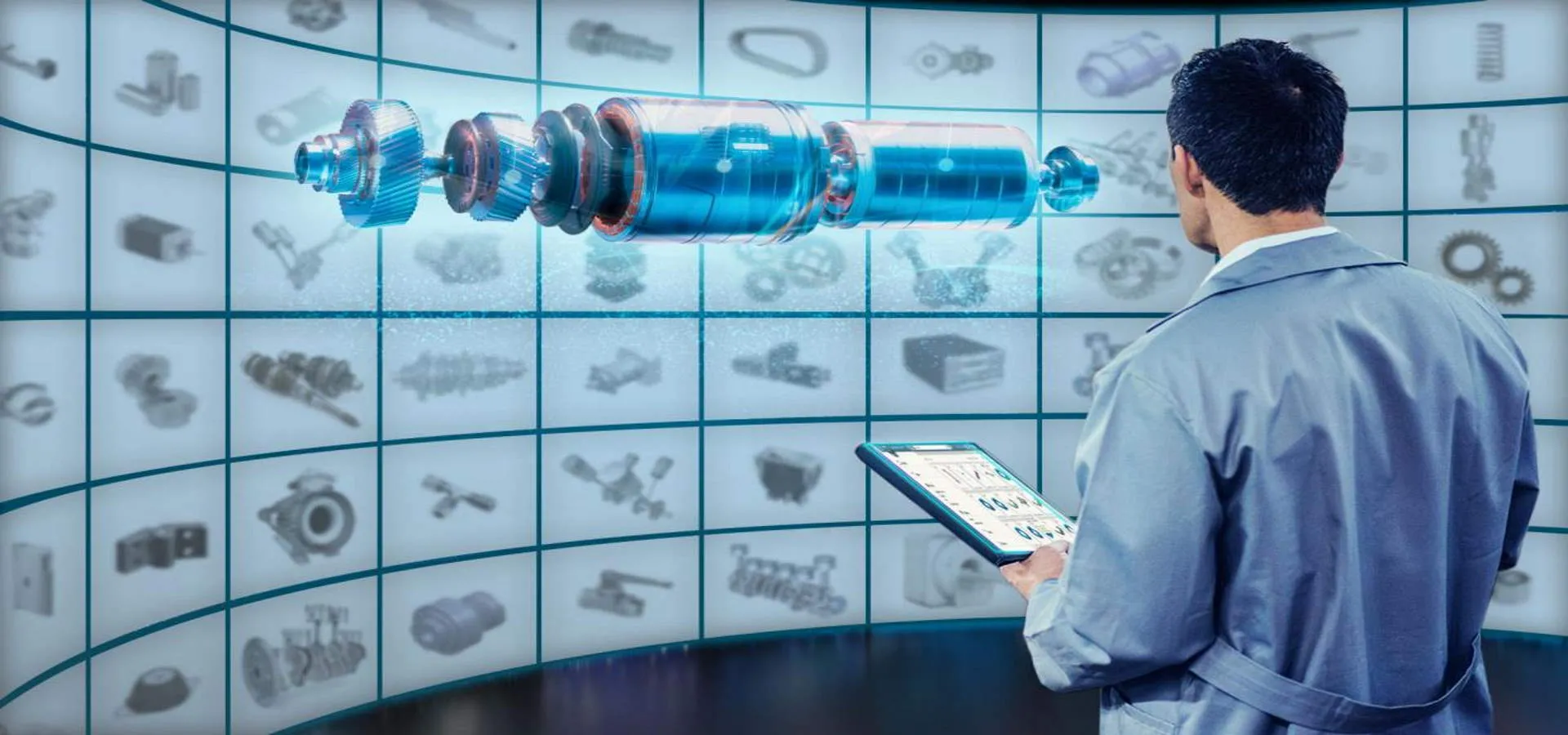
Achieve Product Design Excellence with CATIA 3DEXPERIENCE

CATIA is one of the widely used software applications for product design across various industries. CATIA has helped organizations to conceptualize, design and conform to the ever-changing industry standards and requirements. Across industry lines, CATIA still proves to be the most preferred product design application for any organizations.


CATIA, now powered by the 3DEXPERIENCE platform delivers unmatched capabilities of integration with existing processes and tools of any organization. 3DEXPERIENCE platform provides single source of truth dashboard to the entire business line of a company. It enables real-time concurrent design and engineering giving visibility to all the stakeholders in a single window. This eventually drives high levels of business intelligence and unprecedented collaboration between various departments of the organization. This not only saves precious time, thereby helping in meeting the challenging deadlines but also provides organizations to dedicate more brain power in planning the road ahead so as to be prepared for a completely volatile future.


CATIA 3DEXPERIENCE is much more than a CAD application. It connects all other departments of the organization through a common thread. CATIA 3DEXPERIENCE also facilitates Product Data Management & Product Lifecycle Management powered by ENOVIA.

This not only helps in predictability but also empowers organizations to manage changes efficiently. Lesser number of iterations for the New Developed Products means faster launches, lesser wastage and more profitability.


CATIA 3DEXPERIENCE delivers unmatched capabilities in multiple disciplines
DESIGN/STYLING:

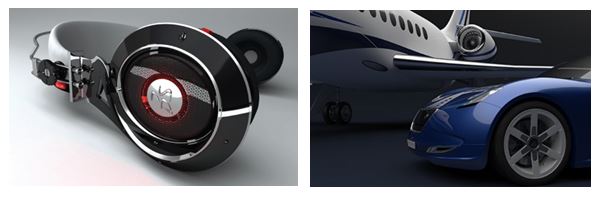
In transportation industry, the style & design of the product plays a major role in its success in the market. Develop shape & material creativity, reach a high level of surface sophistication & quality, and get the right decision tools with physical & virtual prototypes in CATIA 3DEXPERIENCE.

Few roles to mention:

  • Product Designer
  • Transportation Designer
  • Class-A Expert


Achieve Product Design Excellence with CATIA 3DEXPERIENCE1


ENGINEERING

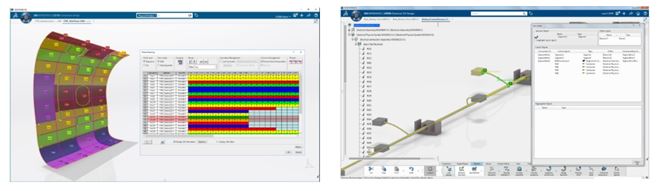
Mechanical engineers equipped with CATIA 3D Modeling tools can gain insight into key factors of quality and performance early in the product development phase. Digital prototyping, combined with digital analysis and simulation, allows product development teams to virtually create and analyze a mechanical product in its operating environment.

Few roles to mention:

  • Airframe Composites Designer
  • Electrical 3D Systems Designer
  • Function Driven Generative Designer


Achieve Product Design Excellence with CATIA 3DEXPERIENCE2


CONSTRUCTION

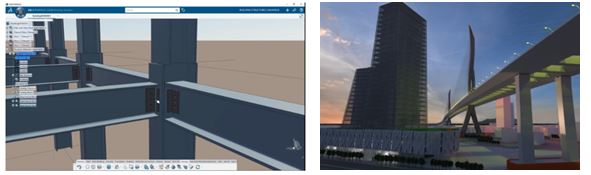
Robust, industry-specific process experience and roles to design and engineer complex buildings and infrastructure projects based on 3DEXPERIENCE virtual twin technology.

Few roles to mention:

  • Building Design Engineer
  • Building Structures Engineer
  • Building and Civil 3D MEP Designer


Achieve Product Design Excellence with CATIA 3DEXPERIENCE1


SYSTEMS ENGINEERING

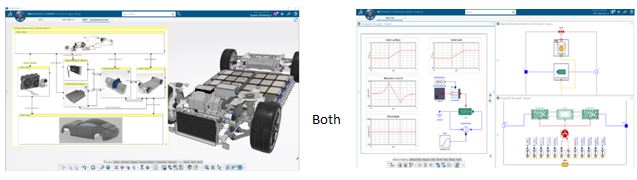
The Systems Engineering solution from Dassault Systèmes delivers a unique, open and extensible development platform – a platform that fully integrates the cross-discipline modeling, simulation, verification and business process support needed for developing complex ‘cyber-physical’ products. It enables organizations to quickly and easily evaluate requests for changes or develop new products or system variants, while utilizing a unified performance-based systems engineering approach that reduces the overall cost of system and product development.

Few roles to mention:

  • Battery Systems Engineer for Transportation & Mobility
  • Avionics Architect
  • 3D Routed Systems Designer


Achieve Product Design Excellence with CATIA 3DEXPERIENCE1


CATIA and 3DEXPERIENCE platform together can take the innovation, adaptability, profitability and efficiency of an organization to a whole new level.

How companies optimize their Design, Engineering and Manufacturing Processes?

Organizations are adopting Lightweight Engineering solutions to optimize their design, engineering and manufacturing processes. R&D departments in the Automotive and Aerospace sector is increasingly considering ways to adopt Lightweight Engineering solution to develop the new product designs.

There are multiple methods to optimize the weight, shape and material selection of parts and assembly. However, Lightweight Engineering is much more than this. Lightweight Engineering is the optimization of design, engineering and manufacturing processes which helps to create and evaluate new types of concepts and techniques that will make better lighter products.


There are multiple challenges which are faced while designing a part for Lightweight Engineering. Some of the challenges are listed below:
  • How to optimize the weight and shape of the design and further simulate and test virtually considering the entire Vehicle or Aircraft Design?
  • How to optimize fastening in complex assemblies?
  • How to achieve paperless engineering and manufacturing?
  • How to optimize the process for composites from design to engineering to manufacturing stages?
  • How to achieve a complex sheet metal part design right the first time in Aerospace and Automotive sectors?
  • How to manage weight and balance workflow to achieve the KPI?

To address the above challenges, there are multiple processes and digital validation solutions which traditionally work in silos. However, a single solution which can carry design, engineering and manufacturing processes with the same digital thread without any data loss is desirable and preferred as well.

CATIA for Lightweight Engineering solution addresses the above challenges through:
  • Cognitive Augmented Design with respect to Additive Manufacturing with best trade-off analysis approach
  • Simulation Driven Design for Digital Continuity with SFE concept
  • Reverse Engineering Processes with methodology and approach – from scan of “as built” or FEA deformation prediction results
  • Fastener analysis and review in earlier stages for complex Assemblies
  • Fully optimized process from design to simulation to manufacturing for composites
  • First time right approach for complex sheet metal parts by considering manufacturing constraints
  • Quicker design innovations in Mold Tool Designs
  • Predicting the change management with best impact analysis approach
  • Predicting mass distribution to balance weight in the earlier stages for large assemblies
  • Increasing the quality of manufactured products with minimal tolerancing and drawing interpretation errors by 100% Product Manufacturing Information in 3D for accurate & annotated geometric definition

Project Management & its Importance to Organizations

Most of the organizations employ traditional operating procedures for Project Management. Data handling process is usually manual (file based) which means organizations manage their activity through Excel sheets.

The overarching question for organizations is why to invest on a software when the work is being managed manually?

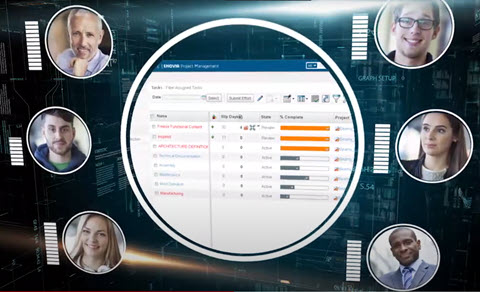
The answer lies in Dassault Systèmes’ Project Management solution ENOVIA powered by 3DEXPERIENCE platform which delivers highly customized solutions with respect to specific industry verticals.


Not having a Project Management solution implies
  • Significant time is spent on non-value-added activities
  • Lack of traceability
  • No clarity on work allocation
  • Scheduling conflicts
  • Preparing data for a particular meeting involves time as well as manpower
  • Audit & compliance – collaboration with OEM & maintaining quality standards
  • Manual collection of project information which leads to process delay

Key advantages of having a Dassault Systèmes’ Project Management solution ENOVIA
  • Shorten product development time and reduce development cost
  • Collaborate efficiently across engineering domains and locations
  • Product portfolio planning & resource planning
  • Manage complexity of product configuration and need for traceability
  • Reduce reliance on manual collection of status by directly connecting to deliverables managed in the project
  • Optimize resources and schedule to deliver the products that lead to the highest combination of revenue and margins
  • Real-time, multi-site collaborative product development
  • Single, configured product definition for all disciplines and all authoring CAD tools
  • Connect engineering definition with product portfolio definition
  • Real-time information which can be accessed anytime from anywhere
  • Provide CAD user and managers with a web browser access to the 3D definition from any device
  • Edit product structure & 3D composition
  • Apply changes and configurations from web browser

Listen to how Suprajit Engineering benefitted from Dassault Systèmes’ 3DEXPERIENCE platform


To know more about Project Management solution, visit this page: https://edstechnologies.com/enovia/project-portfolio-manager/

Overview on DMLS Process for 3D Printing and its Applications in Space Industry

Additive Manufacturing

Additive manufacturing is a specific 3D printing process where parts are built layer by layer by depositing material according to digital 3D design data. For example, instead of milling a workpiece from a solid block, additive manufacturing builds the part up layer by layer from raw material supplied as a fine powder. This technique is known as Powder Bed Fusion.


Powder Bed Fusion (PBF)

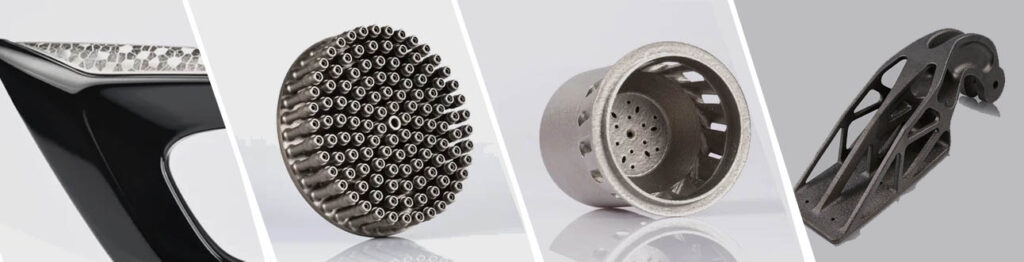
Powder Bed Fusion (PBF) is a laser or electron-based additive manufacturing technique. This is categorized based on the different working systems such as Selective Laser Sintering (SLS), Selective Laser Melting (SLM), Electron Beam Melting (EBM) and Direct Metal Laser Sintering (DMLS). In PBF, DMLS is recognized well in the industrial sectors such as aerospace, defence, automobile, tooling, space launch vehicles, biomedical, electric, and marine. The advantage of the DMLS process is that end components, with freedom of design, higher complexity, tailor-made customization, material reuseable and weighting reduction (lightweight structure) can be manufactured without any change in performance.


Direct Metal Laser Solidification:

DMLS follows the principle of “Direkt Metall Laser Schmelzen” (Direct Metal Laser Melting in English). It is a proven Laser – PBF (LPBF) technology and is now the standard in metal 3D printing. DMLS operates with the principle of high-intensity ytterbium laser beam as an energy source. The laser beam melts the selective powder particles into liquid stages from the melt-pool and gets cured rapidly for the required layer known as a layer thickness. In DMLS, an inert atmosphere (argon or nitrogen) is maintained in the working chamber. Inert gas with high purity has to be used to keep oxygen at the correct level and decrease flammability in the presence of hydrogen. DMLS process is capable producing complex and lightweight structures. The DMLS workflow is displayed below:


Feedstock Material widely used in DMLS
  • Stainless Steel – StainlessSteel GP1, StainlessSteel PH, CaseHardening Steel
  • NickelAlloy – IN718, IN625, HX
  • Cobalt Chrome – CobaltChrome SP2
  • Titanium Ti64
  • Aluminium AlSi10Mg
  • Copper – Pure Cu & CuCrZr

Additive Manufacturing in Space Industry

In space sector, spacecraft and satellites are always looking for new innovations and cutting edge technologies. An increasing number of new start-up companies are entering the space sector. With the knowledge of AM process, they can produce their required designs which are complex while remaining cost-efficient overall.


Benefits of Additive Manufacturing in Space Industry
  • Design for Additive Manufacturing: For space launch vehicles, the parts and structures need to be light-weight without affecting the performance. In addition, the functionality of parts can be completely redesigned based on Design for Additive Manufacturing (DFAM) process. For example, multiple parts can be consolidated into a single all-in-one design.
  • Speed and Productivity: In the rapidly growing market of commercial space applications, DMLS process ability to manufacture prototypes and small series productions plays a significant role with a lesser lead time and a cost-effective process. There are often extreme customer-specific requirements, particularly on aerospace parts, which perfectly matches the possibilities offered by additive manufacturing.

EOS 3D Printed Combustion Chamber for Rocket Engine

Over the past few years, the space sector has blossomed rapidly with many diverse start-ups specializing in development of end components. One of the start-ups based out of US is employing AM process on its mission to orbit. They successfully constructed and tested the new design quickly and cost-efficiently based on their development. The difficulties included the size of the build space and the material properties. AMCM, a company in the EOS group that offers specialized machines tailored to customer requirements, accepted this challenge.

The combustion chamber, printed with the copper alloy on AMCM’s M4K machines, is the largest single-piece combustion chamber for liquid rocket engines in the world.

The chamber is 86 cm (34 in) high, with an outlet nozzle diameter of 41 cm (16 in).


Manufacturing challenges are addressed by additive manufacturing. This type of part requires higher investment in custom machines. Now, they are utilising the DMLS process to print the combustion chamber, nozzle and neck combined into a single piece.


DMLS technique and its various applications are recognized well in industrial sectors for providing the solutions with new design and manufacturing processes to produce complex parts. DMLS techniques also offer unique process parameter optimization to produce high-quality parts rapidly with intuitive mechanical properties and dimensional accuracy.

An Integrated Solution for Manufacturing Complex Parts

Globalization and the fluctuations in customer demand in various industries have made manufacturing companies to rethink their current manufacturing process.

The components are becoming very complex to manufacture since they have to accommodate the growing need of customers’ expectation. How can these complex parts be produced? How can manufacturing companies avoid costly errors? How can companies ensure manufacturing is carried out in the most optimized way?

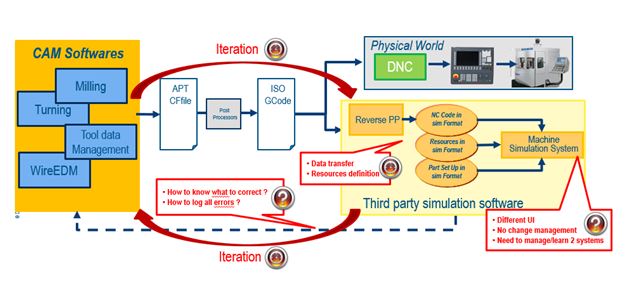
Traditionally, most of the manufacturing companies relied on conventional method which had a lot of silos. Dependency on multiple software solutions delayed the production & increased the production cost.


Traditional workflow

manufacturing3

Let’s look at the challenges with respect to NC programming:

  • Due to part complexity, product development cost is increased. How can companies reduce this cost?
  • How to efficiently reduce programming lead-time from virtual manufacturing to actual production?
  • How to reduce time-to-market?
  • How to maintain quality and flexibility in a competitive environment?

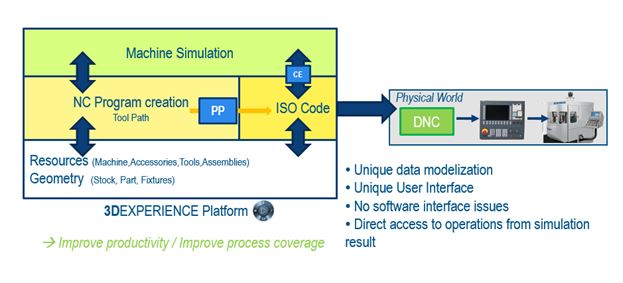
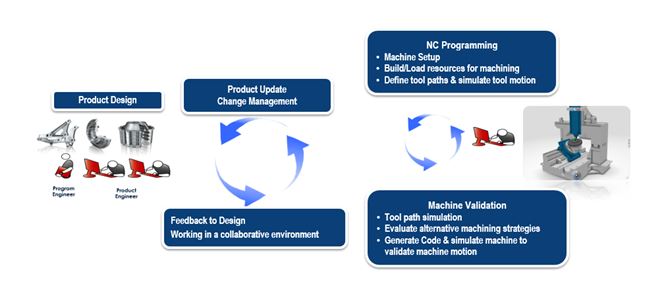
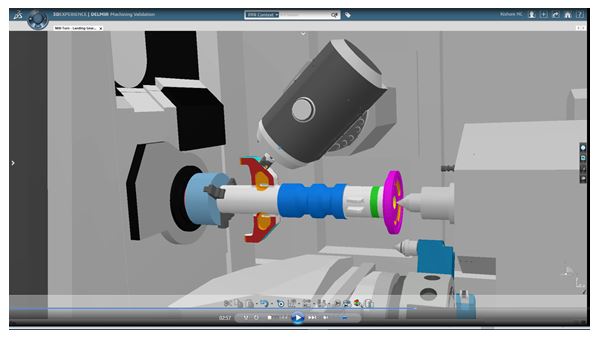
Dassault Systèmes’ NC Programming & Simulation solutions provides unified access from design to manufacturing in a collaborative environment. Dassault Systèmes’ well-known brand CATIA delivers the high-end capability with respect to design & the brand DELMIA ensures the NC code generation, validation & machine simulation under one roof.

NC Programming & Simulation solutions ensure complete work flow from design to manufacturing without the need of any third-party applications.


Benefits of NC Programming & Simulation workflow with Dassault Systèmes’ 3DEXPERIENCE platform

manufacturing3
manufacturing3
 

By adopting Dassault Systèmes’ NC Programming & Simulation solutions which is powered by 3DEXPERIENCE platform, manufacturing companies can address the above discussed challenges and gain the following benefits:

  • Ensure the quality of NC programming, simulation and optimization
  • Increase quality significantly by leveraging NC planning and programming automation
  • Reuse corporate rules and standards for tools & machining process
  • Improve productivity enhancements for tool management, NC setup preparation, NC program creation, NC program validation and NC program simulation

manufacturing3


Subscribe to our newsletter

Get all the latest information on Events, Sales and Offers.